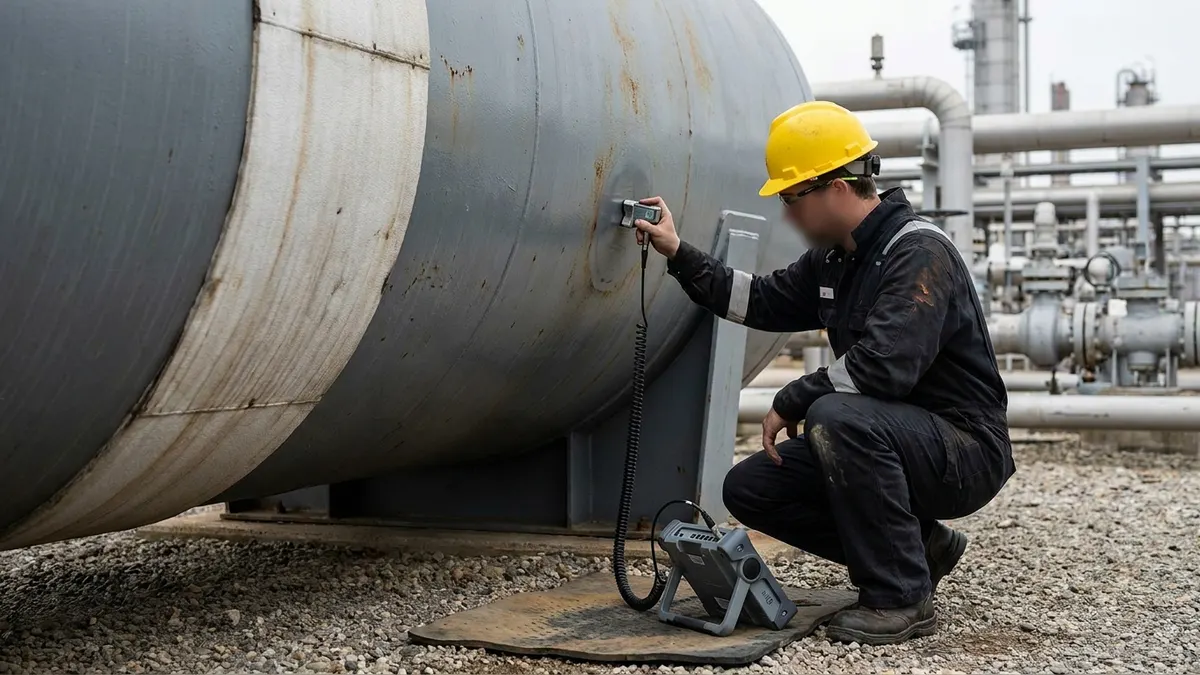
Hydrogen Damage Is Hiding in Your Equipment: What MI Programs Need to Get Right
According to Inspectioneering Journal, hydrogen-related damage mechanisms represent some of the most insidious threats to mechanical integrity in process industries. Unlike surface corrosion or erosion, hydrogen damage often progresses subsurface, with limited early warning signs and a high potential for sudden loss of primary containment. Writing in the May/June 2026 issue, Sreya Bhaduri, a project specialist at AsInt Inc., argues that managing hydrogen damage effectively requires understanding it not as a single problem but as a system of interrelated mechanisms tied to temperature, pressure, metallurgy, and operating environment.
Background
Hydrogen damage is not a new concern in refining, petrochemical, and upstream processing facilities, but it continues to catch operators and inspection programs off guard because of how it behaves. According to Inspectioneering Journal, the mechanisms covered under this category are best understood as a continuum rather than isolated phenomena, and API RP 571 (Damage Mechanisms Affecting Fixed Equipment in the Refining Industry) is the industry’s primary reference for identifying the most critical ones.
At lower temperatures, particularly in wet hydrogen sulfide environments, the relevant mechanisms include hydrogen-induced cracking (HIC) and stress-oriented hydrogen-induced cracking (SOHIC). Both are driven by atomic hydrogen diffusing into steel and accumulating at trap sites such as inclusions, creating internal pressure buildup that leads to cracking. Sulfide stress cracking (SSC) is closely related. At the higher end of the temperature and pressure spectrum, high temperature hydrogen attack (HTHA) becomes the dominant concern, occurring in process equipment exposed to hydrogen at elevated temperatures. The article frames these not as separate problems to be managed independently but as part of a broader hydrogen damage picture that integrity programs need to address holistically across the asset lifecycle.
Analysis
The framing here matters a great deal for how facilities and their service contractors approach inspection and maintenance planning. Most mechanical integrity programs are reasonably good at tracking visible degradation, scheduled thickness measurements, and surface-level corrosion. Hydrogen damage breaks that model. Because it develops below the surface, in the microstructure of the steel itself, conventional visual inspection and even standard ultrasonic thickness testing can miss it until a failure is imminent.
The fact that API RP 571 is cited as the governing reference is significant for anyone working in US refining and petrochemical facilities. That standard is baked into Process Safety Management (PSM) compliance under OSHA 1910.119, which means facilities covered by PSM are already expected to have addressed these damage mechanisms in their process hazard analyses and inspection programs. The gap, in practice, is often in execution: inspection techniques get selected without full consideration of the specific mechanism at play, or intervals get set based on general corrosion logic rather than the crack-growth behavior that governs HIC or SOHIC.
Bhaduri’s emphasis on managing hydrogen damage “across the asset lifecycle” is also worth unpacking. This is not just an in-service inspection problem. It starts at the design and material selection phase, where choosing the right steel chemistry and heat treatment can dramatically reduce susceptibility. It continues through fabrication and welding, where improper procedures can introduce residual stress that accelerates SOHIC. It runs through operating life, where process upsets and changes in feedstock composition, particularly increasing sulfur content in crude slates, can shift equipment into regimes where hydrogen damage becomes active. And it extends to end-of-life decisions, where hydrogen-damaged equipment may look structurally sound but carry hidden risk.
For the broader industry, the timing of this article aligns with growing attention on hydrogen as both a damage mechanism and a feedstock. As facilities explore hydrogen production, blending, and transport, the same damage threats that have existed for decades in wet H2S service are showing up in new contexts with potentially less institutional knowledge behind them.
What It Means for Subcontractors
-
Inspection contractors need mechanism-specific expertise. Recommending or executing an inspection scope without distinguishing between HIC, SOHIC, HTHA, and SSC is not sufficient. Each mechanism requires different detection methods, and a mismatch can produce a clean inspection report on equipment that is actually failing internally.
-
API RP 571 is your baseline reference for PSM-covered facilities. If you’re working turnarounds or inspection programs at refineries or petrochemical plants covered under OSHA PSM, you should expect these mechanisms to be in the facility’s damage mechanism register. Know how they show up and what inspection techniques apply.
-
Welding and fabrication work carries integrity risk beyond the weld itself. Residual stresses introduced during field welding and repair can create conditions that accelerate SOHIC in susceptible materials. Pre- and post-weld heat treatment procedures are not administrative formalities in these environments.
-
Feedstock and process changes are a trigger for reassessment. If a facility changes crude slate, increases throughput, or modifies operating conditions, that should prompt a review of whether previously acceptable equipment is now operating in a more aggressive hydrogen damage regime. Contractors working maintenance and reliability roles should flag these changes to the MI team.
-
Documentation discipline matters. Hydrogen damage findings, even minor HIC blistering, need to be tracked over time to detect progression. Subcontractors who deliver inspection data need to ensure it feeds into the facility’s fitness-for-service records, not just a standalone report.