
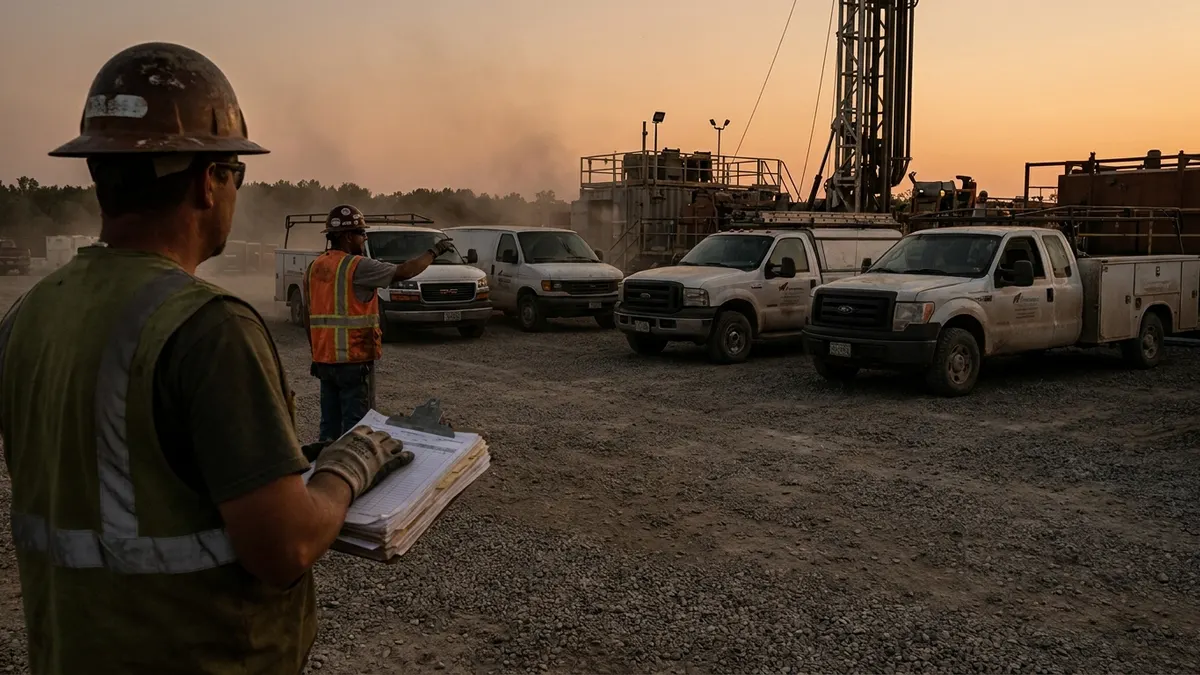
Quick Summary: OSHA’s multi-employer citation policy means subcontractors can be cited for hazards they did not create, on sites they do not control. An analysis of 631 oilfield inspections across 24 states in 2024-2025 found electrical violations and General Duty Clause citations as the top two categories (55 and 42 citations respectively), with well service companies bearing $1.52 million in cumulative penalties. Most citations are preventable with proper documentation, hazard communication, and a field safety process that keeps pace with changing job conditions.
If you are a subcontractor working on operator-controlled well sites, pipeline rights-of-way, or multi-trade construction sites, OSHA can cite your company for safety violations even when you did not create the hazard, do not control the site, and were not the employer whose worker was injured. That is not a hypothetical. It is how the enforcement system works.
This guide explains OSHA’s multi-employer citation policy in plain language, breaks down the four employer roles that determine who gets cited, and gives you a practical framework for protecting your company without needing an in-house safety department.
Why Subcontractors Get Cited on Sites They Don’t Control
OSHA’s enforcement model does not follow the chain of command on a job site. It follows a policy called CPL 02-00-124, the multi-employer citation policy, which has been in effect since 1999. Under this policy, OSHA can issue citations to any employer on a multi-employer worksite whose employees are exposed to a hazard, regardless of which employer created the condition or controls the site.
The logic is straightforward from OSHA’s perspective: if your workers are exposed to a recognized hazard and you did nothing about it, you failed your obligation as an employer. It does not matter that the hazard was created by the general contractor, left behind by a previous sub, or exists because the operator refused to address it.
This is the mechanism behind the most common complaint from oilfield subcontractors: “We didn’t create the problem, but we got the citation.” Under the multi-employer policy, that outcome is by design.
The Four Employer Roles: How OSHA Decides Who Gets Cited
When OSHA arrives on a multi-employer worksite, inspectors classify each employer present into one or more of four roles. Each role carries different obligations and different criteria for citation.
1. Creating employer
The employer whose actions or inactions caused the hazardous condition. A creating employer can be cited even if none of its own employees are exposed to the hazard. If your crew digs an unstable trench that exposes another contractor’s workers to a cave-in risk, your company is the creating employer and OSHA will cite you regardless of whether your own people were in the trench.
2. Exposing employer
The employer whose employees are exposed to the hazard. This is the role subcontractors most commonly fall into on operator-controlled sites. You did not create the hazard. You may not have the authority to fix it. But your workers are working near it, and OSHA holds you responsible for taking action.
An exposing employer avoids citation by demonstrating reasonable care, which includes:
- Identifying the hazard through a competent inspection or reasonable diligence
- Requesting correction from the creating or controlling employer
- Removing your workers from the hazard area if correction is not prompt
- Implementing alternative protective measures where feasible
- Informing your employees about the hazard
The key word is “reasonable.” OSHA does not expect a 15-person welding crew to shut down a drilling operation. But it does expect you to recognize the hazard, communicate it, and protect your people while it gets resolved.
3. Correcting employer
The employer tasked by contract or established practice with correcting specific hazards on the site. If your master service agreement (MSA) or work order assigns you responsibility for maintaining fall protection systems, for example, you are the correcting employer for fall hazards. Failure to exercise reasonable care in that correction role results in a citation.
4. Controlling employer
The employer with general authority over the worksite, typically the general contractor or the operator. A controlling employer can be cited for hazards affecting any workers on the site, even when none of its own employees are exposed. The standard is whether the controlling employer exercised reasonable care to prevent and detect violations across the site.
This role is important for subcontractors to understand because it defines the entity that should be receiving your hazard communications. When you identify a hazard you did not create and cannot fix, the controlling employer is who you escalate to, and your written escalation is the evidence that protects you.
Holding multiple roles
A single employer can hold more than one role simultaneously. A subcontractor whose crew creates a trench hazard that also exposes its own workers is both the creating and exposing employer for that hazard, doubling the citation exposure.
The General Duty Clause: Why It Is the Top Citation in Oilfield
The General Duty Clause, Section 5(a)(1) of the OSH Act, requires every employer to keep the workplace “free from recognized hazards that are causing or are likely to cause death or serious physical harm.” OSHA invokes it when no specific published standard covers the hazard in question.
In the oilfield, this comes up constantly. Field conditions change faster than safety programs update. A wellsite that was safe at 6 AM may have a completely different risk profile by noon after a scope change, equipment swap, or unexpected pressure event. When OSHA investigates and finds that a crew was exposed to a recognized hazard without adequate controls, and no specific standard applies, the General Duty Clause is the citation.
Recent data backs this up. An analysis of 631 OSHA oilfield inspections across 24 states in 2024-2025 found the General Duty Clause was the second most frequently cited provision (42 citations), behind only electrical violations (55 citations combined) and ahead of PPE, recordkeeping, and fall protection. Well service companies bore the heaviest penalty burden at $1.52 million cumulative, reflecting the high-severity hazards inherent in intervention operations.
For subcontractors, the takeaway is clear: your biggest citation risk is not a specific safety regulation. It is the gap between conditions on the ground and your safety process.
Common OSHA Citations for Oilfield Subcontractors
Beyond the General Duty Clause, the most frequent citation categories for oilfield subcontractors cluster around five areas.
Electrical violations
With 55 combined citations across sub-provisions in the 2024-2025 dataset, electrical hazards are the single largest citation category. Temporary power installations, extension cord management, and ground-fault protection on wellsite equipment are the most common triggers. Subcontractors providing electrical services or using powered equipment on-site need documented inspection protocols.
Fall protection
Working at heights on tank batteries, rigs, and processing equipment without adequate fall protection remains one of OSHA’s top enforcement priorities industry-wide. Subcontractors on elevated work platforms, scaffolding, or any surface above four feet (six feet in construction) need fall protection plans that match the actual work being performed.
Hazard communication
Failure to maintain safety data sheets, label chemical containers properly, or train workers on chemical hazards they encounter on multi-employer sites. This is especially relevant for subcontractors who work around substances managed by the operator or another contractor.
Trenching and excavation
Unshored trenches and excavations without adequate sloping or shoring are among the highest-fatality violations OSHA encounters. Subcontractors performing any ground disturbance work need a competent person on-site and documented soil classification.
Personal protective equipment
PPE violations often stem from inconsistent enforcement rather than lack of availability. Workers observed without proper eye protection, hearing protection, or respiratory protection in documented hazard zones generate citations for the exposing employer, even when the PPE was available but not worn.
How to Protect Your Company: The Documentation Framework
OSHA evaluates whether you exercised “reasonable care.” That determination almost always comes down to documentation. A verbal conversation with the operator about a hazard is worth nothing if OSHA asks for evidence six months later. A written email sent the same day is worth everything.
Before the job starts
Pre-job safety walk-down. Before your crew starts work on any new site or any new phase of an existing job, conduct a documented walk-down. Identify existing hazards, confirm that site-specific safety plans are in place, and note any conditions that conflict with your company’s safety requirements. Date it, sign it, and keep it.
JSA or JHA for the actual scope. A job safety analysis written for the work your crew is actually performing, not a generic template from last year’s project. When the scope changes, the JSA must change with it. This is the single most common gap OSHA finds: a JSA that was valid on day one but does not reflect conditions on day 15.
Confirm the controlling employer’s site safety plan. Ask for it. Read it. Note any gaps between the site plan and your crew’s activities. If the operator or GC does not have a written site safety plan, that itself is a finding worth documenting.
During the job
Daily crew safety meetings. Brief, documented, and specific to today’s work. Record the date, the topics covered, and who attended. If a new hazard was identified, note what action was taken.
Hazard communications in writing. When your crew identifies a hazard created or controlled by another employer, put it in writing to the controlling employer the same day. Email is sufficient. State the hazard, the location, the risk to your workers, and your requested action. Keep a copy. This single practice is the most effective protection against exposing employer citations.
Stop work authority. Your field supervisors need clear authority to stop work when conditions are immediately dangerous. OSHA will not cite a subcontractor whose foreman stopped work and reported a hazard. It will cite one whose foreman saw the hazard and kept working.
When OSHA arrives
Cooperate, but protect your documentation. You are required to allow OSHA access. You are not required to volunteer documents beyond what is requested. Have your safety point of contact present during the inspection if possible. Take notes on what the inspector observes and photographs. Do not destroy, alter, or create documents after an inspection begins.
Your crew’s testimony matters. OSHA will interview your workers individually. Ensure your crews know their rights (they can request a representative present) and that they have been trained on the actual safety procedures your company follows. A worker who cannot describe the JSA process or the stop-work policy undermines your reasonable care defence.
Fatality and Catastrophe Inspections: What to Expect
OSHA must be notified within 8 hours of any workplace fatality and within 24 hours of any inpatient hospitalization, amputation, or loss of an eye. On oilfield sites, the operator typically handles this notification, but as a subcontractor you should verify that it has been made and document that verification.
Fatality investigations are more thorough, more adversarial, and more likely to result in citations than routine inspections. They carry significantly higher citation rates and frequently result in serious or willful classifications with penalties up to $165,514 per violation. Investigators will:
- Interview workers from every employer on site, not just the employer of the deceased
- Request all safety documentation: JSAs, training records, safety meeting logs, hazard communications
- Inspect equipment and work areas
- Classify every employer under the multi-employer policy
- Issue citations to multiple employers for the same incident if warranted
If a fatality occurs on a site where your crew is working, immediately secure your documentation, contact your insurance carrier, and consult legal counsel before providing written statements beyond the initial notification.
ISNetworld, COR, and Safety Prequalification: What They Do and Don’t Protect
ISNetworld, COR (Certificate of Recognition), and similar safety prequalification platforms are increasingly required by major operators as a condition of being awarded work. They serve a real purpose: they verify that your company has written safety programs, training protocols, and insurance coverage in place.
What they do not do is provide legal protection from OSHA citations. Certification demonstrates that your safety management system exists on paper. OSHA evaluates what happens in the field. A subcontractor with a perfect ISNetworld score can still be cited if its crews are not following the documented procedures on the actual job site.
That said, strong prequalification records support your reasonable care defence. An OSHA inspector reviewing your company after an incident will note whether you had a documented safety program, whether your training records are current, and whether your incident reporting history suggests systemic problems or isolated events. Having your house in order on paper is necessary. It is just not sufficient on its own.
What to Do If You Receive an OSHA Citation
An OSHA citation is a formal legal document with financial penalties and compliance deadlines. Responding correctly matters.
Understand the citation type
Other-than-serious: A violation that has a direct relationship to job safety but would not cause death or serious physical harm. Penalties up to $16,550 per violation (2026 limits, adjusted annually).
Serious: A violation where there is a substantial probability that death or serious physical harm could result and the employer knew or should have known of the hazard. Same maximum penalty per violation.
Willful: A violation committed with intentional disregard or plain indifference to the requirements. Penalties up to $165,514 per violation. Willful violations involving a fatality can result in criminal referral.
Repeat: A violation of the same or a substantially similar standard within the previous five years. Penalties up to $165,514 per violation.
Respond within the contest period
You have 15 working days from receipt of a citation to contest it. If you miss this window, the citation becomes a final order and the penalties are due. Do not let administrative delay cost you the right to contest.
When to contest vs. settle
Contest the citation if you believe the classification is wrong (e.g., a serious violation that should be other-than-serious), if the multi-employer role assignment is incorrect, or if you have strong documentation supporting your reasonable care defence. Consider an informal settlement conference with the OSHA Area Director before formal proceedings, as many citations are resolved or reduced at this stage.
Use the citation to improve
Regardless of whether you contest, treat the citation as a free audit of your field safety process. If OSHA found a gap, close it. Update your JSAs, retrain your field supervisors, and strengthen your hazard communication protocol. The citation itself is a cost. The repeat citation that follows because you did not fix the underlying issue is the real danger.
The “Job Changed Faster Than the Safety Process” Problem
One observation from the industry’s response to recent OSHA enforcement data captures the core problem well: “a lot of trouble starts when the job changes faster than the safety process does.”
This is the core vulnerability for field service subcontractors. Your JSA was written for the original scope. The operator changes the work plan mid-shift. A piece of equipment gets swapped. The weather window closes and reopens with different conditions. Your crew adapts on the fly because that is how field work gets done. But the safety documentation does not update with it, and when OSHA reviews the record later, the gap is obvious.
The fix is not more paperwork. It is a simpler, faster update process:
- Field-level JSA amendments. Your foreman should be able to update or annotate the JSA on-site when conditions change, without going through a back-office review cycle. A handwritten note on the existing JSA documenting the change, the new hazard, and the control measure is better than a pristine original that no longer matches reality.
- Scope change triggers a safety pause. When the operator changes the scope of work, your crew takes five minutes to review the safety implications before proceeding. This does not slow the job. It prevents the investigation that does.
- End-of-day debrief. A two-minute conversation at the end of each shift: what changed today, what hazards came up that were not in the original plan, and what did we do about them. Document the answer, even as a one-line note.
Bottom Line
OSHA’s multi-employer citation policy means you can be cited for hazards you did not create, on sites you do not control. That is the reality of working as a subcontractor on multi-employer worksites. Your protection is not legal immunity. It is evidence that you exercised reasonable care: you identified hazards, you communicated them, you protected your workers, and you documented all of it. The companies that build that discipline into daily field operations do not just avoid citations. They build the safety reputation that wins better contracts.
