
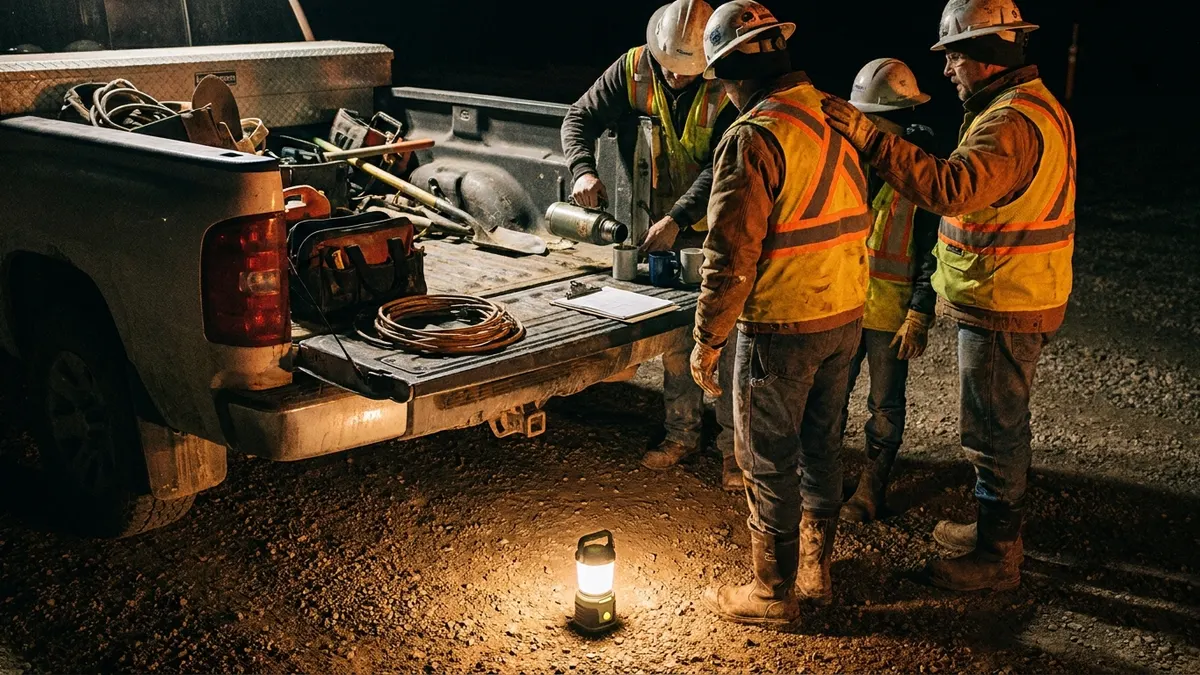
Quick Summary: Most subcontractors lose field workers not because a competitor pays dramatically more, but because of schedule unpredictability, poor equipment, weak supervision, and a feeling that the company does not value their time. Meanwhile, the hiring process itself is where many small contractors lose candidates they worked hard to find. This guide covers the full cycle: how to recruit in a tight labour market, how to onboard without losing new hires on day one, and the non-wage retention levers that keep crews intact when everyone in the basin is competing for the same hands.
You know the pattern. A solid hand gives two weeks’ notice. You ask why. “Got offered more money.” You counter. Sometimes it works. Usually it does not, because money was not the real reason. It was the excuse that was easiest to give.
The real reasons field workers leave small subcontractors are almost never about base pay alone. They are about what the job feels like day to day: whether the schedule is reliable, whether the equipment works, whether the foreman has their back, and whether anyone notices when they do good work.
But retention starts earlier than most companies think. It starts with how you recruit, how fast you move, and what the first week on the job looks like. Get those wrong and no retention strategy will save you.
Why Hiring Skilled Field Workers Is So Hard Right Now
The labour shortage in oil and gas and construction is not new, but several forces have made it worse.
A generation of experienced hands retired during the 2020 downturn and never came back. Many found other work or simply left the industry. That exodus pulled decades of institutional knowledge off the market and left a significant skills gap at the journeyman and foreman level.
The rig count recovery brought demand back faster than the labour supply could adjust. When activity ramps up in the Permian or the Eagle Ford, everyone activates their Rolodex at the same time. Day-rate contractors and service companies are competing for the same certified pipefitters, equipment operators, and electricians.
Meanwhile, trades enrolment in vocational programs has not kept pace. Texas and Alberta both face a compounding problem: not enough young workers are entering the skilled trades pipeline, and those who do often get absorbed by construction and infrastructure projects before oilfield companies can reach them.
The result: if you post a job and wait, you will lose. You need to recruit like your pipeline depends on it, because it does.
How Small Subcontractors Can Win the Hiring Race
You cannot outspend a major service company or a national construction firm. You can out-communicate them, out-treat them, and out-respond them.
Speed is your advantage. Large companies have HR departments, approval chains, and screening processes that take two to three weeks. You can make an offer in 48 hours. When a qualified welder is on the market, the contractor who calls within the day and makes a clean offer wins. Set up your hiring process so you can move fast.
Build a bench before you need it. The worst time to recruit is when you have a mobilization notice in your hand. Maintain an active list of workers you have employed before, workers who have applied in the past, and referrals from your current crew. Touch base with those people regularly, not just when you are desperate.
Use your current crew as recruiters. A structured employee referral program is one of the highest-ROI recruiting tools available to small contractors. Pay a referral bonus ($500 to $1,500 is a common range, paid after the new hire completes 90 days) and make it easy for your workers to send people your way. Workers refer people they trust, which improves the quality of candidates and the cohesion of your crew.
Be honest about the work. Do not oversell the job. If it is remote, say it is remote. If the rotation is aggressive, say so upfront. Workers who arrive at a job site and find conditions different from what they were told will leave and tell everyone they know. Workers who arrive knowing exactly what to expect and find you delivered on your promises will stay and recruit for you.
Show up locally. If you work in the Permian, show up at trade school job fairs in Midland and Odessa. Sponsor local welding competitions. Be visible in the community where your workers live. Large national contractors rarely do this. You can.
What a Fast, Field-Friendly Onboarding Process Looks Like
Onboarding is where most small contractors lose workers they have worked hard to recruit. A slow, paperwork-heavy, chaotic first day signals to a new hire that the rest of the job will be the same.
A solid onboarding process for a crew company does not need to be complicated. It needs to be:
Done before the worker shows up on site. Send the MSA acknowledgment, direct deposit forms, emergency contacts, and any certifications checklists electronically, ahead of day one. Tools like DocuSign or a basic HR platform (Gusto, Workday, Rippling) can automate this for under $100 per month.
Site-specific, not generic. On day one, walk the worker through the specific site: where to park, where to report, who their supervisor is, what the safety protocols are for that location, and how field tickets are submitted. Generic company orientation is fine, but workers need site-specific information to feel competent and safe.
Safety-first in practice, not just on paper. Walk the site hazards. Introduce the safety rep. Make it clear that stopping work for a safety concern is not just permitted but expected. Workers who feel physically safe stay longer, especially on remote or high-hazard sites.
Here is a basic onboarding checklist you can adapt:
| Step | Owner | Timing |
|---|---|---|
| Send paperwork package (tax forms, direct deposit, certifications) | Office | Before day one |
| Confirm rotation schedule in writing | Dispatcher/Scheduler | Before day one |
| Site safety orientation and hazard walkthrough | Foreman/Safety Lead | Day one, first hour |
| Introduce to crew and supervisor chain | Foreman | Day one |
| Review field ticket and time reporting process | Foreman | Day one |
| Confirm per diem, travel, and accommodation details | Office | Day one or before |
| 30-day check-in call or meeting | Supervisor or owner | Day 30 |
That 30-day check-in is worth highlighting. It is one of the highest-impact, lowest-cost retention tools available, and almost no small contractors do it. A 15-minute conversation where you ask a new hire how things are going, whether they have what they need, and whether anything surprised them costs you nothing and catches problems before they become resignations.
Why Counter-Offers Fail and What That Tells You
When a key worker comes to you with a competing offer and you match or beat it, you have not solved a retention problem. You have delayed a departure. Industry data consistently shows that 50% to 70% of workers who accept counter-offers leave within 12 months anyway. The underlying dissatisfaction that drove them to interview in the first place has not changed. You have just paid more for the same unresolved issues.
Counter-offers also create a perverse incentive: other crew members notice that the way to get a raise is to threaten to leave. That dynamic is toxic to crew cohesion and expensive to sustain.
The alternative is to identify and fix the non-wage factors that push workers toward the door before they ever get to the point of fielding offers.
The Six Retention Levers That Cost Less Than a Pay Raise
1. Rotation reliability and schedule predictability
This is the single most underestimated retention factor in field services. A worker on a 14/7 rotation who knows exactly when they will be home, and trusts that the schedule will not shift without warning, is dramatically less likely to leave than one making $2 more per hour on a schedule that changes every other hitch.
What “rotation reliability” actually means in practice:
Publish the rotation schedule as far in advance as possible. Two to four weeks minimum. If your dispatch process generates schedules week by week, that uncertainty alone is pushing workers to companies with more predictable operations.
Do not break rotations without a conversation. When a schedule change is unavoidable, call the affected worker directly, explain why, and offer something in return: a preferred rotation next hitch, extra time off, or first pick on the next desirable assignment. The gesture matters more than the specifics.
Track rotation fairness. When certain workers consistently get the short end, whether undesirable locations, extended hitches, or cancelled days off, they notice. A simple spreadsheet tracking assignments by person prevents the perception (or reality) of favouritism.
Handle family time as non-negotiable. Workers who have been promised days off for a kid’s graduation, a medical appointment, or a family event and then get called in anyway do not forget. One broken commitment on something personal can undo months of otherwise solid management.
2. Equipment quality and maintenance standards
Field workers judge their employer partly by the quality of the iron they operate. This is not vanity. Poor equipment creates real problems: safety risks, wasted time troubleshooting breakdowns, frustration when jobs take longer than they should, and the nagging feeling that the company does not invest in its own operations.
Maintain a visible standard. Trucks that start. Tools that work. Safety equipment that is current. PPE that fits. These are baseline expectations, not perks. When a worker’s daily experience involves fighting with broken equipment, the $1.50 per hour difference at the next company starts looking very attractive.
Fix things when they are reported. Nothing kills morale faster than reporting an equipment problem and watching it go unaddressed for weeks. A same-day or next-day response to equipment issues, even if the full fix takes longer, signals that you take operations seriously.
Let experienced operators have input on equipment decisions. When you are purchasing or leasing new equipment, ask your senior hands what works and what does not. They know better than anyone what performs in the field. Including them in the process builds ownership and loyalty.
3. Supervisor quality and field leadership
The foreman or field supervisor is the company in the eyes of the crew. A worker’s relationship with their direct supervisor is the strongest predictor of whether they stay or leave, across virtually every industry, but especially in field work where the supervisor is the only management presence on location.
What good field supervision looks like from the crew’s perspective:
- Clear, honest communication about the job, the timeline, and the expectations
- Willingness to advocate for the crew with the office when something is wrong
- Fair distribution of assignments, overtime, and undesirable tasks
- Consistent safety standards that are not waived when the schedule gets tight
- Treating workers as professionals, not replaceable labour
What drives workers to quit:
- Supervisors who take credit for the crew’s work
- Favouritism in assignments or overtime distribution
- Safety rules enforced selectively or ignored entirely under production pressure
- Foremen who cannot or will not escalate problems to management
- Disrespect, whether overt or through indifference
Investing in your field supervisors, through training, clear expectations, and regular feedback, is the highest-leverage retention investment you can make. A great foreman keeps a crew together through conditions that would scatter them under poor leadership.
4. Career visibility and skill progression
“Career path” sounds like a corporate HR concept that does not apply to a 30-person oilfield services company. But field workers think about their future just like anyone else, and the absence of any visible path forward is a significant push factor.
Career visibility does not require a formal promotion ladder. It requires answering one question for your experienced hands: “Where can I go from here?”
Practical approaches for small subcontractors:
- Cross-training on additional equipment or scopes. A hand who is certified on three pieces of equipment is more valuable to you and feels more invested in the company. Fund the certifications. The cost is a fraction of replacing the worker.
- Path to lead hand or foreman. If you have workers who show leadership potential, tell them. Outline what they need to demonstrate to move into a supervisory role and give them opportunities to practice.
- Specialty skill development. Welding certifications, crane operation, confined space rescue, instrumentation. Workers who see the company investing in their skills are less likely to leave for a small pay bump elsewhere.
- Mentorship pairing. Put experienced hands with newer workers deliberately. It elevates the senior worker’s role, improves the junior worker’s ramp-up, and creates a culture where knowledge is valued.
5. Recognition that is specific and timely
Recognition does not mean an annual safety award or a gift card at Christmas. It means a foreman telling a welder, in front of the crew, that the tie-in they completed under pressure was excellent work. It means the owner calling a hand who stayed late to finish a scope to say thank you. It means noticing.
What works:
- Public acknowledgement of specific work in crew meetings
- A phone call from ownership after a particularly difficult or well-executed job
- Priority consideration for preferred assignments or locations
- Recognition that ties to something the worker actually did, not generic “great job team” messages
What does not work:
- Generic recognition that does not reference specific contributions
- Recognition programs that feel obligatory or manufactured
- Rewards that are so small they feel insulting (a $10 gift card for a month of overtime)
The research is clear: workers who feel recognized are measurably more likely to stay, and the recognition does not have to cost anything. It has to be genuine and specific.
6. Communication and respect for workers’ time
This is the category that captures a dozen small things, each of which seems minor but collectively define the worker’s daily experience.
Pay accurately and on time, every time. Nothing erodes trust faster than payroll errors or delays. For field workers living paycheque to paycheque during rotation, a late deposit is not an inconvenience. It is a crisis. If your payroll process has accuracy or timing issues, fix them before you spend money on any other retention initiative. Whether you use a purpose-built platform like Aimsio or a well-maintained spreadsheet system, clean field ticket and payroll processes give you a competitive edge over the chaotic shops that lose good people to simple administrative failures.
Communicate changes proactively. When a job is delayed, a mobilization date shifts, or a per diem policy changes, tell workers directly and early. Hearing about changes through the crew grapevine or discovering them on arrival creates resentment.
Respect off-rotation time. When a worker is off rotation, they are off. Calling them for non-emergency questions, pressuring them to come back early, or making them feel guilty for using their scheduled time off is a fast path to losing them.
Make administrative tasks field-friendly. If your expense reporting, time sheet submission, or certification renewal processes are clunky and time-consuming, workers resent the lost personal time. Simplify these processes or move them onto mobile-friendly platforms that can be completed in minutes.
The Stay Conversation: Your Cheapest Retention Tool
Exit interviews tell you why someone left. Stay conversations tell you why someone might leave, while you still have time to act.
A stay conversation is a brief, informal, one-on-one check-in with a valued worker. It is not a performance review. It is not a formal HR process. It is a foreman or company owner asking three questions:
- What is working for you here? Understand what keeps them.
- What would make this job better? Identify fixable irritants before they become deal-breakers.
- Is there anything that would make you seriously consider leaving? Surface risks early.
The cadence matters. Quarterly is ideal. After major project completions or significant schedule disruptions is also effective. The conversation should happen in a natural setting, not in an office with a form to fill out.
What makes stay conversations work is action. If a worker tells you the truck they drive every day has a broken heater and the parts have been on order for two months, and you fix it within a week, you have demonstrated that the conversation was not theatre. If nothing changes after repeated conversations, workers stop talking and start applying elsewhere.
When Workers Say “More Money,” Listen for What They Actually Mean
Browse any oilfield worker forum and the pattern is consistent. Workers describing why they left rarely cite a dramatic pay increase. They describe leaving for marginally better pay plus one or two of the non-wage factors above.
“Got offered 50 cents more an hour and a guaranteed 14/7 instead of the ‘flexible’ schedule my current company runs.” That worker left for rotation reliability, not 50 cents.
“New company has newer trucks and the foreman actually answers his phone.” That worker left for equipment standards and supervisor responsiveness, not a pay bump.
“Same money but they confirmed the per diem before I started and the first cheque was right.” That worker left because administrative reliability failed at the previous company.
When you lose a worker to a “better offer,” audit the full picture. In many cases, you could have retained them for less than the cost of recruiting and training their replacement.
Measuring Retention: What to Track
You cannot improve what you do not measure. For a small subcontractor, a heavyweight HR dashboard is unnecessary, but tracking four metrics gives you early warning.
Voluntary turnover rate by quarter. Total voluntary departures divided by average headcount. Track it quarterly, not annually, so you catch trends before they become crises.
Tenure at departure. When workers leave, how long did they stay? If your average departure happens at 8 to 12 months, your onboarding or early-stage experience has a problem. If workers leave at 2 to 3 years, your career progression is the issue.
Exit reason tracking. Even a simple spreadsheet categorizing departures as pay, schedule, supervision, equipment, personal, or other gives you data to act on. After 10 departures, patterns emerge.
Rotation schedule adherence. What percentage of published rotations are delivered as promised? If that number is below 90%, you have a schedule reliability problem that is pushing workers out, regardless of what your pay rates look like.
The Math: Retention vs. Replacement
A common objection to investing in non-wage retention: “It’s the oilfield. Turnover is normal.”
Turnover is common. It does not have to be normal at your company, and it is more expensive than most operators calculate.
Replacing a skilled field worker costs $15,000 to $40,000 when you account for:
- Recruiting costs (job postings, referral bonuses, recruiter time)
- Onboarding and orientation (safety training, site-specific qualifications, equipment familiarization)
- Productivity loss during ramp-up (4 to 12 weeks before a new worker reaches full productivity)
- Impact on crew cohesion (existing workers absorbing the new person’s learning curve)
- Mobilization delay if the position sits vacant during a critical window
Compare that to the cost of the non-wage retention levers above: fixing equipment promptly, publishing schedules earlier, training supervisors, and making a phone call after a tough job. The return on retention investment is asymmetric. Spending $2,000 to keep a worker saves $20,000 in replacement costs.
Bottom Line
Winning the labour war as a small subcontractor comes down to three things: moving faster than your competitors to hire, creating a job site experience that experienced workers actually want to come back to, and staying connected to your people before they start looking elsewhere. You do not need an HR department. You need a process, a reputation, and a genuine commitment to the workers who make your operation run. Fix the experience, and the retention follows.
