Q1 2026 Earnings Mixed for Major US Contractors: Granite Climbs, Fluor Slips, Tutor Perini Eyes Blowout Year
According to Construction Dive, the four largest publicly traded US heavy civil and industrial contractors reported uneven first-quarter results to open 2026, with Granite Construction and Tutor Perini outperforming while Fluor posted what analysts called “messy” numbers on falling bookings.
Granite Construction: Border and Data Centres Drive 30% Revenue Jump
Granite led the group with Q1 revenue of $912.5 million, a 30% increase year over year, fuelled by a surge in federal border infrastructure work and data centre site preparation. The Watsonville, California-based contractor raised its full-year 2026 revenue guidance to $5.2–5.4 billion, up from the $4.9–5.1 billion range it projected at the start of the year.
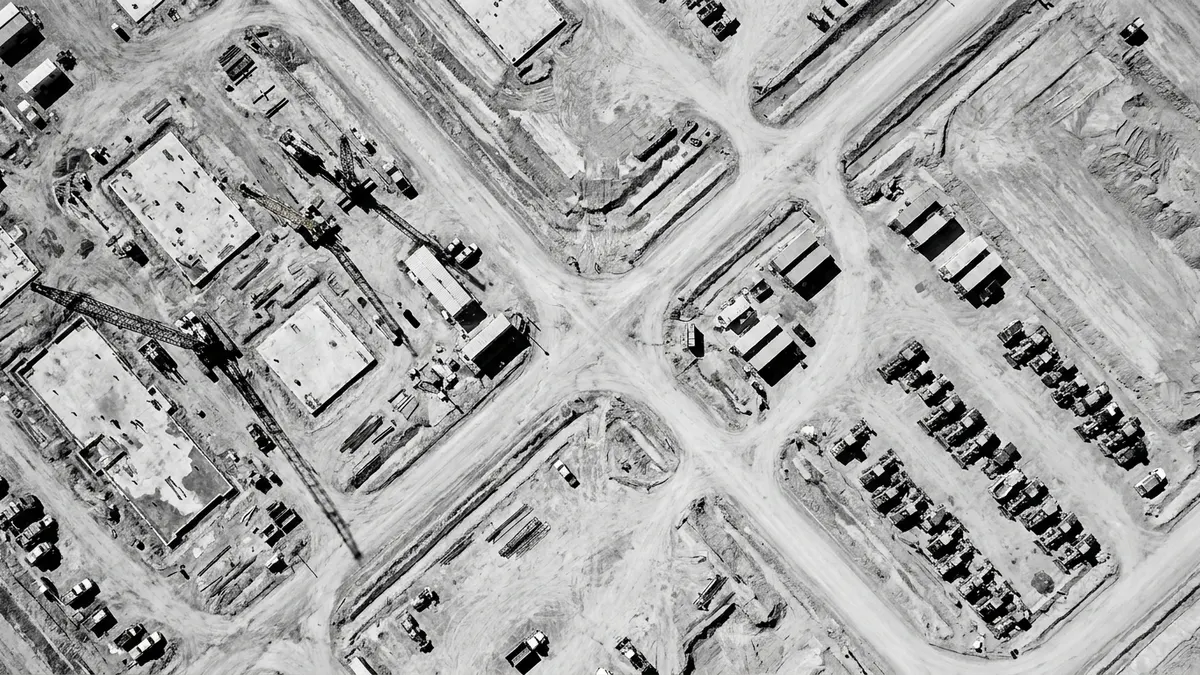
Border work with US Customs and Border Protection now represents roughly 15% of Granite’s revenue, with $640 million of its $7.2 billion backlog tied to tactical infrastructure near the Texas–Mexico border. A $495 million project near Laredo is expected to reach approximately 40% completion by year-end. Data centre site preparation — roads, civil work, and materials supply — is approaching a further 10% of total work, with active projects in Washington, Oregon, Nevada, Arizona, Louisiana, and Mississippi.
Despite the revenue growth, Granite reported a wider net loss of $41.7 million for the quarter, compared to a $33.7 million loss in Q1 2025, reflecting the upfront costs of ramping new work. Backlog grew $200 million sequentially to $7.2 billion, up 24% year over year.
Fluor: ‘Messy’ Quarter, Pipeline at $60B+
Fluor’s Q1 was described as “well shy of expectations” by Baird senior research analyst Andrew Wittmann. New awards dropped 54% year over year to $2.69 billion, dragging backlog down roughly 10% to $25.73 billion. Revenue fell 8% to $3.66 billion.
The company did return to profitability, posting $160 million in net income against a $241 million loss in Q1 2025. CEO Jim Breuer attributed the bookings drop to timing rather than demand, pointing to a front-end engineering pipeline exceeding $60 billion in active prospects and another $40 billion under evaluation over the next three years.
“We still feel very confident that 2026 awards are going to be higher than 2025,” Breuer said.
Fluor is pivoting toward power generation as its primary AI-infrastructure play, arguing the power sector offers better risk-adjusted returns than direct data centre construction, where contract terms remain “challenging.”
Skanska and Tutor Perini: Steady Backlogs, Cautious Optimism
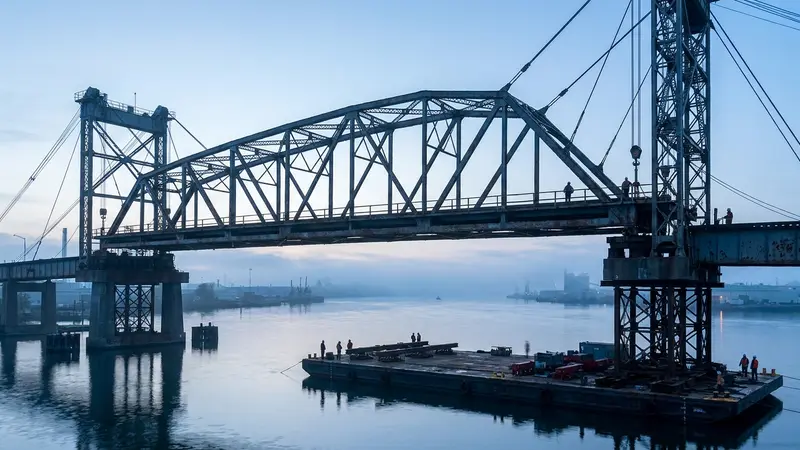
Skanska reported operating profit of approximately $123.5 million (1.14 billion Swedish krona) for Q1, a 5% increase from a year earlier, with backlog at a “historically high” 267.5 billion krona. The Sweden-based contractor said its US construction work remained its strongest performing segment. Major Q1 awards included a $534 million bridge deck replacement for the Vincent Thomas Bridge in Los Angeles and a $165 million Texas A&M University building.
Tutor Perini posted $1.4 billion in revenue, up 11% year over year, with $19.8 billion in backlog and net income of $25.7 million — down 8% due to share-based compensation. CEO Gary Smalley projected 2026 and 2027 would be “blowout” years as megaprojects including the $16 billion Hudson Tunnel and California high-speed rail ramp toward peak activity. The firm is also pursuing $1.4 billion in Minnesota bridge work, several additional high-speed rail segments, and $4 billion in Indo-Pacific military infrastructure.
Iran War: A Cost Headwind, Not a Crisis
All four firms addressed the impact of the Iran War on Q1 costs. Fuel is the primary exposure. Granite flagged liquid asphalt and diesel as its main risk points but said energy surcharges in its contracts provide protection. Skanska said most of its exposure has been transferred to subcontractors or clients. Fluor said Middle East operations continued without interruption.
The consensus: elevated fuel costs are a line item, not a structural risk — at least through Q1.
What It Means for Subcontractors
- Granite’s backlog growth is a direct signal for sub-tier demand. $7.2 billion in committed and awarded projects — $1.3 billion of it federal — means active bidding for structural, civil, utilities, and specialty subs throughout 2026, particularly in South Texas and the US Southwest.
- Fluor’s conversion pipeline matters more than Q1 bookings. $60+ billion in FEED work translates into NTP releases over the next 12–24 months, with heavy subcontract demand in power, LNG, and critical minerals. Watch for limited NTP notices as conversion triggers.
- Data centre site work is accessible sub-tier. Granite, Skanska, and Tutor Perini are all winning data centre civil scopes. Earthwork, utilities, and materials supply are the entry points — not specialty data centre trades.
- Iran War fuel cost pass-through is real. Subcontractors on fixed-price scopes without fuel escalation provisions are absorbing costs that GCs are partially hedging. Review energy surcharge language in any new contract awarded after February 2026.
- Skanska’s $534M Vincent Thomas Bridge deck replacement in Los Angeles will generate sub-tier bridge decking, structural steel, and waterproofing demand. Specialty marine and bridge contractors in Southern California should monitor pre-qualification.