Hanwha Ocean Partners with Kanata Clean Power on $15.7B Floating LNG Project at Prince Rupert
According to a CNW wire service report via BOE Report, South Korean shipbuilder Hanwha Ocean Co., Ltd. has signed a non-binding Memorandum of Understanding with Kanata Clean Power & Climate Technologies Corp. to explore collaboration on the proposed Kanata LNG floating liquefied natural gas export project near Prince Rupert, British Columbia.
Project Scope and Partnership Terms
The proposed facility is expected to have a capacity of up to 12 million tonnes per annum, with Kanata estimating total capital expenditures at approximately US$15.7 billion, subject to final engineering, commercial arrangements, and regulatory approvals. The MOU covers a broad range of potential cooperation areas, including engineering and construction of floating LNG production facilities, operations and maintenance services over the project’s life, strategic equity participation by Hanwha Ocean or affiliated entities, long-term LNG purchase arrangements, and midstream solutions.
Philippe Levy, President of Hanwha Ocean’s Energy Plant Unit, called the MOU “an important first step” while noting that “significant work remains before any final investment or project execution decision can be made.” Kanata LNG is designed around modular construction and marine-based liquefaction technology, and is positioned near Prince Rupert, described as North America’s closest Pacific port to Northeast Asia. Kanata has also offered participating First Nations the opportunity to acquire up to a 50% ownership interest in the project, subject to negotiations, financing, and applicable approvals.
What It Means for Subcontractors
- A US$15.7 billion FLNG project represents one of the largest potential construction programs in western Canada, with significant demand for marine, mechanical, electrical, and instrumentation contractors if the project reaches final investment decision.
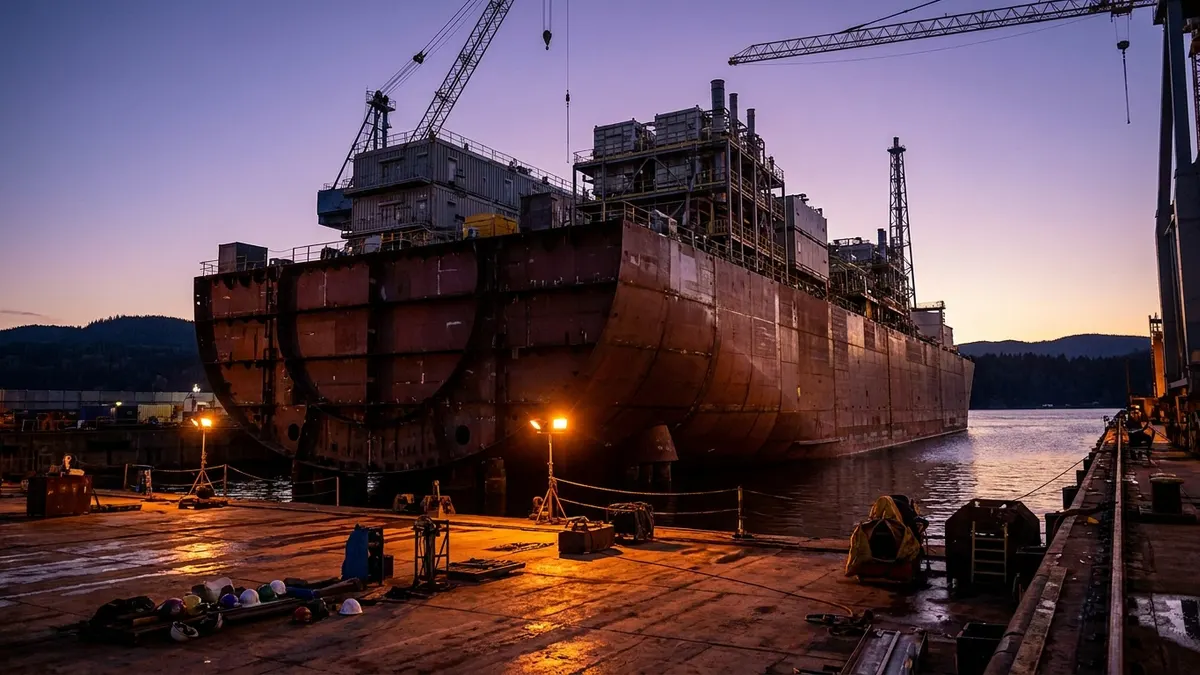
- The modular construction approach signals work could be fabricated at multiple locations, meaning BC-based and potentially US Gulf Coast fabrication yards and specialty contractors could compete for scopes.
- Operations and maintenance services are explicitly included in the MOU scope, pointing to long-term service contract opportunities well beyond the construction phase.
- The project remains pre-FID and non-binding at this stage, so subcontractors should track regulatory and commercial milestones before committing resources to pursuit efforts.
- First Nations equity participation of up to 50% could shape Indigenous content and community benefit requirements, which field service companies bidding on the project will need to factor into their compliance and partnership strategies.