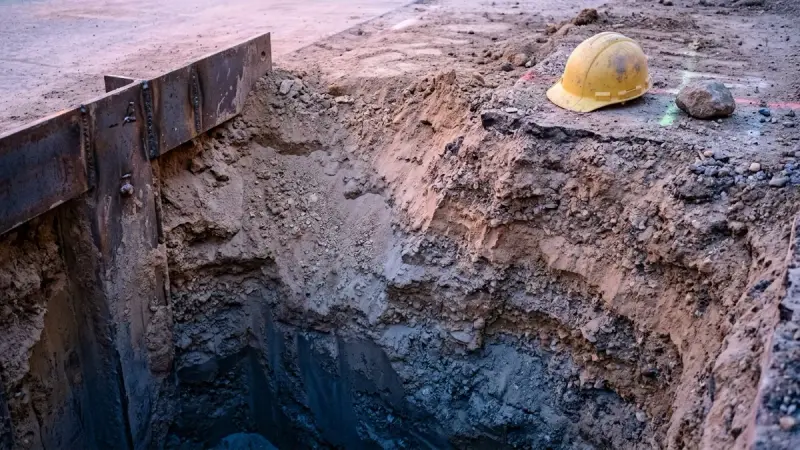
OSHA Proposes $254,884 Fine After Pennsylvania Trench Collapse
OSHA proposed $254,884 in penalties against a Chambersburg, Pennsylvania, excavation contractor after a trench wall failed and fatally engulfed a worker 12 feet below grade. ISHN reports the agency cited willful, repeat and serious violations.
What OSHA Found
OSHA opened its investigation into Jonas David Wagoner, doing business as J.D. Wagoner Excavating, on April 2, 2026. Inspectors found crews installing a storm sewer system in a trench that was not adequately protected against soil collapse. When part of the wall gave way, unrestrained soil buried one worker. ISHN reports the worker died of the injuries.
The citations break down as follows, per ISHN:
- Willful: failure to protect workers from cave-ins.
- Repeat (two): failing to assign a competent person to conduct daily trench inspections, and failing to remove employees from hazardous conditions.
- Serious: failing to provide construction hazard prevention training, failing to give workers a safe way out of the excavation, failing to keep materials at least two feet from the edge, and failing to restrain side materials that could roll in.
ISHN did not publish the CFR sections cited. The two Subpart P provisions most directly relevant are 29 CFR 1926.652, which covers protective systems, and 1926.651(k), which requires daily inspections by a competent person. The source does not say which sections OSHA cited or what earlier citations triggered the repeat classification.
What It Means for Subcontractors
- Check the protective system before anyone enters. The willful citation centers on a 12-foot storm sewer trench with inadequate protection. Underground utility, civil and pipefitting crews should confirm a 1926.652-compliant system (sloping, shoring or shielding) is in place before work starts and after any change in conditions.
- Document the daily competent-person inspection. Two repeat citations involve the missing competent person and leaving employees in hazardous conditions. Under 1926.651(k), name the competent person for each open trench, log the inspection daily, and give that person authority to pull crews out.
- Enforce the two-foot spoil setback. OSHA cited the contractor for materials within two feet of the edge and for unrestrained roll-in hazards. Have equipment operators and laborers check spoil piles, pipe stock and bedding material every shift.
- Verify a safe exit and training records. The serious citations include no safe means of exit and no hazard prevention training. Confirm that every excavation has an exit route and that training sign-in sheets are current for every crew member.
- Price the exposure. The $254,884 proposal is for one 12-foot trench job. Prime contractors and municipal owners reviewing storm sewer subcontractors may ask about safety history, so keep your citation record and corrective-action files organized for prequalification.