Massachusetts Contractor's $4.7M Fine Shows How Repeat Trench Violations End Businesses
According to Equipment World, a Massachusetts contractor with a violation history stretching back to 1995 is now staring down $4,699,362 in proposed OSHA penalties after a November trench collapse killed one worker and seriously injured another. The case against Revoli Construction Company Inc. of Franklin, Massachusetts is not a story about a single bad day on a jobsite. It’s a case study in what happens when a contractor treats safety citations as a cost of doing business rather than a warning to change course.
Background
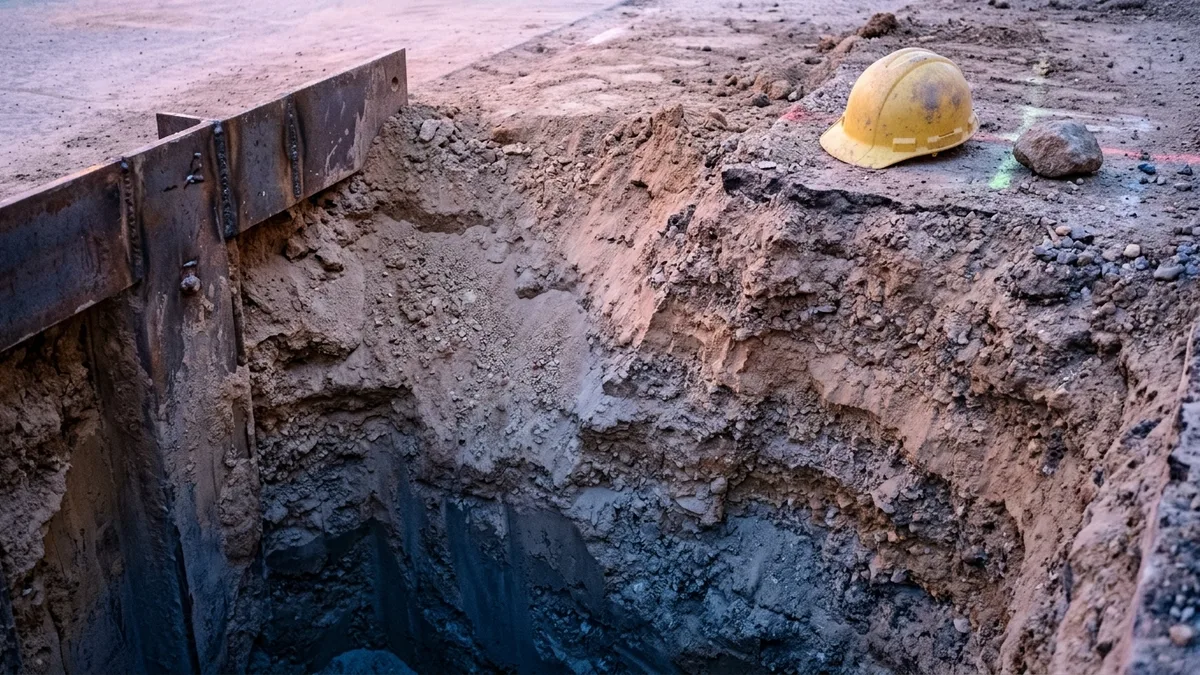
On November 18, 2024, workers for Revoli were inside a trench on a sewer installation project in Yarmouth, Massachusetts, when a cave-in occurred. While workers were in the trench, others outside were removing sandy soil and installing steel plates, according to OSHA. Backfilled sand collapsed into the trench, killing Miguel Alexandre Reis, 61, who is survived by his wife and two adult children. A second worker was buried to his waist and airlifted to the hospital. A third managed to escape on his own.
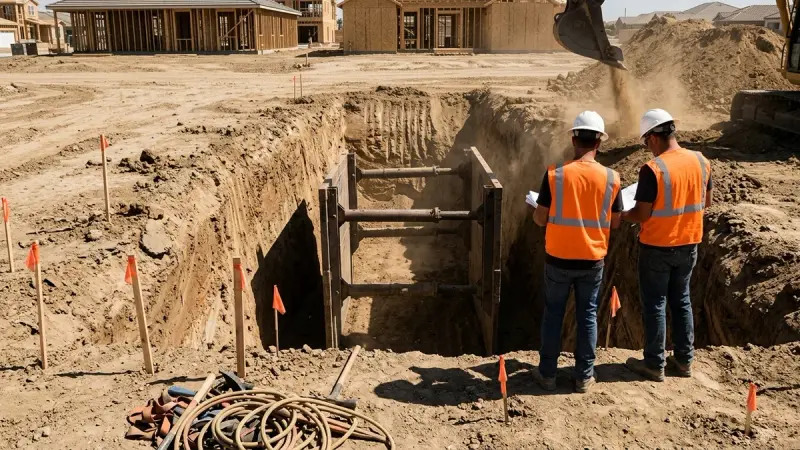
OSHA’s response, issued April 1, included seven willful, 17 serious, and 33 repeat violations, totaling 57 citations for this incident alone. The repeat violations cover exactly the kind of basics that trench safety standards are built around: no adequate cave-in protection, a damaged protective system, no safe worker egress, unsupported underground utilities, spoil piles within two feet of the excavation edge, and failure to install shoring per design. These are not obscure regulatory technicalities. They are the foundational requirements of OSHA’s excavation standard, 29 CFR 1926 Subpart P, which has been federal law since 1989.
Revoli’s OSHA history reads as a slow-motion warning that went unheeded. The company was cited as far back as 1995, fined in 1999 after an inspector found a worker, the owner’s own nephew, in an unprotected excavation after the worker had already been reprimanded for the same behavior. More recently, OSHA fined the company $5,625 in November 2023 after two employees worked inside an unprotected trench between 5.5 and 7.5 feet deep in Littleton, and $6,950 in February 2025 for electrical hazards in South Yarmouth. Each of those fines was paid and forgotten. Then a man died.
Analysis
The Revoli case illustrates a trap that field service companies fall into more often than the industry acknowledges. Small-to-mid-sized contractors operating on tight margins can come to view modest OSHA fines as an acceptable overhead item, particularly when enforcement inspections are infrequent and projects keep moving. That calculation works, until it doesn’t.
OSHA’s penalty structure changes dramatically once violations are classified as willful or repeat. A single willful violation can carry a penalty of up to $161,323 under current federal maximums. Multiply that across seven willful citations and stack 33 repeat violations on top, and the math becomes existential for most subcontractors. A fine approaching $4.7 million is not a business expense. For the vast majority of small excavation contractors, it’s a company-ending event.
The specific failure mode here, removing spoil material outside the trench while workers remained inside during a sewer installation in sandy soil, reflects a workflow pressure that field crews feel every day. Jobs run behind. Crews push to make up time. The shoring gets skipped or the spoil pile creeps too close because the work is almost done. That’s how cave-ins happen. Sandy and granular soils are among the most unstable excavation conditions, classified as Type C under OSHA’s soil classification system, and they require the most robust protective systems. There is no shortcut that ends well.
U.S. Secretary of Labor Lori Chavez-DeRemer called the collapse “a solemn reminder of the dangers construction workers face when basic safety procedures and safe engineering solutions are ignored.” That framing matters: OSHA used the word “ignored,” not “overlooked.” Willful violations carry a specific legal meaning, that the employer knew the hazard existed and made a deliberate choice not to fix it. That designation drives both the penalty total and the legal exposure that follows.
What It Means for Subcontractors
-
Repeat violations multiply your risk. Every OSHA citation your company receives is on record. When an incident occurs, investigators will pull that history. Repeat and willful classifications, which carry penalties up to 10 times higher than serious violations, are far more likely when prior citations exist for the same hazard.
-
Trench safety is non-negotiable on every excavation over five feet. OSHA’s Subpart P requires a protective system, either sloping, shoring, or a trench box, for any excavation five feet or deeper. Sandy, granular, or previously disturbed soils require the most conservative approach. If your crew is skipping the box because the job is almost done, that’s the moment a collapse is most likely.
-
Spoil pile placement kills. Maintaining excavated material within two feet of a trench edge is a cited violation for a reason. Spoil weight destabilizes trench walls. The standard requires spoil to be kept back, and it’s one of the most commonly missed requirements on active jobsites.
-
Small fines are not a green light. A $5,000 or $6,000 OSHA fine can feel manageable. Treat it as a fire alarm, not a bill. Companies that pay fines and resume the same practices are building a documented record that OSHA will use against them when the next, worse incident occurs.
-
Competent person requirements are your first line of defense. OSHA requires a competent person to classify soil, inspect the excavation daily, and stop work when conditions change. That person needs real authority to halt operations. If your competent person doesn’t feel empowered to pull workers from a trench, the designation is paperwork, not protection.
-
Subcontractors on GC-managed sites are not off the hook. If you’re performing excavation work as part of a larger project, your company owns the safety obligation for your crew’s trench. General contractor oversight does not transfer OSHA liability. Your protective systems, your citations, your penalties.