LS Power Breaks Ground on $1B Idaho-Nevada Transmission Line After Decades of Delay
Engineering News-Record reports that LS Power has broken ground on the Southwest Intertie Project-North, a 285-mile, 500-kV transmission line between Idaho and Nevada that spent decades tangled in financing arrangements before finally reaching construction. The project offers a real-world case study in how long large-scale transmission work can sit in limbo even after basic engineering is done, and what happens once the money finally lines up.
Background
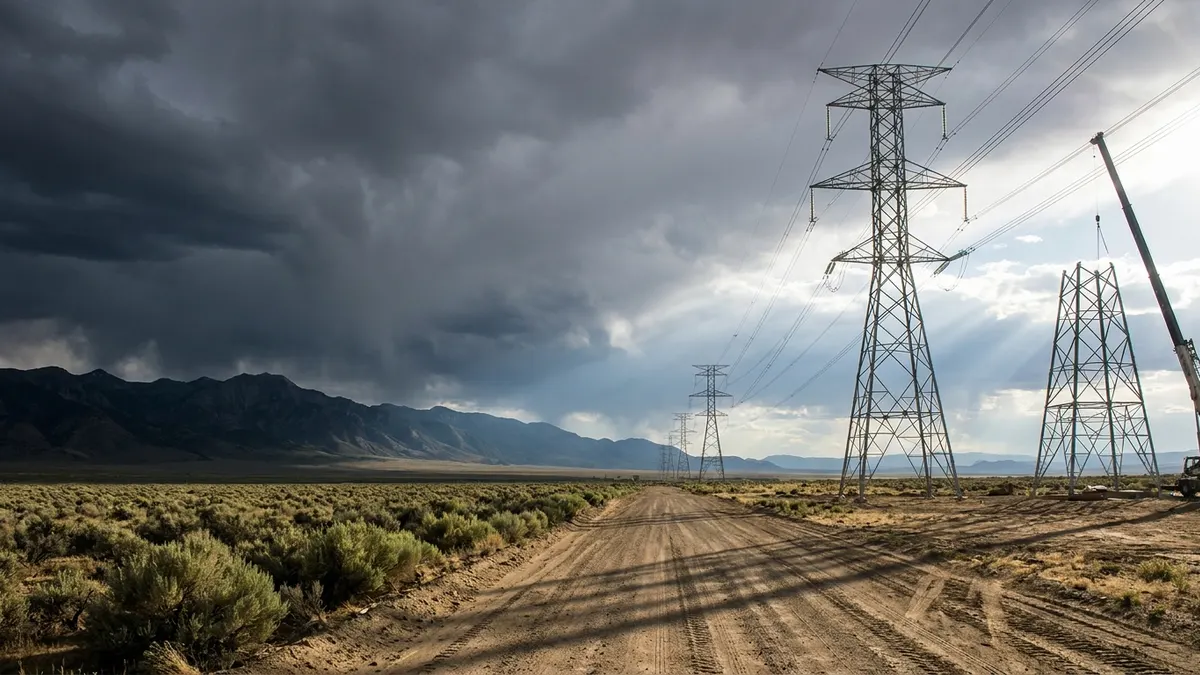
Great Basin Transmission LLC, an LS Power affiliate, held a formal groundbreaking Sept. 3 in Ely, Nevada, with Gov. Joe Lombardo on hand, according to ENR. The line, known as SWIP-North, fills the missing link in a high-voltage corridor running from Idaho’s Magic Valley to the Las Vegas area. Once combined with two existing lines through Nevada, the completed 576-mile corridor will carry up to 2,000 MW in either direction.
ENR notes the corridor was first conceived in the 1980s, with LS Power acquiring development rights in 2005 and federal authorization dating back to 1994. Despite that head start, the northern segment sat unbuilt for years while financing and offtake arrangements shifted.
Two very different customers ended up anchoring the project’s value, per ENR. California grid planners pushed SWIP-North primarily to access roughly 1,000 MW of Idaho wind generation moving south, with the California Independent System Operator calling it the “only active transmission solution” giving the state direct access to that resource. The U.S. Energy Department committed up to $331 million to the project as of ENR’s May 2024 reporting, when the roughly $1-billion project was expected to start construction in 2025 and finish in 2027. By November 2024, CAISO put total capital cost at $1.23 billion, excluding financing costs, with about $950 million tied to the share allocated to California ratepayers. The Federal Energy Regulatory Commission accepted the CAISO-Great Basin cost-sharing agreement in January 2025.
Idaho Power took the opposite flow. The utility struck a deal with Great Basin in February 2025 for 500 MW moving north from Desert Southwest markets, owning an interest carrying 250 MW and holding rights to another 250 MW for 40 years. Idaho regulators approved that arrangement in December 2025 after commission staff projected Idaho Power would face capacity deficits of 154 MW in 2028 and 384 MW in 2029 without the line, calling the northbound capacity a least-cost, least-risk option. Idaho regulators did not approve cost recovery outright, however, reserving a prudence determination for a future rate case. Nevada regulators approved grid construction in January 2026, and CAISO said by March that the project had secured 99% of its right-of-way, tracking toward a June 2028 in-service date.
Analysis
The most striking thing about SWIP-North isn’t the engineering, it’s the timeline. A corridor conceived in the 1980s, federally authorized in 1994, and under LS Power’s development control since 2005 didn’t reach a shovel in the ground until September 2026. That gap says less about construction readiness and more about how long it takes multiple states, a federal grid regulator, and competing utility interests to agree on who pays for what and who gets which direction of flow.
The bidirectional capacity model here is worth watching as a template. Instead of one utility footing the bill for one use case, California ratepayers are funding southbound wind access while Idaho Power is funding a northbound capacity slice, each justified by its own regulatory proceeding. That structure let the project clear FERC’s cost-sharing review in January 2025 and Idaho’s rate proceeding in December 2025, even as it drew opposition from Idaho residents skeptical that new wind development, including the now-canceled Lava Ridge project, would ever materialize to fill the southbound capacity.
For contractors, the practical takeaway is that engineering was largely locked in well before permitting finished. POWER Engineers, now part of WSP Global, had completed at least 75% of design by late 2024, meaning the fixed lump-sum construction contracts that followed came with a clearly defined scope. That’s a different risk profile than projects where design and permitting drag on in parallel. The liquidated damages tied to schedule milestones, per ENR, signal that Great Basin wants firm delivery dates now that financing is settled, which puts real pressure on the crews already mobilized.
What It Means for Subcontractors
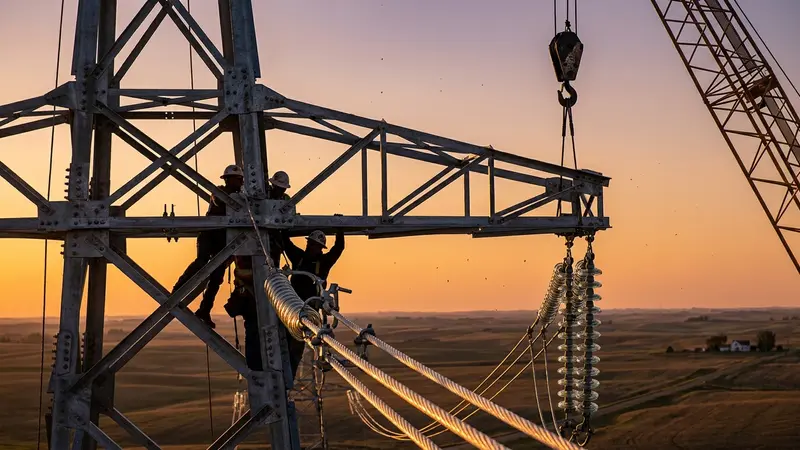
- Wilson Construction was awarded SWIP-North’s 285-mile line construction, according to electrical workers union Local 1245, which reported in August that Summit had already started foundation work while Wilson prepared to begin line construction. Subcontractors in transmission line work, foundations, and structural steel across Idaho and Nevada should look at these two contractors’ subcontract packages directly.
- The scope extends beyond the transmission line itself: substation expansions are planned at Midpoint (Idaho) and Robinson Summit (Nevada), plus new series-compensation equipment on both SWIP-North and the existing One Nevada line operating within NV Energy’s system. Electrical and E&I subcontractors should watch for packages tied to these substation and compensation equipment scopes specifically.
- The project targets a June 2028 in-service date, with CAISO reporting 99% of right-of-way secured as of March 2026. That gives crews roughly a two-year construction window, useful for firms planning labor and equipment allocation across Idaho and Nevada job sites.
- Fixed lump-sum pricing covers the majority of the transmission-line construction contract, with liquidated damages tied to schedule milestones. Subcontractors bidding into this or similar LS Power-affiliated work should expect tight schedule enforcement and price contracts accordingly.
- Idaho’s Public Utilities Commission approved the capacity arrangement but did not approve cost recovery, reserving a prudence review for a future rate case. Firms with long-term interests in the region’s transmission buildout should track that future Idaho Power rate proceeding, since it could affect the utility’s appetite for similar projects going forward.