Long-Delayed Bathurst Street Widening Finally Breaks Ground in York Region
A $127-million widening of Bathurst Street in York Region, Ontario is underway this spring after being shelved for more than a decade, Daily Commercial News reports. The four-kilometer project runs from north of Highway 7 to Major Mackenzie Drive and is expected to wrap in 2028.
Market Impact
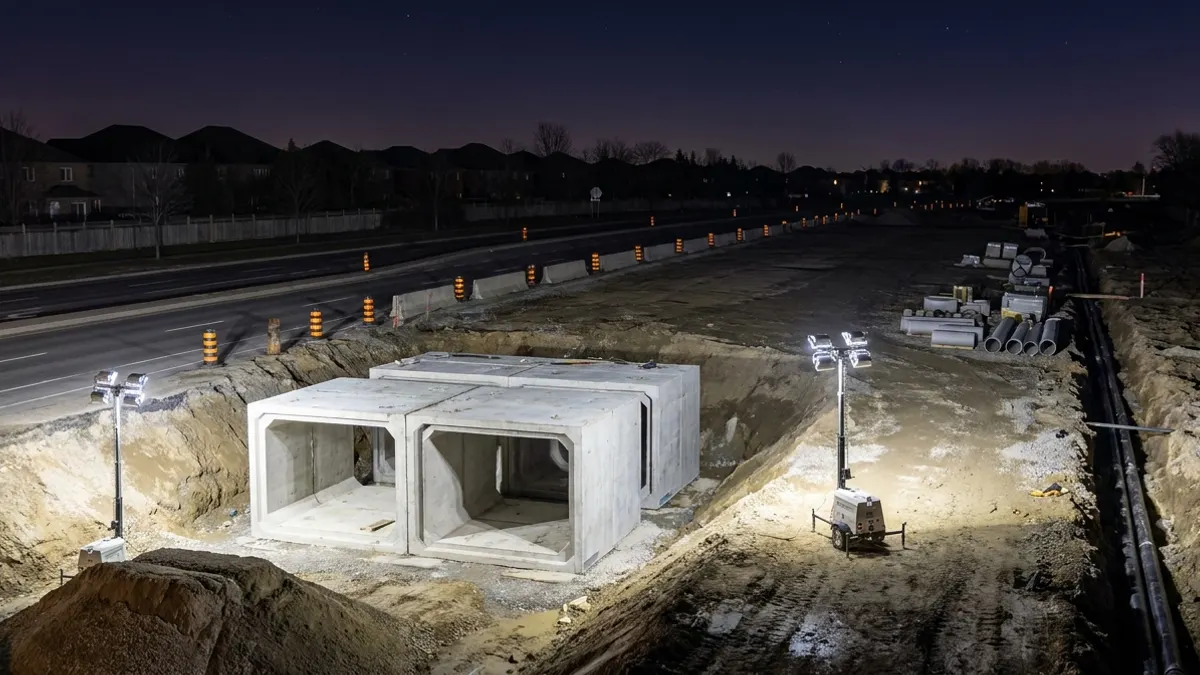
Parsons Corporation is the design consultant and Fermar Paving is the general contractor overseeing a project scope that goes well beyond lane expansion. The work includes widening the roadway from four to six lanes, installing more than two kilometres of 300-millimeter-diameter watermain, and building two box culverts measuring 10 meters wide, four meters high, and up to 52 meters long. Crews will also rehabilitate and extend an existing set of twin culverts and install two overflow culverts using micro tunnelling methods, according to York Region capital delivery director Salim Alibhai.
Additional scope covers a landscaped median, continuous sidewalks on both sides of the road, bicycle lanes, and two new parkettes. Alibhai says the corridor carries 60,000 vehicles a day and that the expanded roadway’s high-occupancy/transit lanes will extend from Major Mackenzie Drive to the Highway 7 ramp to link with York Region’s Bus Rapid Transit network. The project’s roots trace back to a 2009 master transportation plan, with Parsons starting design in 2011 and construction originally slated for 2014. York Region delayed the build to avoid conflicting with construction of the nearby Yonge Street BRT line, a decision Alibhai says was meant to limit disruption to commuters and neighboring communities given how close the two corridors run. “Delivering a major road project can take eight to 10 years to complete,” Alibhai says, noting this one’s origins go back more than 15 years.
What It Means for Subcontractors
- Micro tunnelling crews and specialty excavation contractors have direct work on the two overflow culvert installations, a technique specified to limit surface disruption along the corridor.
- Utility contractors handling watermain work should note the 300-millimeter-diameter, two-kilometer-plus scope, along with the high groundwater conditions flagged by Alibhai in river valley and creek locations where excavation depths are shallower than expected.
- Paving and civil crews should plan around night work windows, since Alibhai says paving and similar tasks may shift to off-peak hours to keep four lanes open during peak travel periods.
- Staffing plans should account for six to eight crews of 35 to 50 workers each during peak construction season, running July through September annually through 2028.
- Landscaping and hardscape subcontractors have parkette and median work built into the scope, alongside continuous sidewalk and bike lane installation on both sides of the corridor.