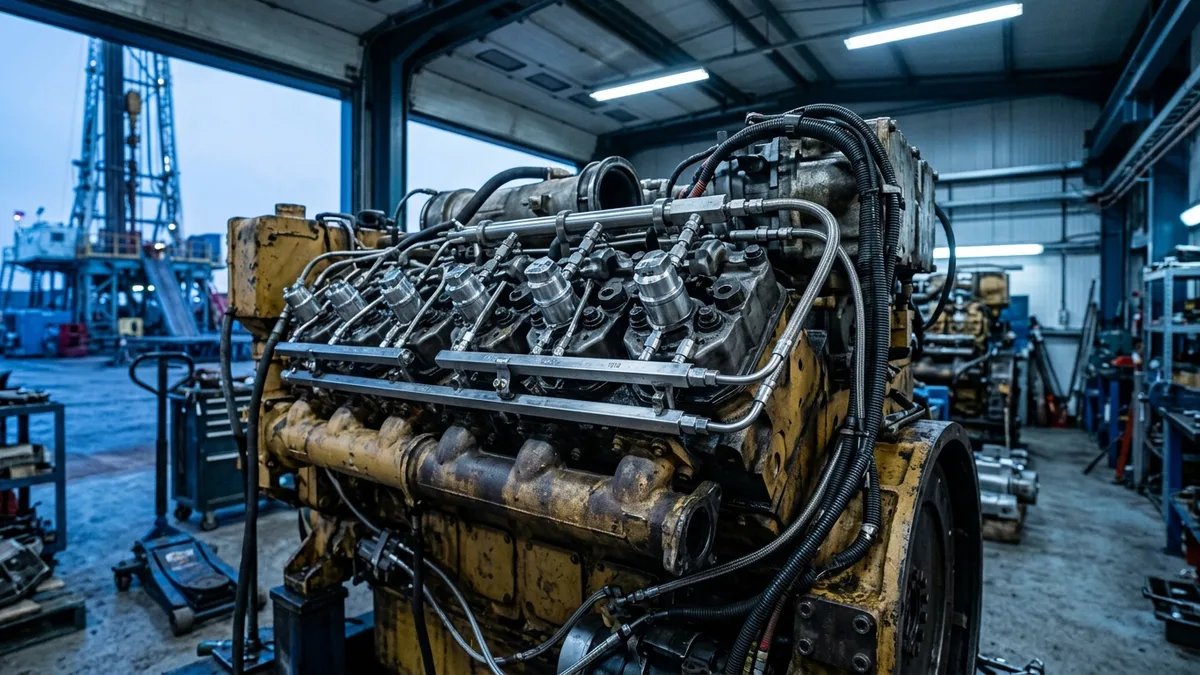
H&P Retrofits 50 Engines With Dual-Fuel System, Cutting Diesel Use by Up to 85%
According to Drilling Contractor, Helmerich & Payne has deployed Caterpillar’s Dynamic Gas Blending Gen 2 Kit on 50 engines across 12 rigs in its US Lower 48 FlexRig fleet, retrofitting existing Cat 3512C Tier 2 diesel engines to run on a blend of diesel and natural gas. The system can displace up to 85% of diesel consumption with natural gas, and during 2024 field trials, a single rig saved more than 94,000 gallons of diesel while recording a peak displacement rate of 75%. For subcontractors operating diesel-heavy equipment on or near drilling sites, this rollout signals a real shift in how the industry expects to meet emissions reduction targets without scrapping existing iron.
Background
Onshore drilling contractors have spent years caught between two competing pressures: the need to cut emissions and fuel costs, and the capital discipline required in a market that punishes overspending. Replacing Tier 2 diesel engines outright with dedicated natural gas or dual-fuel engines would address both emissions and fuel economics, but the upfront capital cost has made that path difficult to justify.
Caterpillar has offered its Dynamic Gas Blending technology for drilling and well services since 2012, according to Drilling Contractor. Those earlier systems were fumigated, meaning they mixed natural gas with intake air upstream of the engine. The Gen 2 Kit takes a different approach. It installs gas injectors at each cylinder’s intake port, paired with an in-cylinder pressure sensing system that monitors injection in real time. The system also requires new cylinder heads and dedicated gas piping, making it a more involved retrofit than its predecessor, but the payoff is significantly more precise control over fuel delivery.
Compatible fuel sources include pipeline-quality gas, field gas, compressed natural gas (CNG), and liquefied natural gas (LNG), giving operators flexibility depending on what’s available at the wellsite. Michael Weidenfeller, Product Strategy Manager at Caterpillar Oil and Gas, told Drilling Contractor that drillers are in an “overhaul wave” with their engines right now, and there is clear demand for gasification solutions that deliver meaningful emissions savings without the price tag of a full engine replacement.
Analysis
The deployment at H&P is notable less for the technology itself and more for what it represents: a workable middle path between doing nothing and doing everything. The pressure on onshore drilling contractors to reduce emissions is real, but so is the pressure to protect margins during periods of rig count volatility. The DGB Gen 2 Kit addresses both by extending the useful life of existing Tier 2 engines rather than replacing them.
The fumigation-versus-port-injection distinction matters here more than it might seem. Fumigated systems have a ceiling on how much secondary fuel they can reliably blend before combustion becomes unpredictable. Port cylinder injection, with its real-time pressure monitoring, allows for tighter control, which in turn enables higher substitution rates. An 85% diesel displacement rate is not a modest improvement. It is a fundamental change in how a rig’s fuel economics work on a day-to-day basis. For a rig that previously consumed thousands of gallons of diesel per week, even a 70-75% substitution rate translates to material cost savings when natural gas is priced below diesel on an equivalent-energy basis.
There is also a strategic dimension here that goes beyond cost. Operators, particularly major independents and public companies with emissions commitments, are increasingly scrutinizing the emissions profiles of their contracted drilling fleets. A contractor running dual-fuel rigs can offer operators a credible way to reduce Scope 3 emissions without requiring new capital allocation on the operator side. That is a competitive differentiator, especially in basins like the Permian where rig competition is intense and operators have options.
The fact that H&P has now scaled this across 12 rigs, including Rig 450 currently working in Texas, suggests the technology has moved past the pilot stage. That is the signal the broader contractor market has been waiting for. When a company of H&P’s scale commits to 50 engines and continues rolling out, it tends to set a new baseline expectation across the industry.
What It Means for Subcontractors
-
Fuel supply is a growing differentiator. If you provide fuel logistics, compression, or gas supply services near drilling operations, the expansion of dual-fuel rigs creates new demand for field gas and CNG/LNG delivery infrastructure at the wellsite level.
-
Equipment expectations are shifting. Subcontractors running their own diesel-powered support equipment, including generators, pump units, and light towers, may face increasing pressure from operators and prime contractors to demonstrate emissions reduction plans of their own. The H&P rollout raises the bar across the board.
-
Retrofit economics deserve a closer look. The DGB Gen 2 approach shows that engine replacement isn’t always the answer. If you’re managing an aging diesel fleet, the economics of retrofit dual-fuel conversion, rather than outright replacement, may be worth evaluating with your equipment vendor before the next major overhaul cycle.
-
Understand what “Tier 2” means for your contracts. The DGB Gen 2 Kit is specifically designed for Cat 3512C Tier 2 engines. As more prime contractors and operators specify emissions standards in their equipment requirements, knowing the tier rating and retrofit eligibility of your fleet becomes a practical contract compliance issue, not just an environmental one.
-
Watch for gas supply requirements on Texas job sites. With H&P’s current Texas deployments and the described compatibility with field gas and pipeline-quality gas, subcontractors working Permian and Texas onshore locations should expect gas infrastructure and fuel handling requirements to appear more frequently in site-specific work packages.