Eagle Mountain-Woodfibre Gas Pipeline Tunnel Achieves Breakthrough
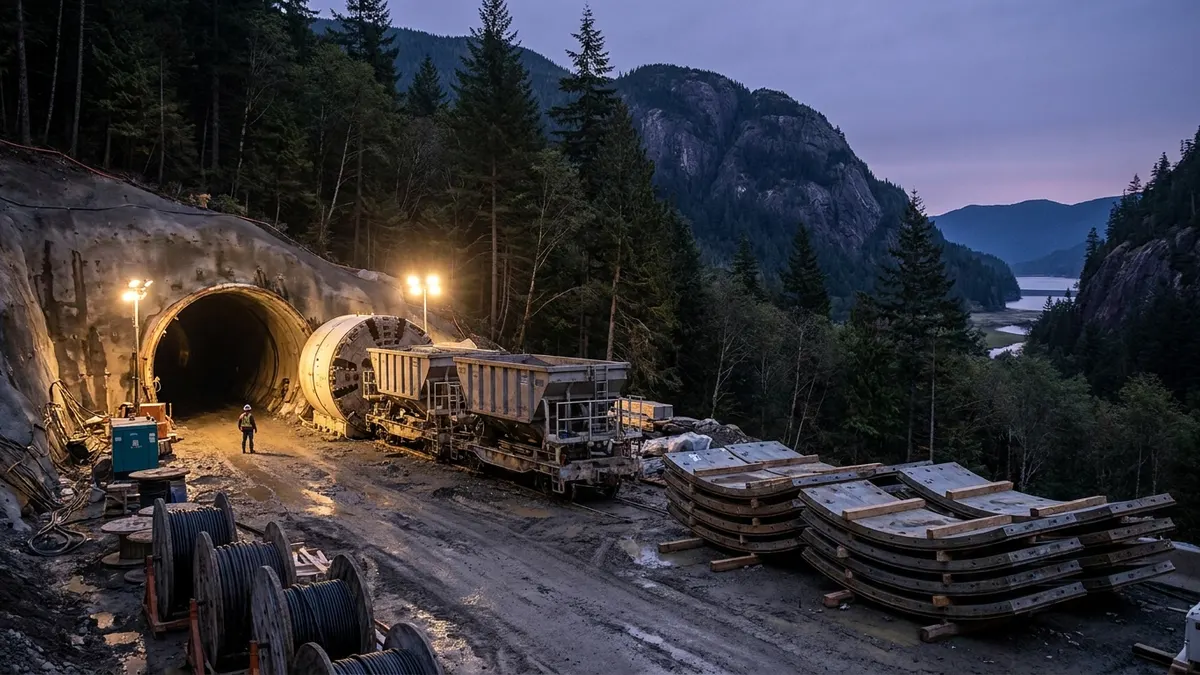
FortisBC confirmed on September 18 that the hard-rock tunnel boring machine on its Eagle Mountain-Woodfibre Gas Pipeline Project broke through beneath Monmouth Mountain, connecting with the previously completed soft-ground tunnel and finishing a continuous 8.86-kilometre underground route between Squamish and the Woodfibre LNG site, tunnelbuilder.com reports.
The crossing was built by the Frontier-Kemper/Michels joint venture under a tunnelling contract originally awarded to Frontier-Kemper Constructors for approximately C$341 million. Two tunnel boring machines worked from opposite ends through very different ground conditions: a hard-rock TBM excavated about 5.02 km of 4.5-metre-diameter tunnel from the Woodfibre side through the granite mass beneath Monmouth Mountain, while a slurry TBM excavated about 3.8 km of 4.1-metre-diameter tunnel from the Squamish side, including the sensitive crossing beneath the Skwelwil’em Squamish Estuary. The alignment descends from roughly 50 metres above sea level to about 25 metres below sea level at its deepest point before rising again toward the BC Rail portal.
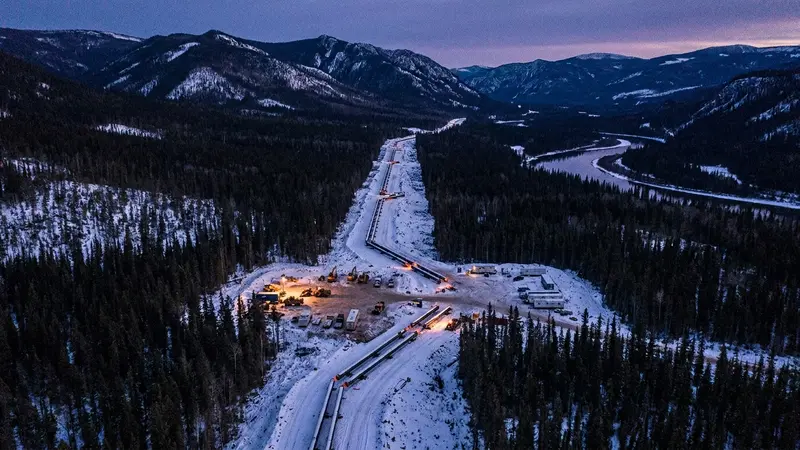
Placing the pipelines underground was a condition of the Squamish Nation Environmental Assessment Agreement, which required the route to avoid surface disturbance within the Skwelwil’em Squamish Estuary Wildlife Management Area. The tunnel alignment was developed in consultation with the Squamish Nation.
With excavation complete, crews will now dismantle and remove the TBM equipment and prepare the tunnel for pipeline installation using a pipe-thrusting method. The tunnel will ultimately carry two separate 24-inch high-pressure natural gas pipelines, the primary line and a backup. The broader Eagle Mountain-Woodfibre Gas Pipeline Project comprises roughly 47 km of new 24-inch pipeline between north of Coquitlam and the Woodfibre LNG site, plus about 3 km of additional pipeline near Westwood Plateau in Coquitlam, connecting FortisBC’s existing transmission system to the Woodfibre LNG facility on Howe Sound.
What It Means for Subcontractors
The project shows the scale of specialty tunnelling work now underway to support West Coast LNG buildout: a nine-figure civil contract, dual TBM crews operating for roughly three years, and a hand-off phase ahead as attention shifts from excavation to TBM extraction, tunnel outfitting, and twin pipeline installation. Subcontractors with pipe-thrusting, dewatering, or underground utility installation capability should watch for RFPs as FortisBC moves into the pipeline-installation phase, alongside ongoing surface pipeline work between Coquitlam and Squamish.