EIA Sees Record US Crude Output in 2026 on Permian, Gulf Gains
US crude oil production will average a record 13.8 million b/d in 2026, up from the prior record of 13.7 million b/d in 2025, Oil & Gas Journal reports, citing the US Energy Information Administration’s latest Short-Term Energy Outlook.
Market Impact
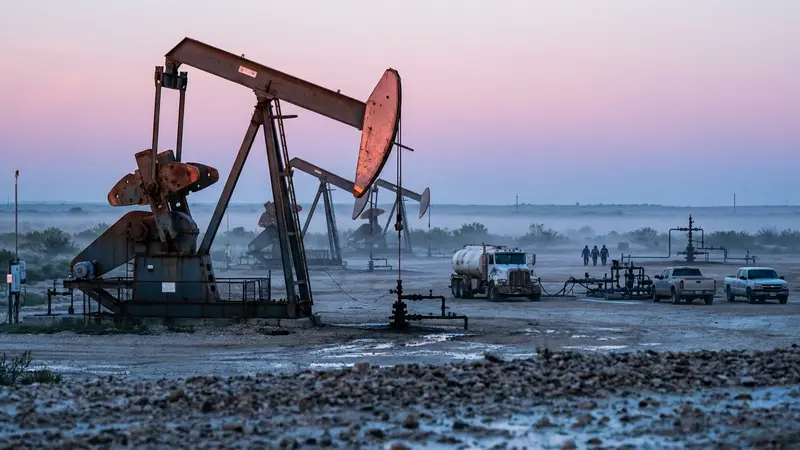
Crude output averaged 13.7 million b/d during the first half of 2026, a 2% increase over the same period a year earlier, with EIA crediting most of the gain to the Permian basin and the Federal Gulf of Mexico. Permian production is forecast to average 6.8 million b/d in 2026, up 3% from 2025, as West Texas Intermediate averaged $84/bbl through August, well above the $65/bbl seen in 2025. That price level sits above reported breakevens: the Dallas Fed Energy Survey put average breakeven prices at $69/bbl in the Midland basin and $63/bbl in the Delaware basin as of March.
In the Gulf of Mexico, crude production rose 10%, or 0.2 million b/d, in the first half of 2026 versus a year earlier, and EIA expects full-year Gulf output to increase 3%, or 0.1 million b/d. Four projects that started up over the past year are driving that growth: the Shenandoah floating production unit, averaging 70,000 b/d since July 2025; the Ballymore subsea tieback, averaging 58,000 b/d since April 2025; the Whale floating production unit, averaging 38,000 b/d since January 2025; and the Salamanca floating production unit, averaging 25,000 b/d since late 2025. EIA said four additional, smaller projects are expected online by yearend, adding further support to Gulf volumes.
What It Means for Subcontractors
- Permian drilling and completions crews in the Midland and Delaware basins should expect sustained activity through 2026, with WTI prices ($84/bbl through August) running well above the $69/bbl and $63/bbl breakevens operators reported to the Dallas Fed in March.
- Offshore service providers, including subsea installation, hookup, and commissioning contractors, have four new Gulf of Mexico floating production and tieback projects (Shenandoah, Ballymore, Whale, Salamanca) already ramping output, plus four additional smaller projects expected to start up by the end of 2026, meaning ongoing demand for offshore support vessels and platform maintenance crews.
- Fabrication, hookup, and marine logistics firms tied to Gulf of Mexico floating production units should track the yearend startup window for the four smaller projects EIA flagged, since commissioning and tie-in work typically clusters in the months before first oil.
- E&I and pipefitting contractors serving Permian pads can use the basin’s 3% year-over-year production growth forecast for 2026 as a planning signal for continued pad development and gathering system tie-ins in Texas and New Mexico.