Delfin Commits $5 Billion to First US Floating LNG Terminal, Targeting 2030 Production Start
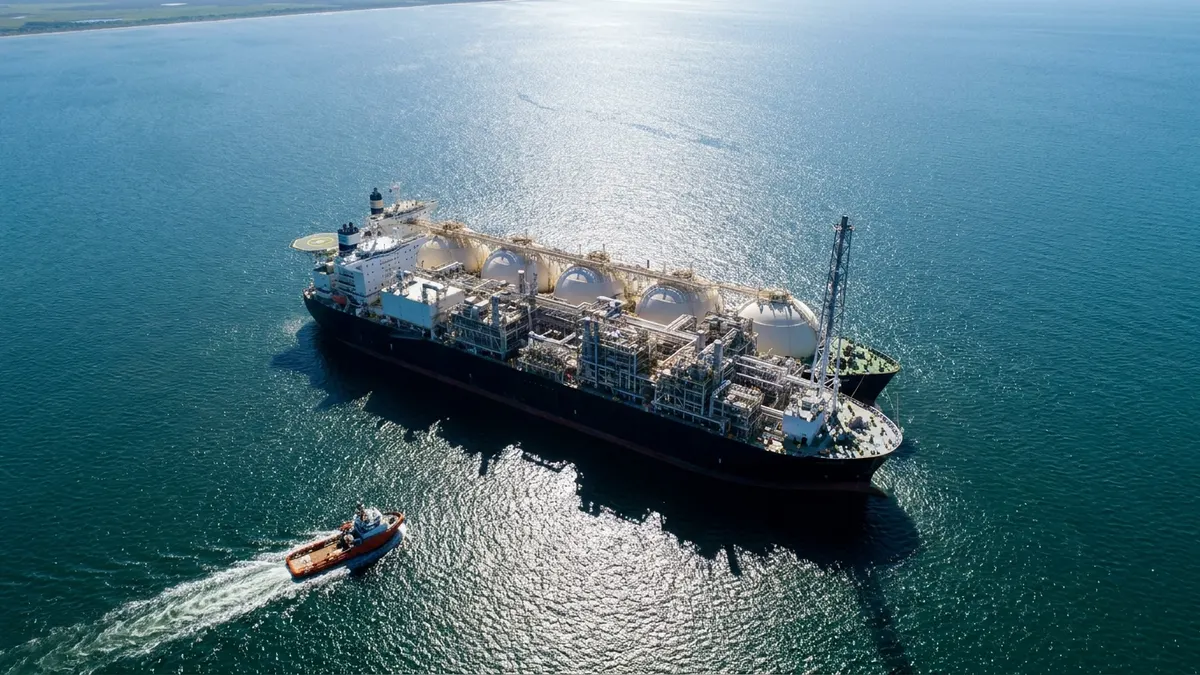
According to Rigzone, Houston-based Delfin Midstream Inc has made a final investment decision (FID) on a $5 billion floating LNG facility offshore Cameron Parish, Louisiana, marking the first time a floating liquefied natural gas project has reached this milestone in the United States. The project, called Delfin FLNG 1, is targeting a production start in 2030 and is backed by a group of investors led by Global Infrastructure Partners (GIP), a part of BlackRock.
Background
Delfin FLNG 1 is phase one of a larger deepwater port project offshore Cameron Parish, Louisiana. According to Rigzone, the full Delfin LNG project holds federal authorization to export up to 13.2 million metric tons per annum (MMtpa) of LNG. Phase one alone carries an expected export capacity of 4.4 MMtpa, which Delfin describes as the largest FLNG project globally.
The project has cleared a significant regulatory runway. The Department of Energy granted a permit to export to free trade agreement countries on February 20, 2014, and a non-FTA approval on June 1, 2017. Approved export volume is equivalent to approximately 657.5 billion cubic feet per year of natural gas, or 1.8 billion cubic feet per day. Delfin says the project has also secured all necessary permits and licenses required to begin construction.
Long-term sales agreements are in place with Vitol, Expand Energy, Centrica, and Gunvor. Investors alongside GIP include Mitsui O.S.K. Lines (MOL), Vitol, and Diameter Capital Partners. Delfin says it is already working toward FIDs in 2027 for two additional vessels, with a total of four FLNG vessels originally proposed, each carrying 3.3 MMtpa capacity.
Analysis
FIDs of this scale are rare, and this one carries outsized significance. Floating LNG is a relatively new execution model globally, and the United States has never completed one. Delfin is threading a needle between proven LNG export infrastructure (think the fixed terminals already operating along the Gulf Coast) and the offshore floating model that has seen adoption in other parts of the world. Getting to FID on a $5 billion project with long-term offtake agreements in place and a credible investor group signals that this project has real momentum, not just ambition.
The 2030 production target is aggressive but not implausible given that permits are already secured. The construction clock is now running. With two more FIDs potentially coming in 2027 for additional vessels, the procurement and construction activity window could extend well into the early 2030s, creating a sustained workload rather than a single-year spike.
The Cameron Parish, Louisiana location is critical context for anyone tracking Gulf Coast field activity. This corridor already hosts significant LNG and petrochemical infrastructure, which means the local subcontractor base is familiar with the safety and permitting environment. But floating LNG adds complexity that fixed-terminal work does not, including marine interface work, mooring systems, and the integration of processing equipment onto a vessel hull. That specialization premium will matter when contracts are scoped.
The investor lineup also tells a story. MOL is described by Rigzone as the owner of the world’s largest fleet of LNG carriers, and its involvement suggests vessel construction and marine operations will be tightly managed at the owner level. Subcontractors should expect rigorous qualification requirements and structured procurement processes, consistent with what major energy infrastructure financiers like BlackRock’s GIP typically demand.
Mark Florian of GIP noted the project is backed by “proven construction partners,” which suggests a degree of contractor alignment may already be underway at the tier-one level. For smaller subs, the window to get on approved vendor lists is now, not in 2028.
What It Means for Subcontractors
- Pipeline and marine mechanical subs should be tracking Delfin’s procurement activity closely. A project of this scale offshore Louisiana will require substantial subsea pipeline, mooring, and marine construction work in addition to topside mechanical scope.
- The 2030 production target means construction mobilization is likely in the 2027 to 2028 range. Subcontractors interested in this work need to begin vendor qualification efforts now, not when the RFQs drop.
- Cameron Parish is established LNG territory. Local subs with Gulf Coast LNG or petrochemical experience are well-positioned, but floating LNG has unique marine interface requirements that may favor contractors with offshore fabrication or vessel-integration backgrounds.
- Two more FIDs are targeted for 2027. If Delfin follows through, this isn’t a one-project opportunity. Subs who perform well on phase one will have a significant advantage in subsequent vessel scopes.
- Investor-grade projects mean compliance-heavy procurement. Expect detailed prequalification, HSE documentation, and financial vetting consistent with major infrastructure financing standards. Get your paperwork in order early.
- Watch the tier-one contractor awards. GIP’s reference to “proven construction partners” suggests some contractor relationships may already be forming. Identifying the prime contractors early is the fastest path to subcontract opportunities on a project this large.