Data Center Gas Demand Drives Biggest Pipeline Push Since 2008
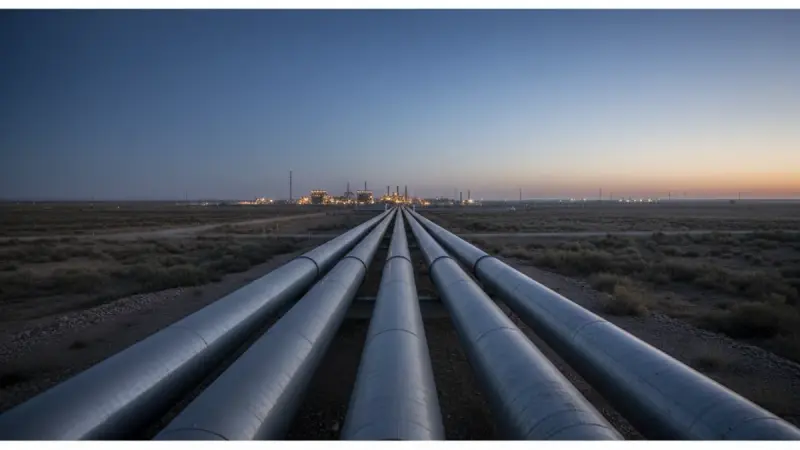
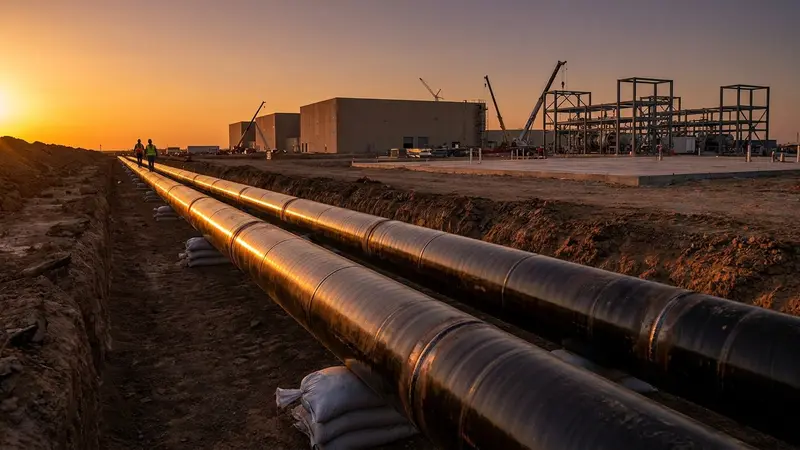
Gas pipelines are being built to feed AI data centers, and a new Pipeline Technology Journal analysis calls the resulting expansion of U.S. gas power plants and pipeline networks the largest since the 2008 shale peak. For field contractors, the useful part is the scope of work it describes: interstate looping, added compression, and high-pressure laterals running straight into data center campuses.
The analysis names no projects, owners, contract values or schedules. This article separates what the source says from what we infer about timing and trade demand.
Background
The Pipeline Technology Journal piece starts with the load. A single hyperscale campus can draw several hundred megawatts, and some planned developments approach one gigawatt, which the analysis likens to the power needs of a medium-sized city. AI workloads need round-the-clock “firm power,” it says, and renewables plus batteries cannot cover multiday gaps at grid scale. Nuclear and small modular reactors are described as years away because of regulatory hurdles and construction timelines. That leaves natural gas as the bridge fuel on immediate deployment schedules.
On the physical buildout, the source says pipeline operators are expanding interstate capacity, looping existing systems and building high-pressure laterals into data center campuses. It places this activity in Texas, the Mid-Atlantic and the Midwest. It also cites midstream reporting that gathering line expansions, added compression capacity and new laterals are moving in Texas, the Marcellus region and the Mid-Atlantic.
The analysis highlights a shift in how gas is used. After 2008, new pipe largely moved gas to LNG export ports or to cities for heating. This round burns gas locally to generate power for compute. Developers facing years-long grid interconnection queues are building “behind-the-meter” gas plants and microgrids on site or along major interstate pipelines, fed by dedicated laterals.
The source also lists three constraints: gas turbine manufacturing backlogs extending late into the decade, slow permitting and right-of-way acquisition, and a widening gap between announced data center capacity and operational timelines. Some projected gas demand gains are being pushed deeper into the 2020s as a result. Utilities and pipeline operators still describe AI load growth as a multi-decade structural shift.
Analysis
What the source supports. The work types are clear: looping, compression additions, laterals and gathering line expansion. The regions are Texas, the Marcellus and the Mid-Atlantic, plus the Midwest for interstate and lateral work. The headline claim of “biggest since 2008” is the publication’s characterization, not a figure we can verify from the piece. There is no mileage, horsepower or dollar total behind it.
What we infer. The following is our reasoning, not sourced fact.
- Laterals may move first. A dedicated lateral to a single campus is a shorter, narrower scope than an interstate expansion. If the permitting burden is lighter, these could reach construction sooner than large-diameter mainline work. The source does not say this, and it does flag permitting and right-of-way as slow across the board.
- Turbine backlogs can strand pipe. If turbines arrive late, the gas supply may sit idle or be re-sequenced. For a crew, that shows up as schedule slips, demobilization risk and standby time. The source’s note on execution delays points the same direction.
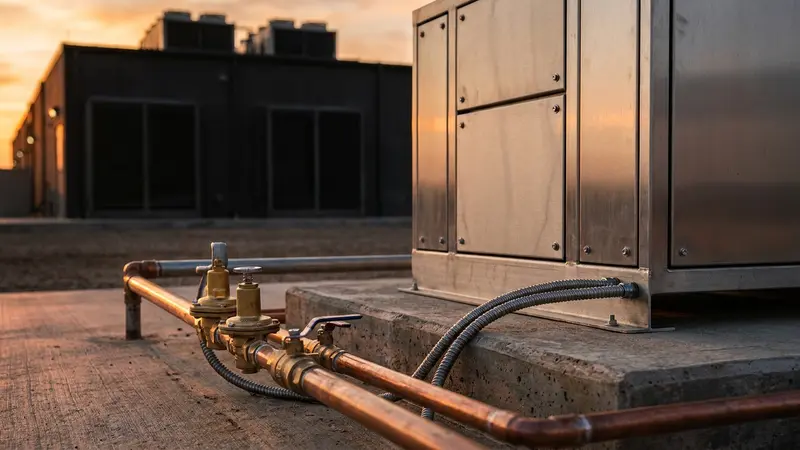
- Compression is the quiet volume driver. Adding compression capacity is cited in Texas, the Marcellus and the Mid-Atlantic. Station work typically pulls mechanical, piping, electrical and instrumentation crews, as well as civil crews for pads and foundations. That is our read of the scope, not detail from the article.
- HDD and welding demand depend on route. The source does not mention horizontal directional drilling. Lateral routes into developed campus areas would plausibly involve road, utility and water crossings, so HDD and tie-in welding are logical trades to expect. Treat that as a prospecting hypothesis until specific projects surface.
The practical risk is a mismatch between the announcement cycle and the award cycle. The source itself says announced data center capacity is outrunning operational timelines. A subcontractor who staffs up on press-release volume could end up with idle crews.
What It Means for Subcontractors
- Pursue lateral and compression packages first, mainline second. The source supports laterals into campuses, looping and added compression in Texas, the Marcellus and the Mid-Atlantic. Pipefitting, pipeline welding, and station mechanical and E&I crews in those regions have the most direct fit.
- Pitch behind-the-meter sites as a separate market. On-site gas microgrids fed by dedicated laterals mean small-diameter, high-pressure gas piping, meter and regulation stations, and tie-ins at the plant fence. Target the developers and power plant EPCs, not just the pipeline operators. The source names none, so build the target list from local data center announcements in Texas, the Midwest and the Mid-Atlantic.
- Price schedule risk into contracts. The source cites turbine backlogs extending late into the decade and a gap between announced and operational timelines. Ask for delay, standby and demobilization language on any lateral tied to a not-yet-delivered turbine, and document standby costs from day one.
- Plan permitting lead time into your backlog. The source calls environmental approvals, federal permits and interstate rights-of-way time-intensive. Do not count a project in your backlog until permits are in hand, because crews tied to a pending approval are crews you cannot redeploy.
- Expect no bid-stage visibility from this story. The analysis gives no EPC awards, packages out for bid, letting dates or named operators. Treat everything here as market direction. The next gate to watch is project-specific: a filed pipeline application or a named data center developer announcing a gas supply arrangement, each of which would give you an owner to approach.
- Keep HDD and civil capacity flexible. The source does not mention HDD, so we are not forecasting volume. If you run HDD or civil crews, line up crossing and site-prep work on lateral routes in the three named regions, and be ready to quote when a specific route is announced.