Valley Water's $1.88B Anderson Dam Contract Sets Up 7-Year Rebuild
Daily Commercial News reports that Valley Water’s board of directors has formally awarded a $1.88 billion construction contract to the Flatiron Dragados Sukut ADSRP Joint Venture, clearing the way for a seven-year rebuild of Anderson Dam in eastern Santa Clara County, California. The award moves one of the largest dam projects in the US toward a 2027 construction start and puts a major slug of subcontract work on a clock that field service firms in California and the broader West should be watching closely.
Background
Anderson Dam, built in 1950, is the largest of Valley Water’s 10 reservoirs, so large the agency says all nine of its other reservoirs could fit inside it, according to Daily Commercial News. Seismic safety concerns have forced the agency to restrict storage levels for years, leaving the reservoir operating at a fraction of capacity while a fix moved through planning, design and permitting.
That regulatory path cleared in 2026. The Federal Energy Regulatory Commission approved the retrofit in spring 2026 and authorized decommissioning of the dam’s hydroelectric generating facility, which operated for roughly three decades but has sat idle since 2018. The US Army Corps of Engineers followed in June with a water resources permit, the last major hurdle before Valley Water could award construction.
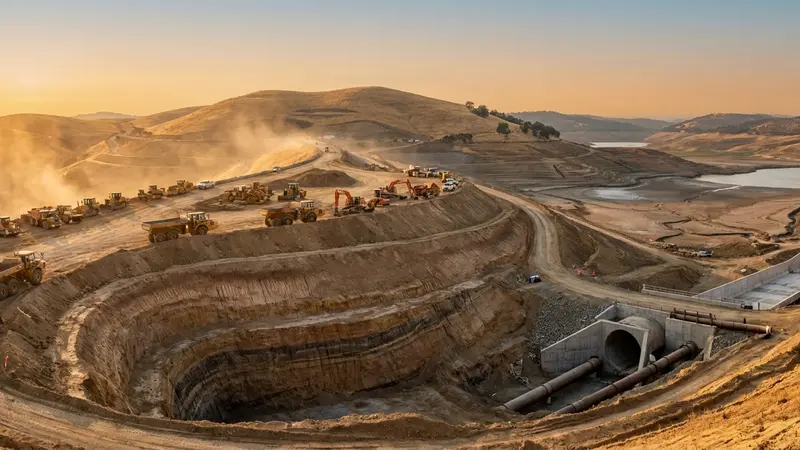
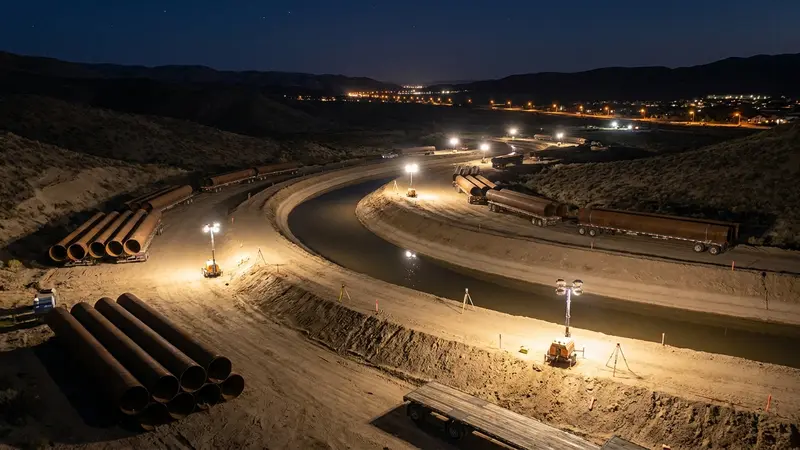
The $2.8 billion overall project includes reconstruction of portions of the dam embankment and spillway, installation of new outlet pipes, and a series of seismic and safety upgrades. Before that main retrofit contract can mobilize, Valley Water has been running five preparatory projects to allow the reservoir to sit empty safely during construction. The centerpiece is the Anderson Dam Tunnel Project, which is in its final stages and expected to be complete later this year. It swaps the dam’s existing four-foot outlet pipe for a 13-foot diameter tunnel, giving Valley Water the capacity to divert water into Coyote Creek while the main works proceed. Valley Water expects the tunnel functional before winter 2026. Since 2023, the agency has secured more than $114 million in state and federal grants tied to this and other infrastructure work, per Daily Commercial News.
Analysis
The sequencing here matters more than the headline dollar figure. The tunnel and the other four supporting projects are essentially finished or nearly so, which means the enabling civil and outlet-works packages that would normally be the first wave of subcontract opportunity have already been let and executed largely outside this new $1.88 billion award. What’s left for the Flatiron Dragados Sukut joint venture to distribute starting in early 2027 is the core retrofit scope: embankment demolition and reconstruction, spillway rebuild, new outlet pipe tie-ins, and the seismic retrofit systems themselves.
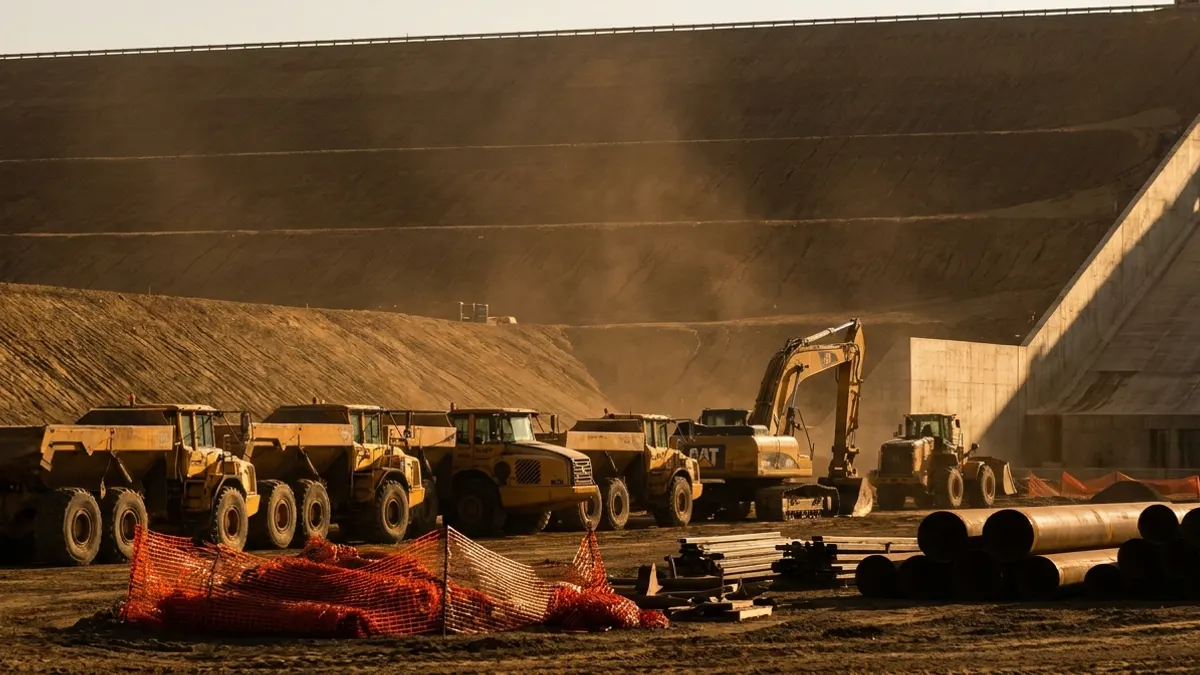
Given the scale, a seven-year construction window, and the presence of Flatiron and Dragados (both heavy civil and dam-experience contractors) as lead JV partners, expect the earliest subcontract packages to center on earthwork, embankment fill, and demolition, the trades needed to get the empty reservoir basin ready for reconstruction. Spillway concrete work and outlet pipe installation typically follow once the embankment is opened up, meaning those packages likely won’t hit the street until well into 2027 or 2028. Seismic retrofit specialty work, ground improvement, grouting, instrumentation, and anchoring systems, tends to be awarded in the middle phases of a project like this, once the structural geometry is locked in.
Valley Water framed the project’s payoff broadly: restored water supply reliability, groundwater recharge, flood protection for the roughly two million residents the district serves, and recreational access along Coyote Creek. But for subcontractors, the real signal is timing. A $1.88 billion prime contract on a seven-year schedule means the JV will be issuing a steady stream of packages rather than one lump procurement, and firms that position early for embankment and civil work stand a better chance of also picking up follow-on scopes as the project moves into spillway and seismic phases.
What It Means for Subcontractors
- Earthwork, demolition, and embankment fill packages are the most likely first wave once construction starts in early 2027; contractors with heavy civil dam experience should be positioning now with Flatiron Dragados Sukut.
- Spillway concrete and outlet pipe tie-in work will likely follow embankment reconstruction, meaning bid opportunities in that scope probably won’t surface until 2027-2028 based on the project’s sequencing.
- Seismic retrofit specialty trades, ground improvement, grouting, anchoring, and instrumentation, typically get awarded mid-project; firms in these niches should track JV subcontractor outreach as the embankment phase wraps.
- The Anderson Dam Tunnel Project, the last of five preparatory works, is expected complete before winter 2026, signaling the main $1.88 billion retrofit contract is on track for its early 2027 start.
- Valley Water has already pulled in more than $114 million in state and federal grants since 2023, a signal of funding stability worth noting for firms weighing bid/no-bid decisions on a seven-year job.
- California-based mechanical, structural, and geotechnical subcontractors should watch for Flatiron Dragados Sukut’s subcontractor prequalification announcements as the primary entry point into this contract.