Traffic Exposure Was the Top Hazard on Caltrans LA Tunnel Relighting
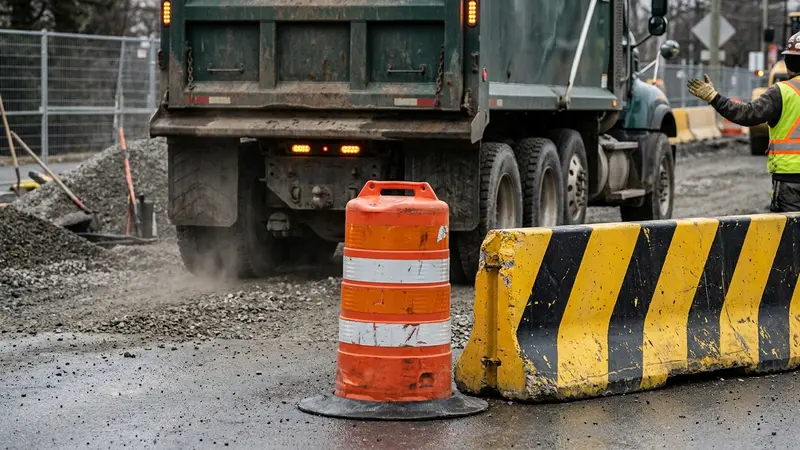
Traffic exposure, not the lighting work itself, was the most dangerous variable on the I-405/I-105 tunnel relighting in Los Angeles, ENR reports in its 2026 West Best Projects coverage. The job won Best Project, Highway/Bridge, and an Award of Merit in Safety.
How the Crew Cut Traffic Risk
Aldridge Electric, the prime contractor, relit three tunnels at the junction of two highways carrying more than 250,000 vehicles a day. Crews worked inside the tunnels under overnight closures. Breaches were frequent enough that the team tracked them through daily task analysis, according to ENR.
The team made three changes. California Highway Patrol was brought in to manage the closures directly. An attenuator blocked the tunnel entrance outright instead of just marking it. A foreman ran a text chain that told every worker the moment each closure was set and each tunnel was safe to enter.
The finished system has more than 6,400 ft of lighting on 835 fixtures in two sizes, one for daylight and one for night. Sensors outside each portal read ambient light, and sensors inside compensate as lamps depreciate. ENR says the job finished below budget and six months ahead of schedule. Aldridge also moved fixture assembly to its prefabrication shop. Custom tracks and brackets were built there, and each fixture was inspected and tested as part of its track before shipping. Custom racks let a field crew lift and set each track without staging.
Project stage: complete. ENR’s coverage does not describe the Caltrans closure-permit process, the traffic control plan (TCP) contents, or closure hours, so the steps below are bid-side checks drawn from what Aldridge did.
What It Means for Subcontractors
- Ask about CHP in pre-bid Q&A. Owner: the prime’s estimator, with the MOT sub. Ask Caltrans in writing whether CHP closure management is in scope and who pays for it. Do this before the bid due date, since Aldridge used CHP to manage closures directly.
- Require a physical blocker in the TCP. Owner: the traffic control sub (Maneri Traffic Control held this role on the Aldridge job). Aldridge blocked the tunnel entrance with an attenuator rather than relying on markings. Bid it as a line item and reject a plan that only marks the lane.
- Set a written “closure set, tunnel safe” signal. Owner: the electrical foreman. Aldridge’s text chain alerted every worker at both moments. Put the same rule in the safety plan, so no one enters until the message goes out.
- Log every breach. Owner: the safety lead. Aldridge tracked breaches through daily task analysis. Build a breach log into your daily JHA and review it weekly, so repeat intrusions trigger a plan change.
- Pin down closure windows and permit lead time before pricing. Owner: the prime’s scheduler, who should get the Caltrans closure-permit steps, approval times and allowed hours in writing during pre-bid. Price standby for closures that don’t happen.
- Pitch prefab to cut live-traffic hours. Owner: the electrical PM. Aldridge shifted assembly of 835 LED fixtures to its shop and sent them as tested, ready-to-set tracks. Offer the same approach in your bid to shrink exposure inside brief overnight windows.