Solar Developers Race July 4 Deadline as Clean Energy Tax Credits Face the Axe
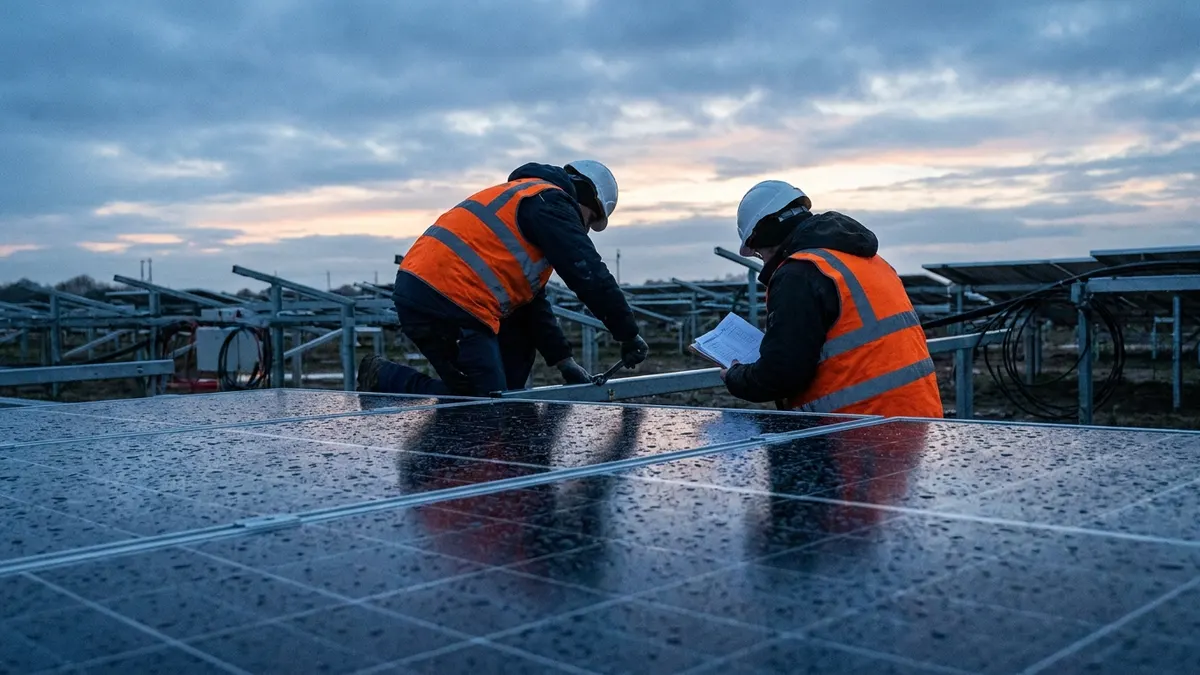
According to Oil & Gas 360, U.S. solar developers have secured federal subsidies for a wave of projects large enough to nearly double current capacity, all in a race to beat a July 4 deadline tied to the Trump administration’s planned elimination of clean energy tax credits. The loss of those credits, worth at least 30% of project costs, is projected to send renewable power costs sharply higher for any projects that miss the cutoff.
Background
The Inflation Reduction Act created a suite of clean energy tax credits that dramatically reduced the upfront cost of solar, wind, and other renewable projects. According to Oil & Gas 360, developers have been moving aggressively to get projects into the subsidy pipeline before the administration’s deadline closes that window. The scale of the activity, enough to potentially nearly double existing capacity, suggests a construction surge unlike anything the renewable sector has seen in a compressed timeframe.
The July 4 deadline creates a hard stop. Projects that qualify before the cutoff can still capture credits worth at least 30% of costs. Projects that don’t are looking at a fundamentally different economics equation, one where costs rise sharply and some developments may no longer remain economically viable at all.
Analysis
For field operations professionals, this situation has a familiar shape: a regulatory deadline creates a rush, the rush creates demand compression, and demand compression means subcontractors hold more leverage than usual, right up until the moment the window closes and the market goes cold.
The scale described by Oil & Gas 360 is what makes this cycle particularly significant. A development pipeline large enough to nearly double existing solar capacity does not move smoothly through a construction supply chain. Labor, equipment, and materials all get pulled toward the same projects on the same timeline. That is a classic recipe for schedule slippage, cost overruns, and disputes over who bears the risk when a deadline-driven project misses its target.
The 30% figure is also worth examining closely. A tax credit at that level isn’t a bonus, it’s a foundational part of project financing. When that credit disappears, some projects won’t just become more expensive, they’ll become unfinanceable. Developers know this, which explains the urgency. But urgency in project development rarely translates to smooth execution on the ground.
The post-deadline picture matters too. If a significant portion of this pipeline stalls or gets canceled after July 4, the subcontractors who staffed up to meet the rush will be carrying capacity they can’t deploy. The boom-bust dynamic is a real risk for any field service company that over-commits to renewable work without building in contract protections.
The price escalation angle cuts both ways. Higher project costs post-credit mean fewer projects get built, which reduces long-term workload for renewable-focused subcontractors. But in the short window before the deadline, those same subcontractors have genuine pricing power. The question is whether they’re positioned to use it.
What It Means for Subcontractors
-
Pricing leverage is real right now. Developers need crews, equipment, and materials on compressed timelines. That demand pressure gives subcontractors room to negotiate stronger rates and terms before the July 4 window closes.
-
Build deadline risk into your contracts. If a project’s economics depend on qualifying for the tax credit, and your scope is on the critical path, make sure your contract clearly defines what happens if the project stalls, gets delayed, or gets canceled after the cutoff.
-
Watch your exposure on mobilization. Staffing up or purchasing materials to meet a deadline-driven schedule means you carry cost risk if the project doesn’t proceed. Milestone-based payments and mobilization fees are worth pushing for on any rush work.
-
Don’t over-commit capacity to a single demand spike. The projects rushing to beat July 4 represent a compressed surge, not a sustained pipeline. Subcontractors who treat this as a new baseline and expand accordingly could find themselves with excess capacity in the second half of the year.
-
Post-deadline, cost escalation will reshape the project mix. According to Oil & Gas 360, the loss of these credits is expected to raise renewable power costs sharply. That means fewer greenfield projects moving forward after the deadline. Subcontractors should be mapping their backlog now to understand how much of their future work is tied to post-credit economics.
-
Stay close to your developer clients. Project financing decisions are being made quickly. A developer who is confident their project qualifies may be a strong customer through late 2026. One who misses the deadline may pause work entirely. Knowing which situation your clients are in is essential for your own planning.