Ksi Lisims Locks In 20-Year SEFE LNG Deal as FID Window Narrows
A binding 20-year contract with a German buyer moves the $10 billion Ksi Lisims LNG project one step closer to a final investment decision (FID), and that puts the BC north coast contractor pool on a short clock. The Canadian Press reports, via the Journal of Commerce, that Ksi Lisims has finalized a sale and purchase agreement with Securing Energy for Europe (SEFE) for one million tonnes per year of LNG, with deliveries to begin in the early 2030s.
Background
SEFE and Ksi Lisims signed an initial heads of agreement in May 2026. The new binding agreement converts it into a firm 20-year commitment. According to the report, the project now has binding contracts for seven of its 12 million tonne per year capacity, and two more deals are in preliminary stages.
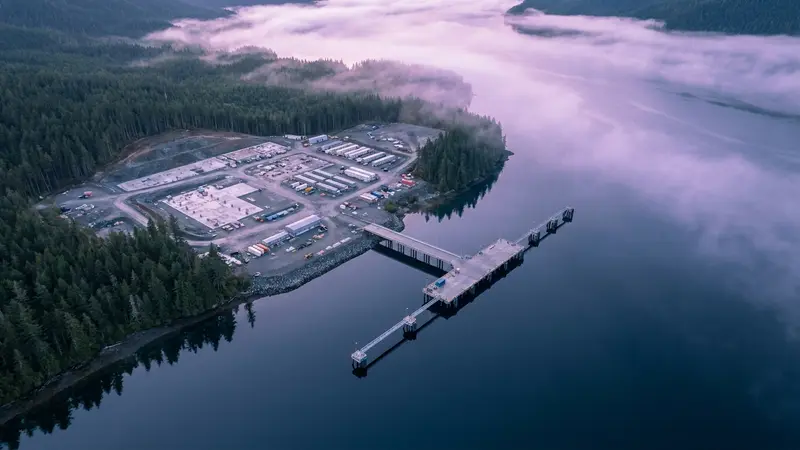
The project sits on the north coast of British Columbia near the Alaska border, about 15 kilometers from the village of Gingolx in Nisga’a territory. The Journal of Commerce project listing shows it in the “Final Planning” stage, not construction, with data current as of October 27, 2026.
Houston-based Western LNG is the lead developer and future operator. It is partnered with Rockies LNG, a consortium of Canadian natural gas producers, and the Nisga’a Nation, on whose lands the project would be located. The report says the project has regulatory approval and that the partners aim to reach FID this year.
Analysis
The stage matters more than the headline. A signed SPA is not a construction notice. The source describes final planning and a target FID, not a mobilization date. With roughly two months left in 2026 as of the report date, the partners’ stated aim leaves little room to slip. If FID lands by December 31, 2026, subcontract awards could start moving early in 2027. That timing is our inference, not something the source states.
Contracting is solid but not complete. Our arithmetic: seven of 12 million tonnes per year is about 58% of capacity under binding contracts. That leaves about five million tonnes uncontracted, with two preliminary deals that could cover some of it. SEFE’s volume is about 8% of nameplate capacity. The source does not say how much contracted volume the partners need before sanctioning, so the FID decision remains the key unknown.
Ownership is the procurement map. The source names three parties: Western LNG as developer and operator, Rockies LNG as the producer consortium, and the Nisga’a Nation as the landholder and partner. It does not name an EPC contractor, and we found none in the source material. Treat the EPC as unannounced until the partners say otherwise. Because the Nisga’a Nation is a project partner on its own lands, we would expect local participation to shape how work is packaged and awarded. The source does not describe procurement terms, so that is also inference.
Politics adds a variable, but not a negative one. Headlines on the same page report that the BC Conservatives won a majority, with Lorne Doerkson as premier-designate, and that Doerkson has pinned growth hopes partly on forestry and an LNG opportunity. We have only the headlines, not the policy detail. Still, a project that already holds regulatory approval and has a new binding contract is the kind of file a new government is likely to want to see sanction.
What It Means for Subcontractors
Ranked by lead time, with the earliest actions first:
- Now through FID (targeted by December 31, 2026): get in front of the Nisga’a Nation and its business partners. The project is on Nisga’a lands and the Nation is a named partner. BC civil, marine and camp firms should pursue joint ventures or supply arrangements with Nisga’a-affiliated businesses before packages are defined. The source does not describe a formal procurement channel, so ask the Nation directly how local participation will be handled. Other First Nations in the region may also have a role, but the source does not say.
- Now through early 2027: line up prequalification for camp, marine and civil scopes. The site is remote, 15 kilometers from Gingolx on the north coast. Our inference is that accommodation, marine access and site preparation are likely early scopes. The source does not confirm any packages. Have safety records, insurance and bonding documentation current so you can respond quickly if owner or EPC prequalification opens after FID.
- At FID: confirm the EPC and who controls subcontracting. The source names no EPC. Western LNG, as lead developer and future operator, is the owner-side contact to track. Mechanical, piping, electrical and instrumentation firms should wait for the EPC award before spending on bids, since those scopes usually go through the contractor.
- Early 2027 and beyond: size crew capacity against the early 2030s delivery date. Deliveries are set for the early 2030s, so the build must finish ahead of that. Do not commit labor to this project in your 2027 plan until FID is confirmed. If FID slips past this year, assume awards slip with it.
- Watch the two preliminary deals. Announcements converting them to binding contracts would take contracted volume above seven million tonnes per year, which would strengthen the FID case. Check Western LNG and Journal of Commerce project page updates for those announcements and for any FID declaration before year-end.