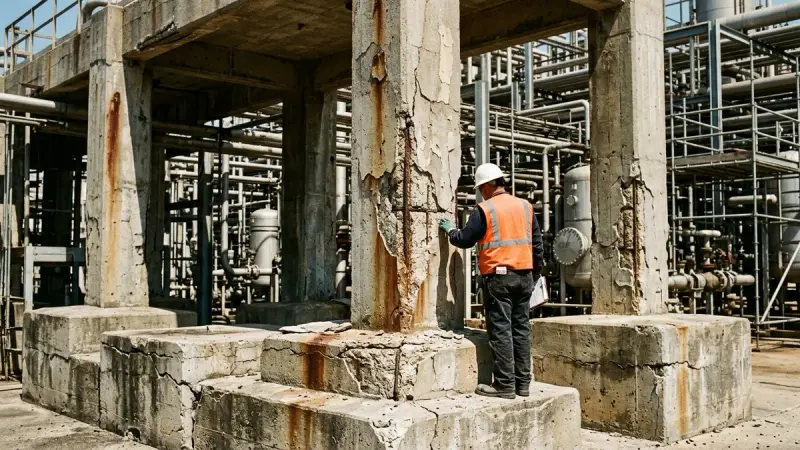
Aging NDE Inspector Pool Puts Turnarounds and QC Sign-Offs at Risk
A shrinking bench of properly trained nondestructive examination (NDE) technicians is quietly undermining mechanical integrity programs at refineries and chemical plants, according to an analysis published in Inspectioneering Journal by Bobby Harrington, CEO of Dynamis Innovative Solutions. Harrington, a 33-year veteran of the reliability and integrity sector, argues that contract inspection companies are cutting corners on training and mentoring just to survive on razor-thin margins, and the result is a growing number of examiners who hold certifications on paper but fail performance demonstration qualifications (PDQs) in the field.
Background
Harrington’s piece, part of a series examining mechanical integrity recommendations in Inspectioneering Journal, frames the issue as a structural problem rather than a one-off staffing shortage. Owner-users increasingly demand only certified Level II examiners, and intense competition among NDE service providers has compressed rates to the point where companies can’t afford to fully honor the training, qualification, and certification process laid out in American Society for Nondestructive Testing (ASNT) standards. High employee turnover compounds the problem: contractors don’t have time to build experienced technicians before those technicians move on, so certification becomes a box-checking exercise rather than proof of competence.
The consequence, per Harrington, is examiners showing up at plant gates who technically meet the certification requirement on their resume but can’t reliably perform the work once tested against real-world PDQs. From the perspective of a refinery NDE program owner, that translates into rework, inspection delays, unplanned downtime, and a heightened risk that a real defect goes undetected until it becomes a mechanical failure.
Analysis
This is a workforce bottleneck with direct schedule and safety consequences, not just an HR headache. Turnarounds are scheduled tightly around inspection windows. If an NDE crew arrives certified on paper but can’t pass a PDQ once work starts, the plant either has to swap technicians mid-turnaround, extend the outage to redo scans, or accept lower confidence in the sign-off. None of those options are cheap, and all of them ripple into every other trade sharing that outage window, from scaffolding to insulation to mechanical.
The rate compression Harrington describes is the real driver here. When owner-users award NDE work to the lowest bidder without weighing training depth, they create an incentive structure where contractors race each other toward the minimum certification threshold rather than investing in mentoring senior technicians who can actually catch subtle indications. Harrington’s broader argument, that certification and qualification are not the same thing, echoes a long-running theme in the inspection trade press, but the pressure to cut corners appears to be intensifying as experienced Level II and Level III examiners age out of the workforce faster than they’re replaced.
The fix Harrington points toward, according to the article’s table of contents, includes API-specific NDE standards and more structured mentoring programs, though the specifics of those proposals sit behind Inspectioneering’s paywall. What’s clear from the publicly available summary is that this isn’t a problem any single contractor can solve alone. It requires owner-users to weigh training rigor into procurement decisions rather than defaulting to price, and it requires contractors to resist the temptation to certify technicians faster than they can actually be qualified.
What It Means for Subcontractors
- NDE and inspection subcontractors bidding turnaround work should expect owner-users to start scrutinizing PDQ pass rates, not just ASNT certification paperwork, when qualifying vendors for refinery and chemical plant contracts.
- Firms that win NDE packages on price alone risk mid-turnaround technician swaps if examiners fail performance demonstration qualifications once on site, a cost that erodes any margin advantage from underbidding.
- Mechanical integrity and reliability teams relying on contract NDE crews should budget schedule contingency for rework and inspection delays tied to underqualified Level II examiners, particularly during high-demand turnaround seasons when experienced technicians are stretched thin.
- Companies with in-house mentoring or Level III oversight programs have a competitive differentiator to highlight in bids, since Harrington’s analysis suggests owner-users are increasingly aware that certification alone doesn’t guarantee field competence.
- Subcontractors should watch for movement toward API-specific NDE qualification standards, referenced in Harrington’s article as a proposed industry fix, which could reshape certification requirements for inspection vendors on downstream contracts once details become public.