Xcel's $1.2B Colorado-Texas Tie-Line Sets Up Bid Packages for Line and Substation Crews
Xcel Energy is moving ahead with a $1.2 billion transmission upgrade linking its Colorado and Texas grids, and federal dollars are what got the project off the ground, The Colorado Sun reports. The utility landed a $250 million grant from the U.S. Department of Energy’s “Speed to Power,” or SPARK, program, covering roughly 20% of the project cost. The remaining 80%, per Colorado Sun’s reporting, will land on customer bills.
Background
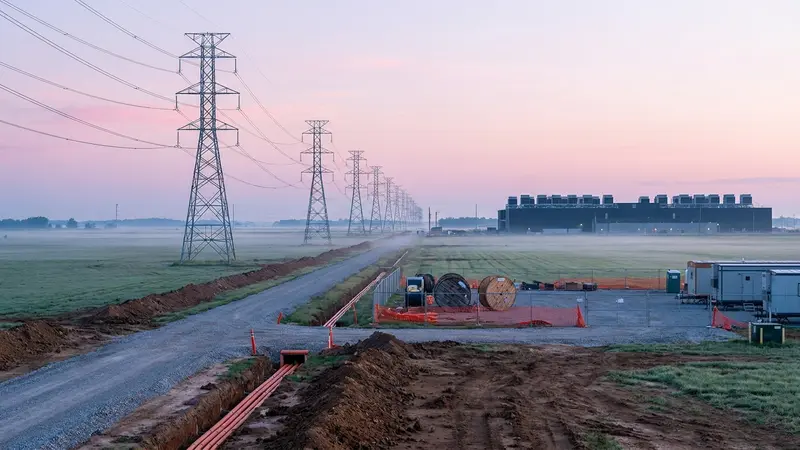
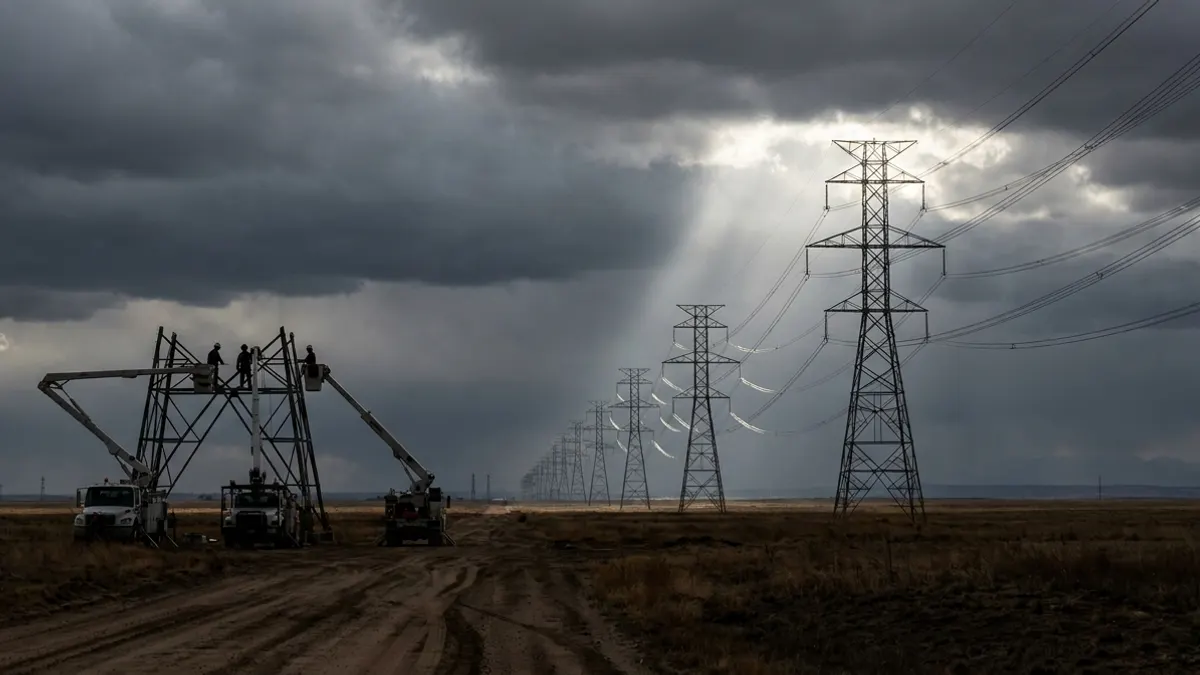
The project upgrades a tie-line running between Finney, Texas, and Lamar, Colorado, boosting its transfer capacity from 210 megawatts to 700 MW, with room to scale to 2,000 MW in future phases, according to The Colorado Sun. The work involves 12 miles of new transmission construction plus the replacement of 16 miles of existing line in Colorado.
The upgrade connects Xcel’s Colorado subsidiary, Public Service Company of Colorado, to its Texas affiliate, Southwestern Public Service, a member of the Southwest Power Pool. SPP is a regional grid operator spanning all or parts of 17 states, with 73,000 miles of transmission and 65,000 MW of generating capacity, including 35,000 MW of wind power across 231 wind farms, the Sun reported. Colorado Energy Office director Will Toor said the connection gives the state “a much larger geographical footprint for access to wind resources.”
The $250 million award is part of a $1.9 billion DOE program funding 31 grid projects in 26 states. Gov. Jared Polis and Xcel Colorado president Robert Kenney both spoke at a Sept. 24 press event in Aurora announcing the funding, framing the project as central to affordability and reliability goals. DOE assistant secretary Tim Walsh said the upgrade will help ensure households across the region have reliable power “even during severe weather.”
The project still needs sign-off from the Colorado Public Utilities Commission and the Federal Energy Regulatory Commission, since it crosses state lines. It also ties into Xcel’s existing $1.7 billion Power Pathway project, which moves power to Front Range population centers, and follows seven other Colorado utilities, including Tri-State Generation and Transmission Association, Platte River Power Authority and Colorado Springs Utilities, joining SPP in April.
Analysis
This is a federally subsidized transmission build that still leaves the bulk of the bill with ratepayers, and that split matters for how fast the project actually reaches construction. Colorado Sun’s reporting notes PSCo’s Robert Kenney was careful to frame the $250 million as cost avoidance rather than a giveaway, an early signal that rate case scrutiny is likely once the PUC review starts. Subcontractors bidding into this project should expect utility commission proceedings, not just permitting, to shape timing.
The dual approval requirement, PUC plus FERC, is also worth flagging. Interstate transmission projects tend to move slower than in-state builds because they trigger federal review on top of state siting. The Colorado Sun’s related coverage noted the Colorado Supreme Court recently rejected Xcel’s request for an expedited decision on a separate power line route, a reminder that route and siting fights can stretch timelines even on projects with strong political backing.
The bigger structural story is Colorado’s slow pivot toward interconnection with the Southwest Power Pool. Xcel’s Colorado subsidiary opted out of SPP membership even as seven other state utilities joined in April, but this tie-line lets Xcel access SPP indirectly through its Texas affiliate. SPP’s own seams study, which its board approved in August, is looking at unlocking as much as 5,500 MW of additional east-west transfer capacity, according to the Sun. If that materializes, this Colorado-Texas line could be the first of several similar upgrades rather than a one-off project, which is a meaningful signal for firms deciding whether to invest in transmission crew capacity in the region.
What It Means for Subcontractors
- Line construction and civil crews should watch for RFP activity tied to the 12 miles of new build and 16 miles of line replacement between Lamar, Colorado and the Texas border, though bid packages won’t drop until PUC and FERC approvals clear.
- Substation and high-voltage DC electrical subs have a longer-term opportunity here: Kenney specifically cited HVDC technology as central to the project’s design, which favors firms with DC conversion and controls experience over standard AC transmission crews.
- Ratepayer cost recovery is a live issue. With 80% of the $1.2 billion project cost passed to customers, expect PUC rate case hearings where cost allocation gets contested. Contractors should track those filings for signals on whether scope or schedule gets trimmed.
- This project links directly to Xcel’s $1.7 billion Power Pathway build, so subs already working Power Pathway packages around the Front Range are positioned to bid adjacent work once this line’s construction packages are released.
- SPP’s August-approved seams study, projecting up to 5,500 MW of added east-west capacity, suggests more Colorado-Texas tie-line upgrades could follow. Firms building transmission capabilities now have a runway beyond this single project if that study advances toward funded work.