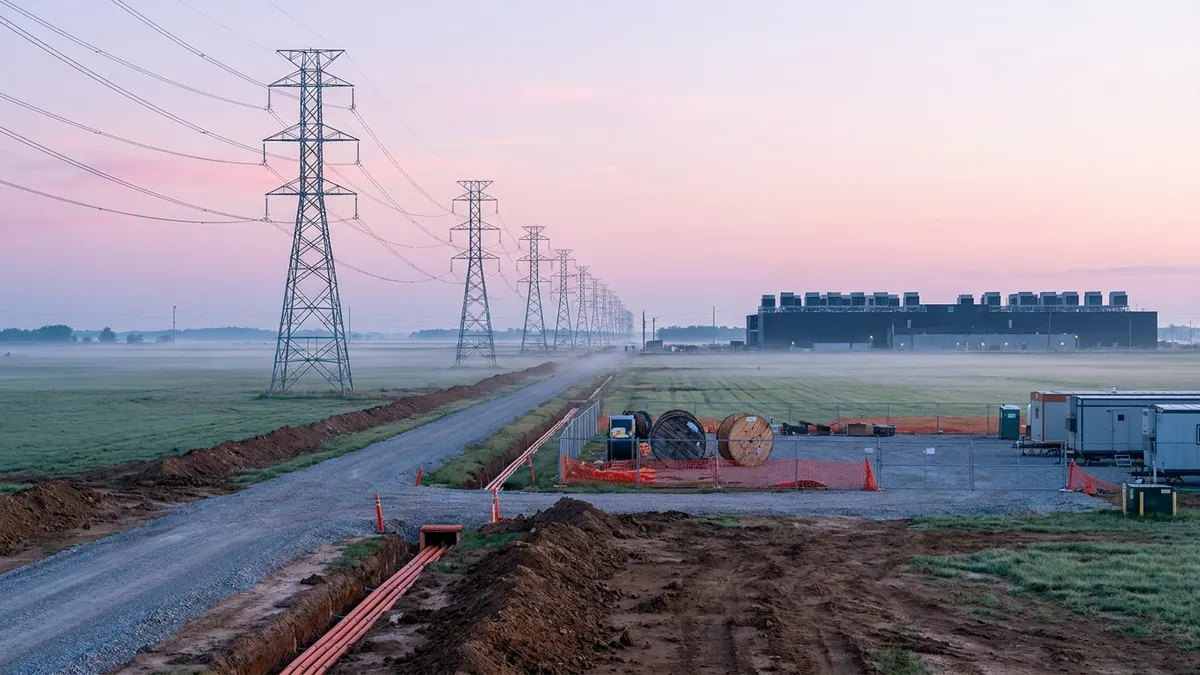
FERC Votes Unanimously to Fast-Track Grid Connections for AI Data Centers
According to an Associated Press report via Daily Commercial News, the Federal Energy Regulatory Commission voted unanimously to direct that AI data centers and other large power users are able to connect to the transmission system in a timely and orderly manner, backing a Trump administration push to accelerate large-load grid connections.
Market Impact
FERC Chair Laura Swett, a Trump appointee, called the vote historic, framing it as a move to push the country’s electricity market into the future. Energy Secretary Chris Wright had urged the commission to act, citing US competition with China in the AI sector. Tech companies and data center developers have welcomed the faster connection pathway.
Under the commission order, data centers will pay the full cost of any grid upgrades required for their connections, shielding ratepayers from those expenses. Swett acknowledged public concern directly: “Many Americans are increasingly concerned about the interconnection of large loads, and data centers will increase their bills in that stress.” The vote comes roughly eight months after Wright first asked the agency to take a more active role in connecting the network of large computing facilities to high-voltage transmission lines.
The decision does not resolve underlying supply constraints. Data center construction is outpacing new power generation coming online, raising concerns about tightening energy supplies and potential blackouts in some regions.
What It Means for Subcontractors
- Electrical and utility subcontractors working near data center corridors, particularly in Texas and other high-growth markets, should expect compressed procurement and construction timelines as developers move to capitalize on faster interconnection approvals.
- Because data centers must cover full grid upgrade costs under the FERC order, project owners will be highly motivated to move quickly and efficiently, putting pressure on subs to mobilize faster and price work tightly.
- The gap between data center construction speed and new power generation capacity signals sustained demand for subcontractors in both sectors, including transmission infrastructure, switchgear installation, and on-site power systems.
- Utilities and regional grid operators pushed back on the plan, concerned about losing process authority. Subcontractors should monitor how local utilities respond, as state-level friction could create project delays even where federal approvals accelerate.