Webuild-FCC JV's $4.32B Ontario Line Win Signals Deep Subcontracting Pipeline
A $4.32 billion transit contract just moved from planning to execution in Toronto, and for subcontractors across the trades, that shift matters more than the headline number, Daily Commercial News reports. The publication confirmed that Pape North Connect, a joint venture between Italy’s Webuild and FCC Canada Ltd., has been awarded the contract for the Ontario Line Pape Tunnel and Underground Stations (PTUS) package, one of the most technically demanding pieces of the broader Ontario Line megaproject.
Background
According to Daily Commercial News, the contract covers three kilometers of new twin tunnels and two underground stations, one of which will connect to the existing Pape Station on Toronto’s Line 2 subway. The alignment runs from Gerrard Street through the Greektown, Pape Village and East York neighborhoods to where Minton Place meets the Don Valley Parkway. It’s one component of the full 15.6-kilometer Ontario Line subway project.
Daily Commercial News reported that Pape North Connect was first selected by Metrolinx and Infrastructure Ontario back in 2024 for the collaborative development phase of what’s structured as a Progressive Design-Build (PDB) delivery model. That development phase is now complete, and the implementation phase, meaning actual construction procurement and mobilization, is underway. Webuild, quoted in the release cited by Daily Commercial News, described the work as requiring “major excavation and construction activities in one of Canada’s most complex urban environments,” citing existing infrastructure networks, underground utilities, and traffic both above and below ground. The company also noted it previously won the RSSOM contract for trains and technological systems on the same subway line, giving the Webuild/FCC pairing a growing footprint across multiple Ontario Line packages.
Analysis
The Progressive Design-Build model is the detail worth sitting with here. Unlike a traditional design-bid-build sequence, PDB brings the contractor in early to collaborate on design before construction pricing is finalized, which is exactly what happened between the 2024 selection and this contract award. That means the JV has already spent roughly two years refining scope, sequencing, and risk allocation with Metrolinx and Infrastructure Ontario. For the broader construction market, that’s a signal that subcontract packages tied to this project aren’t hypothetical; they’re likely already being scoped internally and will start moving to market as the JV builds out its execution team.
A $4.32 billion tunnel-and-stations package in dense urban Toronto is not something Webuild and FCC Canada will self-perform in full. Progressive design-build megaprojects of this size typically rely on a deep bench of specialty subcontractors for shoring and excavation support, tunnel boring logistics, utility relocation, structural concrete, mechanical/electrical fit-out in underground stations, and life-safety systems. The scale of the civil work, three kilometers of twin tunnels plus two stations, means the JV will need geotechnical and excavation specialists comfortable working beneath live streets and around existing utility corridors, plus MEP and station fit-out contractors once the tunnel structure is in place.
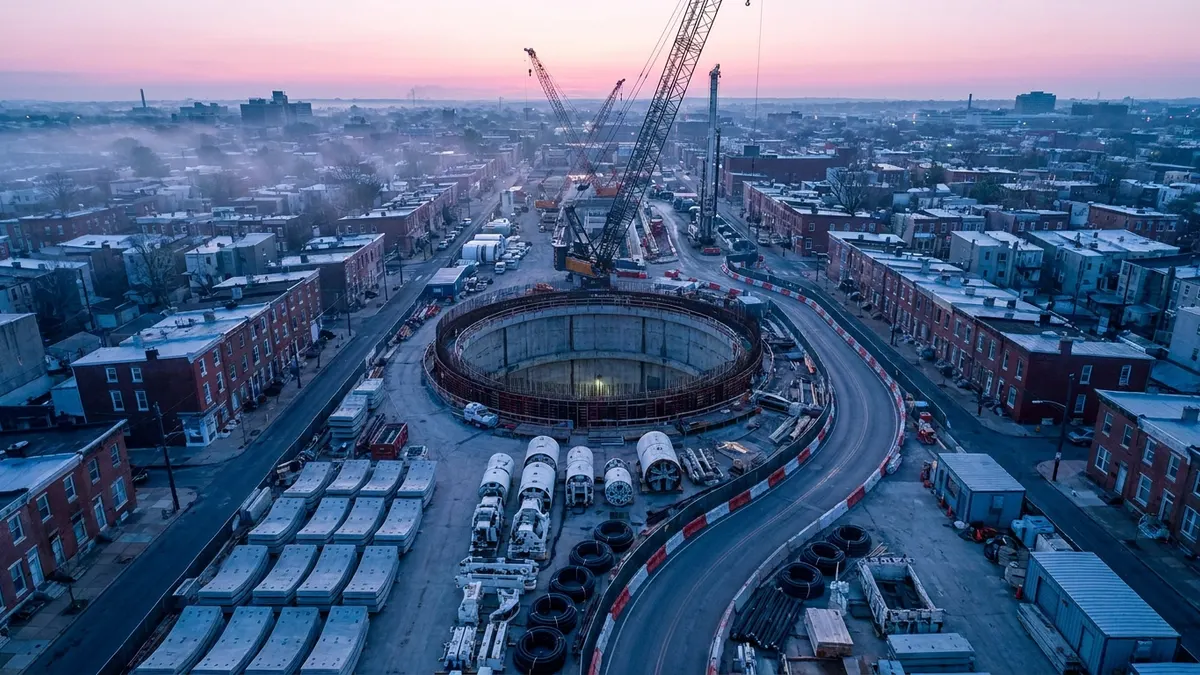
The urban complexity Webuild flagged, existing infrastructure, underground utilities, above- and below-ground traffic, also points to heavy demand for traffic management, utility locating, and coordination subcontractors well before any tunneling equipment shows up. Projects with this profile tend to generate a long tail of smaller, geographically dispersed work packages: local trucking and spoil removal, temporary shoring, dewatering, and site logistics support in the Greektown, Pape Village, and East York corridors specifically.
The Webuild/FCC combination also matters strategically. Webuild’s prior win of the RSSOM systems contract means the same corporate family now holds both a major civil package and a systems package on the Ontario Line. That kind of multi-contract footprint often streamlines how interface risk gets managed between civil and systems work, but it can also mean subcontractors bidding into one package need to track scope boundaries carefully to avoid gaps or overlaps between the JV’s various Ontario Line awards.
What It Means for Subcontractors
- Civil, excavation, and shoring contractors working in the Greater Toronto Area should watch for tender packages tied to the Gerrard Street-to-Don Valley Parkway alignment, since tunnel and station excavation work will need extensive subsurface support subcontracting.
- MEP, electrical, and station fit-out trades should prepare qualification packages now, as underground station buildout typically follows tunnel structural work by 12 to 18 months on comparable progressive design-build transit projects.
- Utility relocation and traffic management subcontractors in the Greektown, Pape Village, and East York neighborhoods should reach out directly to Pape North Connect, given Webuild’s stated need for coordination around existing underground utility networks.
- Firms with prior Metrolinx or Infrastructure Ontario prequalification should confirm their status is current, since the implementation phase is already underway and packages tied to the $4.32 billion contract may move quickly.
- Trucking, spoil removal, and dewatering contractors should position for tunnel excavation logistics tied to the three-kilometer twin-tunnel scope, a segment likely to require sustained multi-year haul and disposal contracts.