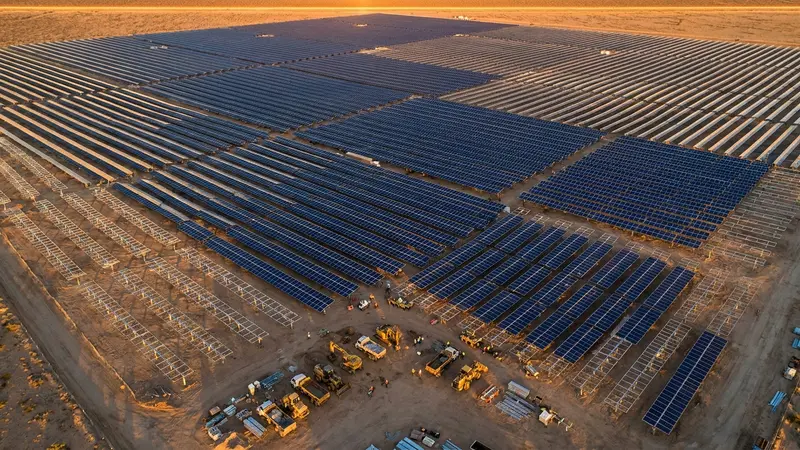
UXO Clearance Shaped Work on 641-MW Bellefield Solar Build
Ordnance screening ran ahead of every ground-disturbing task on the 641-MW Bellefield solar and 500-MW storage build near Mojave, Calif., ENR reports. The 3,080-acre site was a former military munitions depot and bomb testing area.
Project stage: Phase one is built. A second phase of matching size is already under construction.
Market Impact
AES Clean Energy owns the project, and Primoris Renewable Energy is the general contractor, working with Primoris’ ARB Industrial and Primoris Electric. Westwood Professional Services led design. The owner and GC brought in Tetra Tech to investigate, monitor and clear unexploded ordnance. Every person on site was trained to recognize it, and scanning and oversight continued ahead of all ground-disturbing work for the length of the job.
Phase one installed 641 MWdc of solar paired with 500 MW of battery storage. It uses more than 1,187,000 Canadian Solar 540-watt modules and 160 Sungrow inverters. A dedicated 14-mile transmission line ties the plant to Southern California Edison’s Windhub Substation.
The site raised other field problems. Civil contractor Clark Bros. Inc. and Primoris used a roll-and-crush method to flatten vegetation and work it into the soil instead of clearing it. The team puts the fugitive dust reduction at about 70%, with water, hydro-mulch and approved stabilizers covering the rest. Crews also found that wind could loosen torque on panel mounting hardware. The fix was a documented procedure that shakes the panels to simulate wind before the final torque check. To bring in balance-of-site material before the end of 2024, the team raised receiving capacity from 15 deliveries a day to more than 40 within two weeks. That required additional access roads and laydown areas.
What It Means for Subcontractors
ENR does not describe how ordnance costs or anomaly finds were allocated in the contracts. Use that gap to set your own terms before you price.
- Survey, grading, trenching and pile driving subs: Ordnance oversight ran ahead of every ground-disturbing activity here, so expect production to be gated by clearance. Before you sign on a former military or range site, ask the EPC’s subcontract manager in writing what UXO scanning and clearance sits in the geotechnical and grading scope, and who pays standby time when it holds your crew.
- Pile drivers: ENR does not mention pile anomalies, but driving is ground disturbance. Get a written answer on who pays for a stop-work and re-scan when an anomaly turns up mid-drive, and whether clearance must precede each pile row. Settle this before mobilization, not after the first hit.
- Anyone on site: Every person was trained to recognize ordnance, so budget for the training hours and the cost of crews waiting on clearance. Ask whether the EPC’s site-specific briefing is paid time.
- Civil and earthwork subs: Roll-and-crush replaced full clearing, and Clark Bros. worked it out during preconstruction. If you bid grading on a dusty desert site, price the mechanical flattening, water trucks, hydro-mulch and stabilizers in your base number.
- Electrical and mechanical install crews: Torque drift from wind meant a documented shake-then-torque step before final readings. Ask the EPC whether that procedure is a spec requirement, and price the added check time per module row.
- Haul and laydown subs: Moving from 15 to more than 40 deliveries a day inside two weeks forced new access roads and laydown areas. Ask about gate capacity and laydown acreage during bid walks.
- Phase two: The second phase is under construction, so call Primoris Renewable Energy’s subcontract team this quarter to ask about open scopes.