Texas Approves $138B Decade-Long Transportation Investment Plan
The Texas Transportation Commission has approved a $138 billion, 10-year infrastructure investment plan, Construction Dive reports, with the 2027 Unified Transportation Program directing funds toward the state’s most congested roadways and related infrastructure.
Market Impact
Governor Greg Abbott announced the plan Thursday, noting it includes $95 billion in projected funding from existing state and federal revenue sources plus $43 billion earmarked for development and routine maintenance. Abbott pointed to Texas’ above-average GDP growth in 2024, per the Texas Economic Development Corp., and continued population growth as the drivers behind the spending commitment.
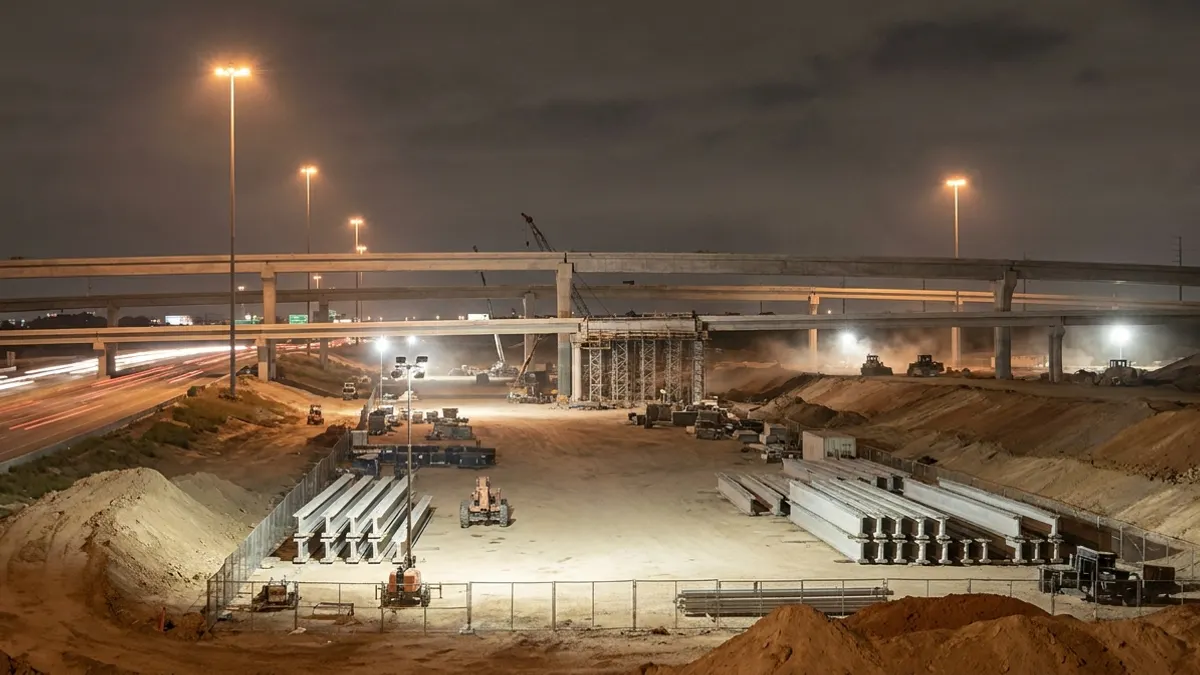
Much of the targeted work will hit roadways on the state’s 100 Most Congested Roadways list, which cost commuters nearly $15 billion in 2024 and produced more than 523 million wasted hours in traffic delays, according to the announcement. TxDOT Executive Director Marc Williams said the plan “reflects the scale and complexity of meeting Texas’ transportation needs in one of the fastest-growing states in the nation,” adding that it’s “focused on practical outcomes, improving safety, preserving the system we have, and supporting reliable movement for people and goods.”
The UTP funding spans 12 categories including public transportation, maritime, aviation, rail, freight, international trade, and bicycle and pedestrian connectivity. The announcement builds on TxDOT’s construction season plans released in February, which included work on the $4.5 billion I-35 Capital Express Central project. Texas is moving to lock in this funding as Congress continues debating a new surface transportation reauthorization bill needed to replace the $1.2 trillion Infrastructure Investment and Jobs Act, which expires September 30.
What It Means for Subcontractors
- Heavy-civil, paving, and grading subs should watch for design-build and construction lettings tied to the 100 Most Congested Roadways list once TxDOT releases the full 2027 UTP project breakdown; congestion corridors are the stated priority for near-term contract packages.
- The $43 billion set aside for development and routine maintenance signals recurring smaller-scope work, an opening for regional paving, striping, signage, and drainage subcontractors beyond the marquee mega-projects.
- Firms with existing I-35 Capital Express Central experience or similar corridor work in Texas should position now, since TxDOT’s February construction season announcement shows the state is already sequencing major project phases ahead of the broader 10-year rollout.
- Trade categories beyond roadways, including rail, maritime, aviation, and freight, are part of the 12-category UTP funding structure, giving E&I, mechanical, and specialty contractors additional entry points as those project lists are finalized.
- Contractors should monitor the federal reauthorization debate in Congress, since the current Infrastructure Investment and Jobs Act expires September 30 and its replacement could affect how much of the $95 billion in projected UTP revenue actually materializes on schedule.