Tennessee's $9.2B I-24 Toll Lanes Deal Signals Decade of Heavy-Civil Work
A 50-year toll concession on a single 26-mile stretch of Tennessee interstate just became one of the largest public-private infrastructure deals in US history, and the construction package attached to it is nearly double what state planners originally budgeted. Engineering News-Record reports that Tennessee’s Transportation Modernization Board approved DriveTN, a consortium including Cintra, Transurban, Tikehau Star/Infra/Capital, Ferrovial, Webber and AECOM, to design, build, finance, operate and maintain new managed lanes on I-24 between Nashville and I-840 near Murfreesboro.
Background
The board’s Aug. 19 vote sets up a revenue-risk concession, meaning DriveTN, not the state, absorbs the risk on traffic volumes and toll revenue over the life of the 50-year agreement. According to ENR, Tennessee officials are calling it the largest U.S. P3 concession to date for an interstate managed-lanes project. The deal is not finalized. TDOT is still negotiating terms with DriveTN while coordinating with the U.S. Department of Transportation’s Build America Bureau, and some proposal details remain confidential.
The scope is substantial even before construction begins. DriveTN’s proposal calls for two price-managed lanes in each direction across roughly 26 miles, plus upgrades at the I-24/I-40 and I-440 interchanges. TDOT’s own federally reviewed baseline design, which received a Federal Highway Administration finding of no significant impact on June 16, priced the project at $4.5 billion and called for 37 bridge replacements, three bridge widenings, 55 new bridges, about 77 retaining walls spanning 18.9 miles, and roughly 30 potential noise barriers. DriveTN’s winning proposal comes in at $9.2 billion in construction costs, more than double that baseline, plus an additional $24.8 billion in what TDOT calls “concession value,” the consortium’s own estimate of what the corridor is worth after covering project and financing costs. TDOT has been clear that figure is not cash the state can spend; it depends on final contract terms and protections still being negotiated.
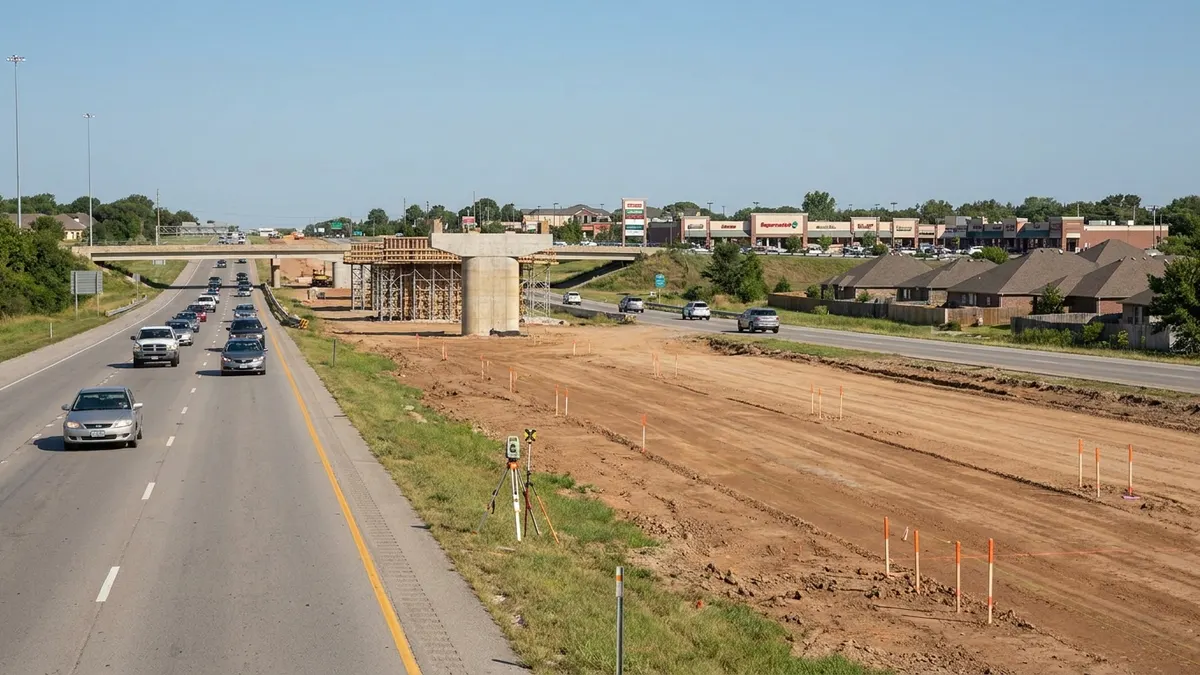
DriveTN’s design also diverges from TDOT’s baseline by placing the new toll lanes outside the existing general-purpose lanes rather than integrated with them. TDOT says this tighter footprint would avoid impacts to the Noble Place Townhomes and the Pan-Asia Supermarket and eliminate reconstruction of the Hickory Hollow Parkway Bridge, but the agency has not yet released updated bridge, retaining-wall or right-of-way counts under the new design. No construction schedule has been set. Federal analysis of the baseline design assumed a 2032 opening, but TDOT says start date, sequencing and duration for DriveTN’s version are still undetermined.
Analysis
The gap between the $4.5 billion baseline and the $9.2 billion selected proposal is the number worth watching. TDOT frames it as added scope and improved features, not inflation on identical work, but for subcontractors it signals a materially larger construction program than what was originally scoped in the environmental review. Fifty-five new bridges and 77 retaining walls in the baseline design were already a heavy-civil bonanza; a nearly $5 billion increase in the winning bid suggests either substantially more structural work, more sophisticated elevated-lane engineering through the developed Nashville corridor, or both.
The elevated-lanes approach is a specific technical signal. TDOT’s baseline design already called for elevated managed lanes between downtown Nashville and Briley Parkway because existing interchanges, floodplains and dense development don’t leave room for conventional widening. That kind of constrained, structure-heavy urban interstate work tends to favor specialty bridge, drilled-shaft foundation and structural steel subcontractors over general grading crews, and it typically runs longer and at higher unit costs than at-grade lane additions.
Because this is a revenue-risk concession rather than a standard design-bid-build contract, the procurement path for subcontract packages will run through DriveTN’s own construction arms (Ferrovial and Webber are both active builders) rather than through a traditional TDOT-led GC selection. That means bid opportunities will likely surface through DriveTN’s supply chain once the concession agreement is finalized, not through a conventional state DOT letting process.
The lack of a locked schedule matters too. With no confirmed construction start, sequencing or opening date, and negotiations still active on both technical and financial terms, this remains a pipeline story rather than an imminent-bid story. Subcontractors should treat 2032 as an outdated reference point tied to the abandoned baseline design, not a working target.
What It Means for Subcontractors
- Structural and bridge subcontractors should note the scale of the baseline federal design, 37 bridge replacements, three widenings, 55 new bridges, and 77 retaining walls across 18.9 miles, as a floor for likely work; DriveTN’s redesign has not yet published updated quantities.
- Firms with elevated-structure, drilled-shaft foundation or urban structural steel experience are best positioned for the Nashville-to-Briley Parkway segment, where TDOT’s design uses elevated lanes to avoid at-grade widening constraints.
- Traffic-management and open-road tolling system integrators should track DriveTN’s electronic tolling buildout, since the concept requires dynamic, congestion-based pricing and a guaranteed 45 mph average peak-period speed, both of which demand ITS and tolling infrastructure work.
- Because this is a 50-year DriveTN-led design-build-finance-operate-maintain concession, subcontract packages will likely flow through consortium members Ferrovial and Webber rather than a traditional TDOT GC letting; firms should establish relationships with those companies now rather than wait for a state-run bid process.
- No construction start date, sequencing or duration has been finalized; TDOT says the previously cited 2032 opening applied only to the abandoned baseline design, so subcontractors should not treat that date as current planning guidance.
- Interchange-specific work is called out at Elm Hill Pike (new managed-lane-only connection), five existing I-24 interchanges slated for modification, and the Almaville Road interchange near Murfreesboro, which would convert to a diverging-diamond configuration, giving civil and signage/striping subcontractors concrete locations to monitor as design finalizes.