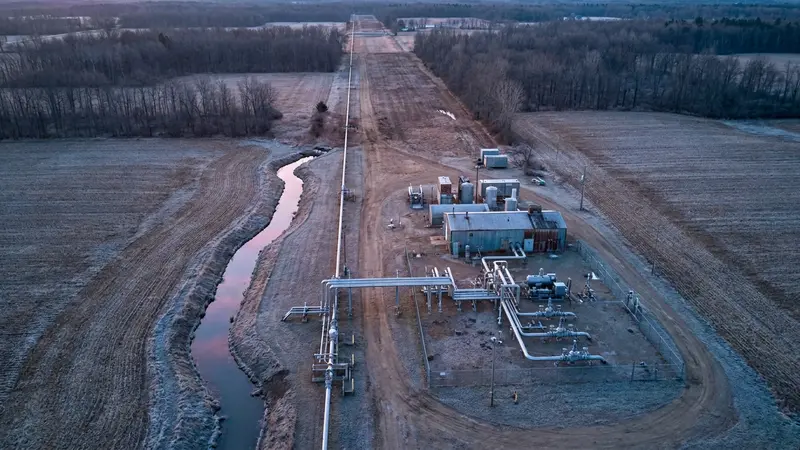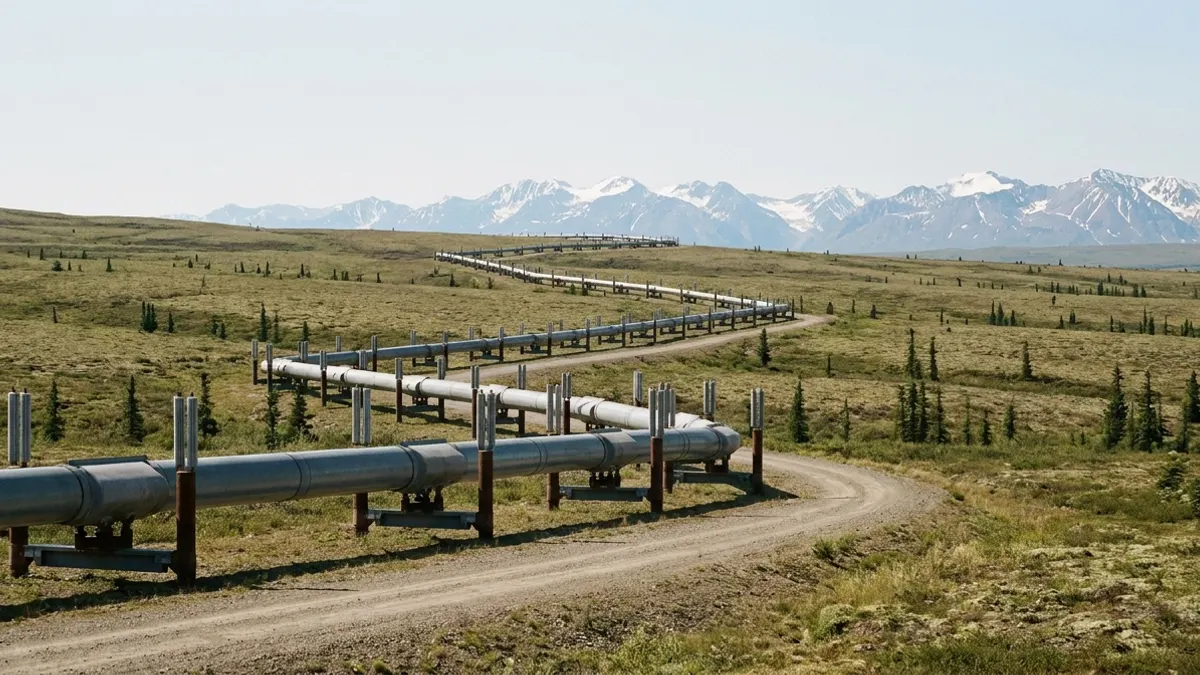
TAPS Owners Seek 30-Year Land Rights Renewal Seven Years Early
The owners of the Trans Alaska Pipeline System want federal land rights locked in decades before they need to be, a timing move that Bloomberg reports via Rigzone is aimed squarely at getting the decision made under a friendly administration rather than a future one.
Alyeska Pipeline Service Co., which operates the 800-mile line on behalf of owners Hilcorp Energy Co., ConocoPhillips and ExxonMobil Holdings Corp., has filed for reauthorization of its federal rights-of-way more than seven years before they expire on January 22, 2034. The Interior Department announced Wednesday it is launching a formal review, starting with an environmental analysis. The Bureau of Land Management has opened a 15-day public comment period on the scope of that review. If approved, the reauthorization would extend federal land authorizations for another 30 years.
Background
TAPS has carried North Slope crude from Prudhoe Bay to Valdez since 1977, built under a congressional mandate that fast-tracked its original environmental review. The last rights-of-way renewal, in 2004, came less than three years before expiration and took nearly two years to complete. This time, owners have given themselves more than double that runway, and Rigzone notes the process could move faster given Trump administration efforts to streamline Alaska oil permitting.
The stakes go beyond paperwork. Throughput through TAPS peaked at more than 2 million barrels per day in 1988 before falling for decades, raising real concerns that slow-moving crude could congeal and disable the line. New North Slope discoveries by ConocoPhillips, Santos Ltd. and others have reversed that trajectory, and Alyeska executives now talk about the pipeline reaching its 100th anniversary rather than just its 50th, which falls next year.
Trump administration officials have been vocal backers. Energy Secretary Chris Wright said last year that Trump “wants to see the flows through TAPS doubled.” Interior Secretary Doug Burgum called TAPS an “underutilized” asset central to a “great Alaskan comeback.” BLM Alaska state director Kevin Pendergast tied the reauthorization directly to unlocking the National Petroleum Reserve in Alaska and the Coastal Plain of the Arctic National Wildlife Refuge. Alyeska CEO John Kurz said a long-term renewal “provides certainty for industry, companies, workers, and communities that depend on TAPS.”
Environmental groups have pushed back, petitioning Interior for a fresh climate and environmental analysis and arguing the pipeline should be decommissioned, a position consistent with the International Energy Agency’s stance that no new oil and gas fields should be developed to hit net-zero targets by 2050.
Analysis
The early filing is a political hedge as much as an operational one. Locking in a 30-year authorization now means the decision rests with an administration that has already sent cabinet officials to Alaska to champion the pipeline, rather than a successor who might revisit the terms or slow-walk approval. That timing logic matters for anyone planning work tied to TAPS: a favorable, faster review reduces the odds of a multi-year permitting fight disrupting future maintenance and expansion plans.
If the reauthorization goes through, it effectively removes a major cloud of uncertainty that has hung over Alaska’s oil infrastructure for years, back when declining throughput made pipeline viability itself a question mark. A 30-year horizon changes the calculus for owners deciding whether to invest in upgrades, pump station work, corrosion control, and capacity additions rather than just maintaining the status quo. Talk of doubling flows through TAPS, if it materializes, would require real fieldwork: pump station upgrades, integrity work on a 49-year-old line, and expanded gathering infrastructure tied to new North Slope fields.
That said, this is a proposal, not a done deal. The BLM review has only just begun, comment periods and environmental analysis remain outstanding, and organized opposition from environmental groups is already on record. A change in administration before the process concludes, or a successful legal challenge, could still alter the outcome. Companies should treat the 30-year renewal as the likely direction of travel given the current political environment, not a locked-in certainty.
What It Means for Subcontractors
- The BLM’s public scoping period runs just 15 days from the August 27 announcement, a narrow window for contractors and trade groups with a stake in the outcome to submit comments on the environmental review’s scope.
- A 30-year rights-of-way extension would support long-horizon planning for pipeline integrity, corrosion control, and pump station maintenance contracts tied to Alyeska and North Slope operators, work that a shorter or contested renewal could put on hold.
- Talk from Energy Secretary Chris Wright about doubling TAPS throughput points to potential future demand for mechanical, civil, and E&I trades on pump station upgrades and expanded gathering systems, though no specific projects or budgets have been announced yet.
- New North Slope development from ConocoPhillips and Santos Ltd. is already driving throughput growth, which could translate into wellsite and gathering-line work in the region independent of the pipeline reauthorization timeline.
- Because the review is not yet final, subcontractors should watch for the completed environmental analysis and any subsequent BLM decision before assuming a firm 30-year window for planning purposes, given active opposition from environmental petitioners.