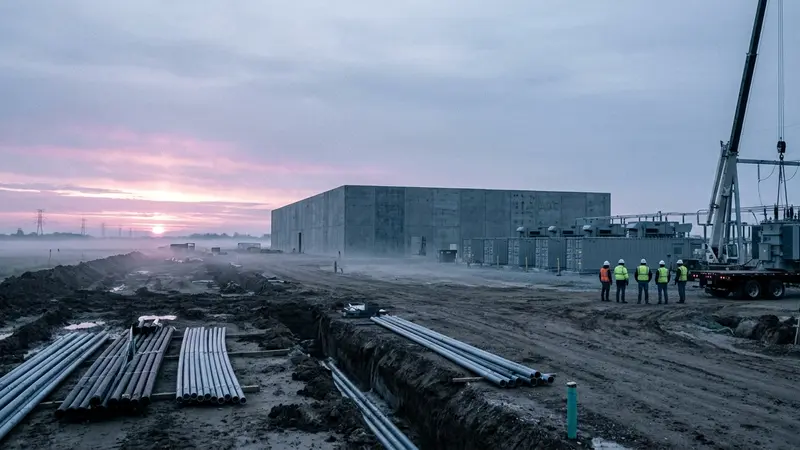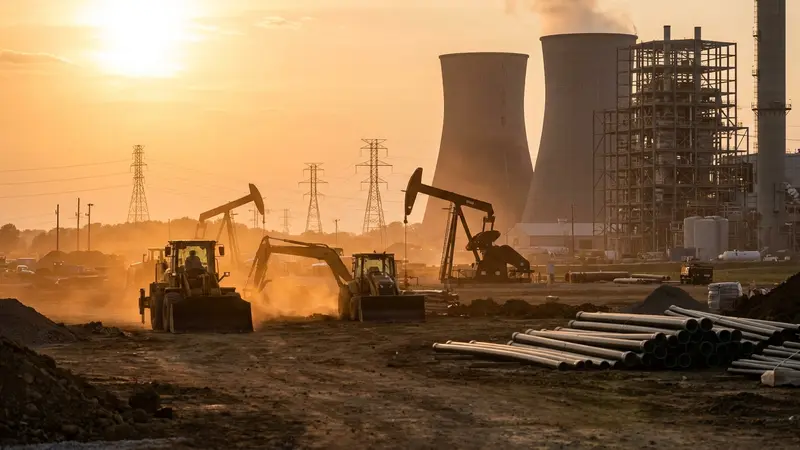
State Data Center Curbs Are Reshaping Where Subs Find Work
Electrical, civil and mechanical subs chasing data center work now have to price in state policy, not just power availability. A Construction Dive monthly roundup published Oct. 26, 2026, shows Virginia and California adding conditions to development, a Texas action described as slowing it, and contractor spending still accelerating.
Background
Construction Dive’s roundup collects a month of its data center coverage. Several items bear directly on where and how these projects get built.
On the policy side, Virginia Gov. Abigail Spanberger issued an executive order limiting state assistance and expedited permitting for data centers. An attorney told Construction Dive that the biggest consequences are not yet known. In California, Gov. Gavin Newsom signed seven bills that give cities more say in data center development. Under them, developers must disclose energy and water use, pay more for grid infrastructure and undergo environmental review.
An executive search professional writing in Construction Dive argued that “even Texas has taken steps to slow the speed of data center development.” The piece called public support, not power, the next bottleneck.
On design, researcher Kasey Fowler-Finn of Saint Louis University said noise-absorbing walls would need to be 4.5 feet thick. She called that impractical and said setbacks should be at least 1,500 feet.
On demand, Construction Dive reports that data center construction spending raced further ahead in August. ABC chief economist Anirban Basu said, “Frankly, it’s becoming difficult to contextualize the size and speed of this boom.” Contractors told the publication that community scrutiny has done little to cool demand. Developers are also embracing flexibility and alternative technologies once considered too unwieldy.
Analysis
The roundup’s headline mentions moratoriums, but the items it describes are not outright bans. Virginia is pulling back state help and fast-track permitting. California is adding disclosure, cost and review requirements. Texas, per the opinion piece, has taken unspecified steps to slow development. The distinction matters for scheduling. These are cost and timeline levers, not stop signs. Hyperscaler projects will likely keep moving but will carry more pre-construction friction.
That friction lands unevenly on trades. California’s requirement that developers pay more for grid infrastructure shifts cost and scope toward utility-side electrical and civil work, and environmental review adds time before dirt moves. We would expect owners to push that uncertainty down into subcontract terms, such as longer price holds, schedule contingencies and allowances.
The noise findings point to sitework. If setbacks of 1,500 feet become a common community demand, a given data hall needs more land. That means more perimeter, access roads, utilities and stormwater work for civil subs. Mechanical subs face a related question: quieter cooling and equipment layouts become a design-stage issue when walls cannot do the job.
Volume is not the problem. Basu’s comment and the recent awards show demand is intact. Fisk Electric, a Tutor Perini subsidiary, won a $24M modular contract for a Houston data center. Construction Dive said it reflects the parent’s shift toward data centers, which it emphasized on recent earnings calls. Skanska landed an $84M data center win, and Nvidia tapped Jacobs for a data center digital twin. Work is flowing to large firms with existing hyperscaler relationships, and subs reach it through those GCs.
Power supply is moving too. Constellation signed 20-year power purchase agreements with both Google and Amazon in the last week, supporting almost 1.1 GW of nuclear expansions, including an 890-MW deal with Google. Developers are securing long-term generation alongside sites, which could create adjacent electrical and civil scopes. The source does not detail those scopes.
Project stage: the roundup does not say which subcontract packages are open on any of these jobs, and it says nothing about bonding or prequalification. The steps below are our inferences from the policy and award facts it does report.
What It Means for Subcontractors
- Electrical subs in California: Ask your hyperscaler GC by Dec. 31, 2026, how the seven new bills change interconnection and utility-side scopes. The requirement that developers pay more for grid infrastructure suggests more owner-funded utility work. Get your crews’ availability for that work in front of the GC’s preconstruction lead now.
- Civil subs everywhere: Build a sitework estimating template for 1,500-foot setbacks. Fowler-Finn’s figure implies larger parcels, so price additional access roads, utility runs and grading per site. Share it with the GCs you already work with so you are in the numbers when a site layout changes.
- Virginia-based trades: Treat expedited permitting as no longer assured under Spanberger’s executive order. Ask GCs to show schedule assumptions in any new subcontract, and negotiate price-hold language that covers permit delays. Revisit this once the attorney-flagged consequences become clear.
- Texas and Houston subs: Fisk Electric’s $24M modular award shows the Houston market is active. Electrical and mechanical subs there should call Fisk Electric’s subcontracting team this quarter about modular installation and field-support work. The source gives no scope details, so ask directly.
- Mechanical subs: Raise noise mitigation early with GCs, since thick walls are not a practical fix. Ask which design package carries acoustic equipment selection and enclosures, and get your scope into the pricing round, not a later change order.
- All trades on bonding and prequalification: The source does not address either, so ask now. Request each hyperscaler GC’s current prequal requirements and bonding thresholds in writing before year-end. Update your financials and safety documentation so you are ready if bonding requirements rise as awards grow.
- Multi-state planning: The roundup names Virginia, California and Texas as places with new restrictions or steps to slow development. Map your backlog against those three this quarter. Shift estimating effort toward states without such measures, and confirm each state’s current status with your GC before committing crews.