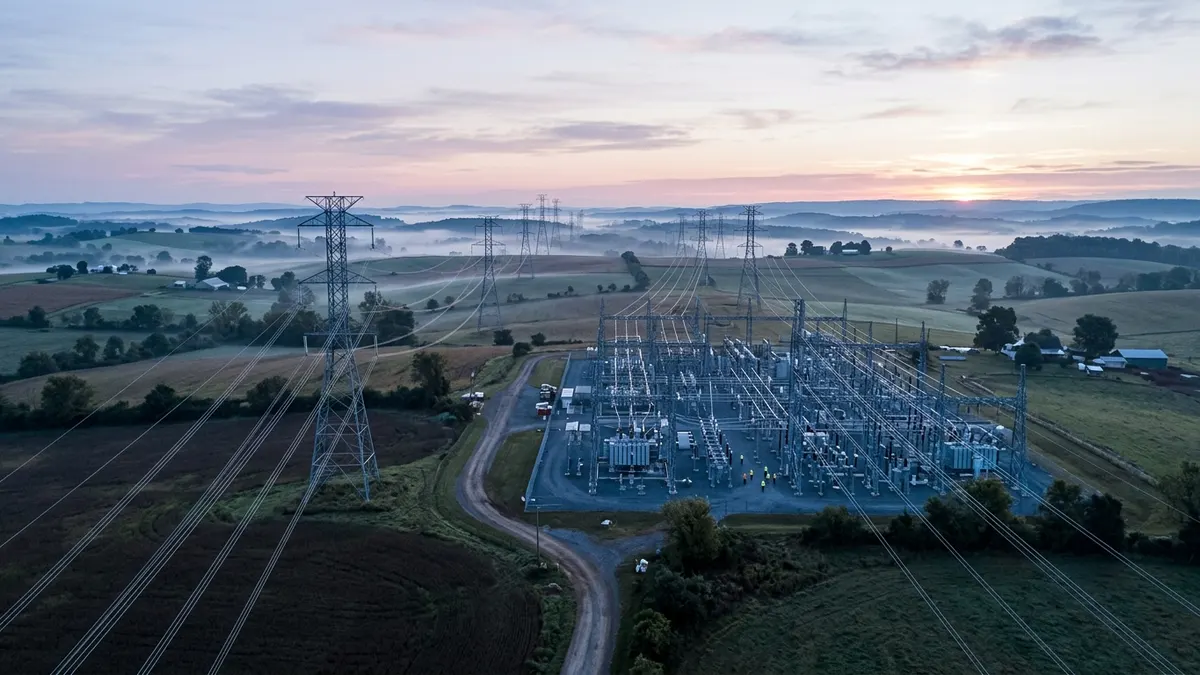
PJM's Queue Overhaul Opens Door to Major Transmission Work Across Mid-Atlantic and Midwest
According to Engineering News-Record, the nation’s largest power grid operator, PJM Interconnection LLC, is overhauling its project review process to accelerate new generating capacity additions across its 13-state service area, with 811 proposed interconnection projects totaling 220 GW now in its reopened queue. The move comes as data center expansion pushes projected summer peak demand toward 253 GW by 2046, up from 160 GW in 2025, a 58% increase that PJM’s own 2026 Long-Term Load Forecast attributes primarily to data centers.
Background
PJM announced the reopened queue on April 29, ahead of its annual meeting, reporting that the accepted project mix includes 349 standalone storage projects, 157 natural gas plants, 142 solar projects, 65 wind projects, 45 solar-plus-storage hybrids, 27 nuclear units, 15 hydro projects, and 11 described as “other.” By capacity, natural gas leads at 105.8 GW, followed by storage at 66.5 GW and nuclear at 17.9 GW. The “other” category, totaling 500 MW, includes biomass, coal, methane, and, for the first time, nuclear fusion. Massachusetts-based developer Commonwealth Fusion Systems is among the applicants, seeking grid inclusion for a planned 400-MW fusion project called Fall Line Fusion.
The revamped queue process is also intended to address mounting criticism of PJM’s management of the wholesale electricity market across its large and diverse region, according to Engineering News-Record. The grid operator is counting on the upgraded review process to not only move projects faster but also restore confidence among stakeholders who have questioned how it manages capacity additions and market operations.
The 30-GW demand increase PJM expects by 2030 is, per its own forecast, driven primarily by data centers multiplying across its footprint, which covers all or parts of 13 states spanning the Mid-Atlantic and Midwest.
Analysis
For anyone watching the energy infrastructure buildout, the scale of what PJM is signaling here is significant. A backlog of 811 projects totaling 220 GW does not move through permitting, engineering, and construction without triggering years of downstream field work. The more meaningful question for the construction and field services industry is not whether work will materialize, but how fast the review process can actually move projects toward shovel-ready status.
PJM’s prior queue management drew criticism precisely because interconnection studies took too long, leaving developers in limbo and delaying physical construction. If the revamped process delivers faster determinations, the pipeline of approved projects that require actual transmission lines, substations, switchgear, and interconnection infrastructure could accelerate substantially.
The fuel mix in the queue also tells a story worth reading carefully. Gas-fired generation leads by raw capacity at 105.8 GW, which signals that fast-ramping peaker and combined-cycle plants will anchor much of the near-term buildout alongside storage. Storage at 66.5 GW is the second-largest category, and that volume of battery installations carries significant civil, electrical, and structural subcontract work. Solar projects, while lower in individual capacity, number 142 in the queue, suggesting dispersed, geographically distributed work across the region rather than a handful of mega-projects.
The data center angle cannot be overstated. When a grid operator’s own long-term forecast projects a 58% increase in summer peak demand by 2046, driven primarily by a single demand category, it reorients how you think about the pace and duration of infrastructure investment. This is not a one-cycle buildout. It is a multi-decade capacity expansion that will require ongoing transmission upgrades, substation expansions, and interconnection work at a scale the Mid-Atlantic and Midwest have not seen in a generation.
The inclusion of nuclear fusion, even at 400 MW from a single developer, is a marker worth noting. It reflects how seriously grid operators are beginning to treat next-generation capacity as a planning variable, even if commercial timelines remain uncertain.
What It Means for Subcontractors
- Transmission and substation work is the most direct near-term opportunity. Every project in PJM’s queue that clears the interconnection review process will require physical infrastructure to connect to the grid. Electrical subcontractors with high-voltage experience across the Mid-Atlantic and Midwest should be positioning now.
- Storage installations represent a growing share of field work. With 66.5 GW of storage in the accepted queue, battery energy storage system installations will be a significant contract category. Subcontractors who build competency in battery enclosure civil work, electrical integration, and commissioning are better positioned than generalists.
- The 30-GW demand increase by 2030 compresses timelines. Developers and utilities facing a hard demand deadline from data center customers will push for faster construction schedules. Subcontractors should expect tighter bid windows and premium pricing pressure for crews that can mobilize quickly.
- Gas plant construction is not going away. At 105.8 GW of proposed gas capacity, mechanical and piping subcontractors with power generation experience remain in strong demand across PJM’s footprint.
- Watch for regional concentration. PJM’s territory, covering the Mid-Atlantic through parts of the Midwest, is where data center development is densest. Virginia, Ohio, and Illinois corridors in particular are likely to see disproportionate project density as interconnection approvals flow through.
- Queue approval is not construction authorization. Subcontractors should track which projects move from the queue through full interconnection agreements and into active development before committing resources. A 220-GW queue will not fully convert to built capacity, and timing risk remains real until projects clear all regulatory hurdles.