Ferrovial-Webber Joint Venture Lands $1.47B Grand Parkway Contract Southeast of Houston
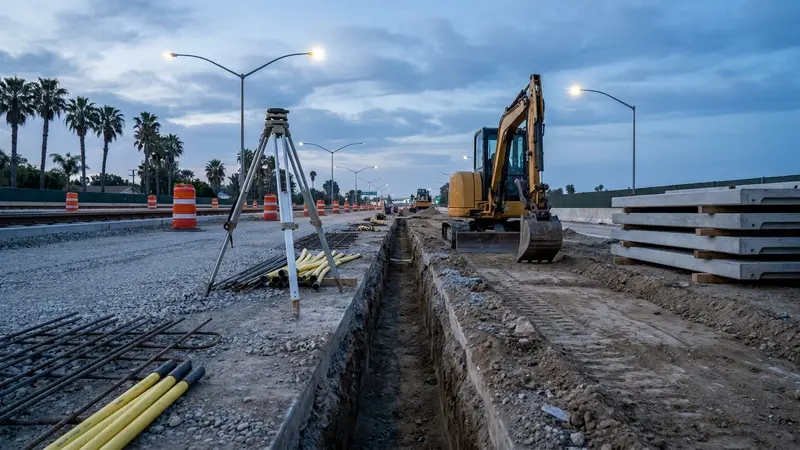
According to Engineering News-Record, the Texas Department of Transportation has selected Ferrovial Construction-Webber 99, a joint venture of Ferrovial and its U.S. construction subsidiary Webber, to design, build, and maintain a nearly 15-mile extension of SH 99 southeast of Houston. The contract is valued at approximately $1.47 billion, making it one of the largest single design-build highway awards in Texas in recent memory.
Background
The project covers Grand Parkway Segment B-1, running from FM 2403 to FM 646 through Brazoria and Galveston counties. According to ENR, the total contract package includes a $1.438 billion design-build contract and a separate $28.25 million capital maintenance agreement covering the first 15 years of operations. TxDOT selected the joint venture through a best-value process following a yearlong review.
The scope is substantial. The project adds four new TxDOT-operated tolled lanes and discontinuous frontage roads along approximately 15 miles, two direct connectors at the SH 99/SH 35 interchange, and roughly 5.9 miles of operational improvements along SH 35 itself. That SH 35 work includes 1.3 miles of reconstructed main lanes and frontage roads, plus 4.6 miles of additional operational improvements. TxDOT stated the project is intended to improve safety and mobility, support regional economic development, and strengthen hurricane evacuation capacity. Substantial completion is scheduled for the winter of 2031-2032, with final contract signing expected this summer pending Federal Highway Administration approval.
Analysis
This award signals continued momentum for large-scale toll infrastructure investment in the greater Houston region, and it reflects a procurement model that subcontractors working in Texas should pay close attention to. The best-value selection process, which took a full year to complete, indicates TxDOT is prioritizing technical capability and long-term performance alongside price. For a job at this scale, that also means the prime contractor’s supply chain will need to demonstrate similar rigor.
The inclusion of a 15-year capital maintenance agreement alongside the design-build contract is significant. Long-duration maintenance provisions are becoming more common on major design-build projects, and they change how primes structure their subcontractor relationships. Firms brought in for initial construction may find follow-on maintenance work available, but they may also face performance standards tied to long-term asset conditions rather than just construction milestones. That’s a different contractual environment than a traditional bid-build job.
The geographic scope also matters. Routing through Brazoria and Galveston counties means this project sits in a corridor that faces genuine hurricane exposure. TxDOT’s explicit mention of evacuation capacity as a project goal suggests that schedule risk tied to storm events will need to be managed carefully. Subcontractors working on this corridor should expect contract language that accounts for weather-related disruption without necessarily offering easy relief provisions.
Ferrovial’s CEO noted the award extends the firm’s existing presence on the Grand Parkway corridor, which suggests established supply chain relationships may already be in play. New subs looking to get on this job will likely need to move quickly once the contract is executed this summer.
What It Means for Subcontractors
- A $1.47B design-build of this complexity will require a wide range of specialty trades. Earthwork, drainage, structural concrete, electrical, and pavement subcontractors in the Houston-area market should be positioning now, before the prime finalizes its subcontract packages.
- The 15-year maintenance agreement creates potential for long-term work beyond initial construction. Firms with maintenance capabilities should flag this when approaching Ferrovial-Webber 99 for inclusion.
- Best-value procurement at this scale means the prime was evaluated on technical merit, not just price. Subs should be prepared to demonstrate qualifications, safety records, and relevant corridor experience, not just submit low numbers.
- Project substantial completion is targeted for winter 2031-2032, meaning this is a multi-year commitment. Resource planning and bonding capacity will be key considerations before pursuing work on this project.
- FHWA approval is still pending and contract signing is expected this summer. Watch for formal subcontractor solicitations to follow shortly after execution.