Commercial Door Safety Inspection Habits Help Prevent Struck-By, Crush Injuries
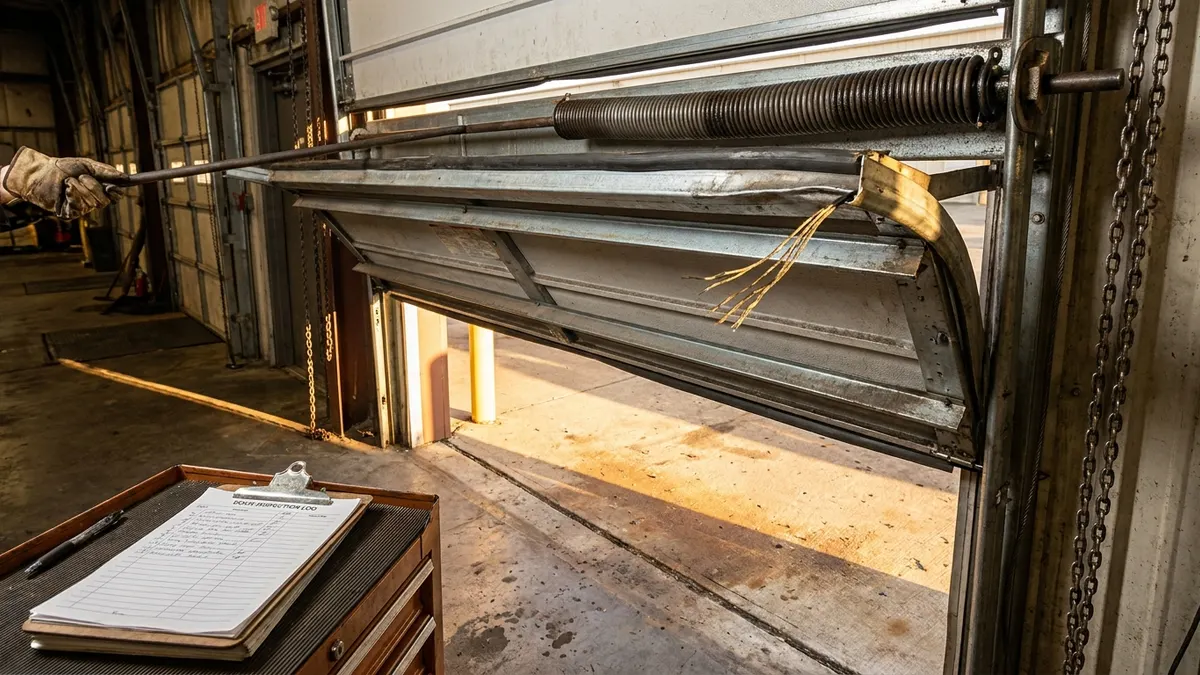
According to ISHN, commercial overhead doors need routine inspection and maintenance to prevent struck-by and crush injuries on jobsites and in facilities. Justin Alquist, owner of Alpha Overhead Doors in Phoenix, writes that most incidents trace back to a handful of preventable mechanical failures: snapped or frayed lifting cables, tracks bent or knocked out of alignment, and torsion springs that fail from fatigue or rust, sometimes sending metal fragments flying when they break.
Alquist recommends employees report any change in a door’s function, misaligned sensors, or visible wear immediately, in addition to scheduled comprehensive inspections performed by a qualified service technician on the manufacturer’s recommended schedule. Those inspections should cover visual checks of springs, hinges, brackets, and panels; a full safety test of the photoelectric sensor and auto-reverse feature; and inspection of perimeter seals, especially through seasonal weather changes.
Routine maintenance beyond inspection includes clearing debris from tracks while maintaining proper clearance, tightening bolts and fasteners, and lubricating springs, rollers, and hinges with commercial-grade lubricant. Facilities with rolling fire doors also need periodic drop tests to stay compliant with NFPA 80 fire code requirements, work Alquist says should be handled by a licensed technician.
What It Means for Subcontractors
- Facility maintenance and general contracting crews that operate warehouses, shops, or laydown yards with overhead doors should fold these inspection points into existing preventive-maintenance checklists rather than treating door safety as a separate program.
- Struck-by and crush injuries from failed springs, cables, or tracks are OSHA citation-prone; documenting routine inspections creates a paper trail that helps in both compliance audits and any post-incident liability review.
- Firms managing multiple sites should budget for licensed-technician inspections on a set cadence, particularly for any rolling fire doors requiring NFPA 80 drop tests, rather than waiting for a visible failure to trigger service calls.