Ergonomics Cuts Soft Tissue Injuries in Heavy Equipment Operations
According to Construction Executive, soft tissue and musculoskeletal injuries remain a leading risk for construction workers operating heavy equipment, and applying ergonomic principles to equipment selection and job site management can deliver measurable safety and financial returns.
Why This Matters Now
Musculoskeletal disorders (MSDs) are among the most common and costly workplace injuries in field operations. The CDC’s National Institute for Occupational Safety and Health (NIOSH) has long identified them as a primary driver of lost workdays and workers’ compensation claims in construction and industrial sectors. For subcontractors already stretched thin on labor, a single serious soft tissue injury can pull a skilled operator off the job for weeks, compounding the staffing shortages that have plagued the industry since 2020.
Construction Executive highlights that excavator operators are particularly vulnerable, often working in non-neutral body positions for extended periods, twisting their torsos and using poorly placed foot pedals or older hydraulic lever systems that generate significant physical strain over a shift.
What It Means for Subcontractors
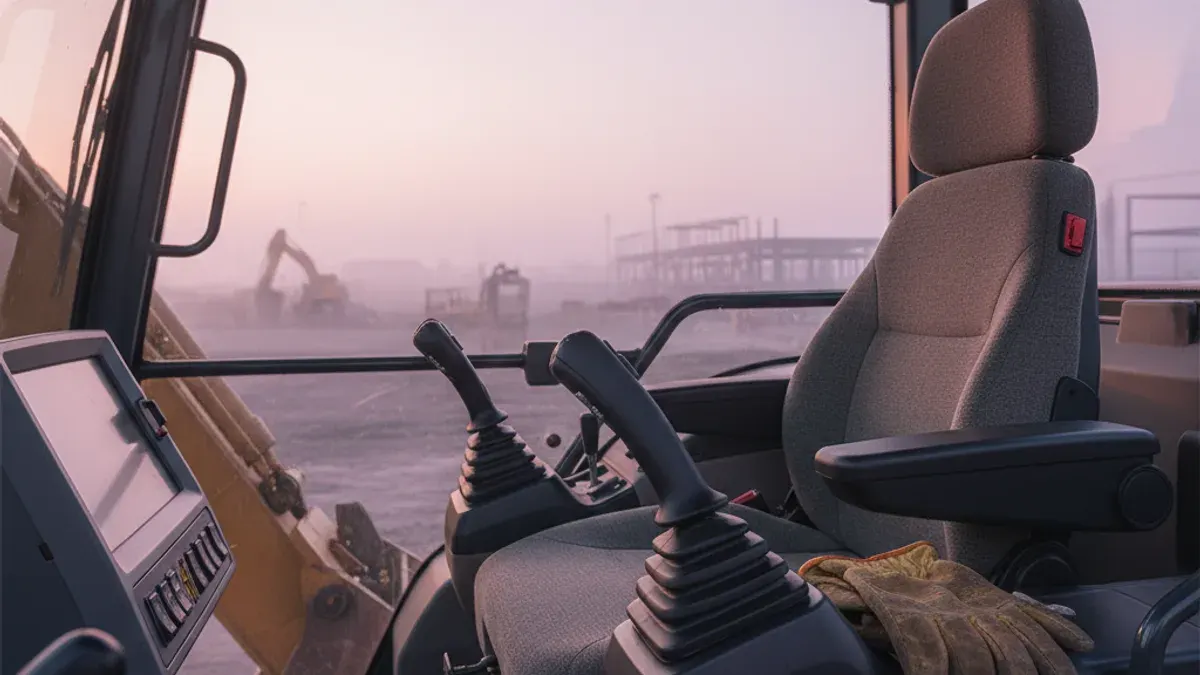
- Prioritize cab ergonomics when spec’ing equipment. Look for machines with adjustable, suspension-mounted seats, electronic joysticks instead of high-force mechanical levers, and large panoramic windshields that reduce blind spots and awkward neck positioning.
- Right-size equipment for the job site. Management should confirm that heavy equipment fits the confined dimensions of a work area. Operators compensating for oversized machines in tight spaces are forced into unnatural postures that increase injury risk.
- Add PPE and ergonomic assessments to your safety program. OSHA expects employers to identify and mitigate MSD hazards. Workers without proper protective gear face significantly higher injury rates, and documented ergonomic assessments can support your defense in a workers’ comp or OSHA inspection scenario.
- Treat ergonomics as a retention tool. In a tight labor market, operators who work in comfortable, well-designed cabs are less likely to leave for competitors. Lower injury rates also reduce turnover driven by chronic pain and long-term disability.