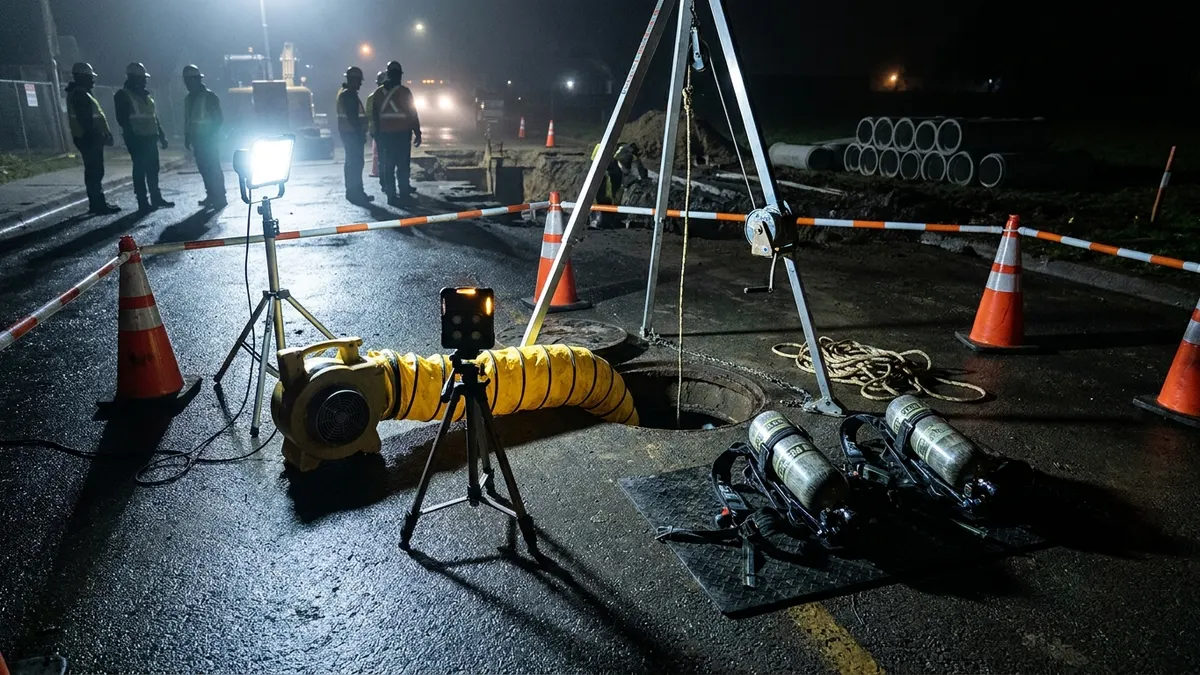
OSHA H2S Reminder: Test Air, Ventilate, Use SCBA Above 100 ppm
Any crew entering a low-lying or poorly ventilated space on a crude oil or utility job needs an air test first. Safety+Health Magazine reports that OSHA calls hydrogen sulfide “one of the leading causes of workplace gas inhalation deaths in the United States.”
The colorless gas smells like rotten eggs, is flammable and explosive, and occurs naturally in crude oil. OSHA warns it can collect in basements, manholes, sewer lines and underground telephone and electrical vaults. Exposure can cause eye, nose and throat irritation, headache, dizziness, coughing, difficulty breathing, shock, convulsions and death.
OSHA says a qualified person should test for the presence and concentration of the gas. If it is present, ventilate immediately. If it can’t be removed, workers need respiratory protection plus any other required PPE, with rescue and communication equipment on hand. Above 100 parts per million, the atmosphere is considered immediately dangerous to life and health, and a self-contained breathing apparatus is required.
What It Means for Subcontractors
- Name the tester before entry. For manhole, vault and sewer work (underground electrical, telecom, utility and pipeline crews), the site safety lead should designate the qualified person on each crew’s permit or pre-job plan, and confirm that person’s instrument reads H2S.
- Put 100 ppm on the checklist. Above that level, SCBA is required. Foremen should verify SCBA, rescue gear and communication equipment are on site before the crew enters, not after a reading comes back high.
- Hold a toolbox talk by Oct. 30. Cover the symptom list, immediate ventilation and what to do if the gas can’t be cleared. Safety managers should log attendance for every crew working crude oil facilities or below-grade structures.