Meta's C$13B Alberta Data Center Signals Years of Trade Work in Sturgeon County
Meta is planting its first Canadian flag in Alberta, and the C$13 billion price tag attached to the project points to years of subcontract work well beyond the data center’s walls, according to a Reuters report via BOE Report.
Background
Meta announced Wednesday it will build a 1-gigawatt data center in Sturgeon County, Alberta, its first facility in Canada and its 33rd data center globally. The investment totals C$13 billion, or roughly $9.17 billion USD, according to the Reuters report. Executives made the announcement in Calgary alongside Premier Danielle Smith and other provincial officials who have spent years courting Silicon Valley companies to invest in the province.
Alberta’s pitch to Meta rested on two practical advantages: natural gas that sells at a discount to the U.S. benchmark, and a cold climate that cuts cooling costs for server infrastructure. The province already hosts 20 smaller data centers that draw from a grid that is 60% powered by natural gas. To avoid straining that grid further, Alberta is now letting new data center developers build their own power sources, and Meta says it will fully fund new generation and grid infrastructure for the project, which will consume as much electricity as 800,000 homes.
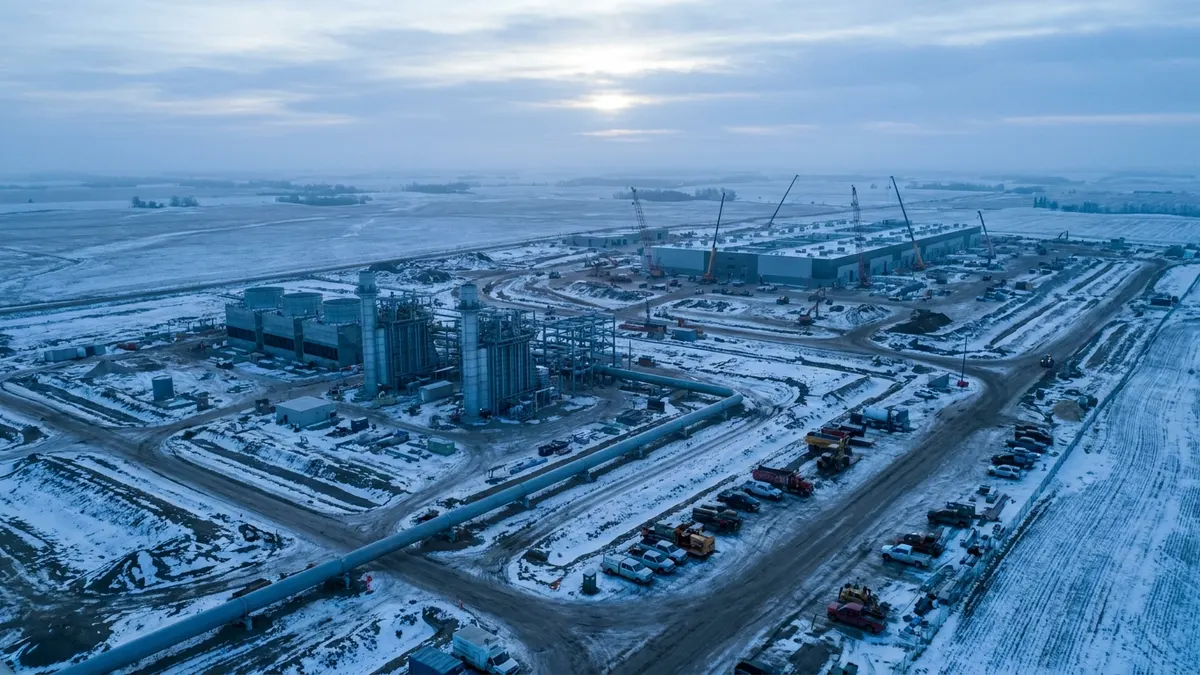
That power will come from a dedicated source. Meta has signed a long-term tolling agreement with Alberta-based Pembina Pipeline, which last week gave the go-ahead for its Greenlight Electricity Centre, a natural gas-fired power plant also in Sturgeon County. The plant is expected to enter service in late 2030 and will require approximately 150 million cubic feet per day of natural gas, per Pembina’s figures cited in the report. Canada’s federal government laid out an AI strategy last month touting the country’s clean electricity grid, but the report notes that most data centers currently in planning across Canada are in Alberta, where grid emissions intensity runs almost five times the national average because of the gas dependency.
Analysis
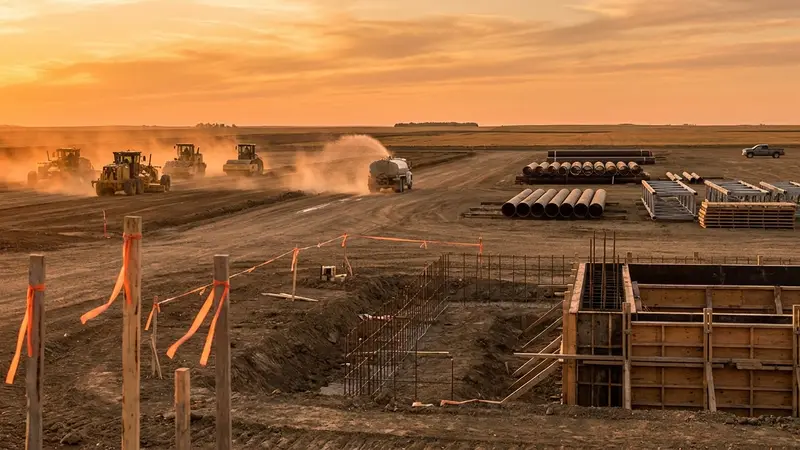
The Meta announcement is really two capital projects bundled into one regional buildout: a hyperscale data center and a dedicated gas-fired power plant to feed it. That combination matters more to subcontractors than the headline dollar figure does. A data center alone generates electrical, mechanical and low-voltage work. Add a purpose-built power plant with a 2030 in-service date, and you get a second, parallel construction program requiring civil, structural, piping, welding and E&I trades on a completely different schedule and likely a different prime contractor.
The 150 million cubic feet per day gas requirement for Greenlight Electricity Centre also implies gathering, compression or pipeline tie-in work to move that volume to Sturgeon County, though the report doesn’t specify the exact infrastructure route. That’s a detail worth confirming directly with Pembina as the project moves from announcement to permitting, since it will determine whether HDD, pipefitting and gas infrastructure crews see near-term bid packages or whether existing lines can handle the load.
Alberta’s decision to let developers build their own generation, rather than forcing everything through the public grid, is the more important long-term signal for the trades. It means every future hyperscale data center announcement in the province, and there will likely be more given the province’s active courtship of tech investment, could come paired with its own captive power project. That doubles the addressable construction market for firms that can work both sides: data hall fit-out and industrial power generation.
The timeline also matters. A 2030 in-service date for the power plant gives subcontractors real lead time to build relationships with Pembina and its eventual EPC contractor, rather than scrambling once packages hit the street. Data center shells typically move faster than power infrastructure, so electrical and mechanical crews focused on the Meta facility itself should expect earlier mobilization than crews tied to the Greenlight plant.
What It Means for Subcontractors
- Sturgeon County-based civil, electrical and mechanical contractors should begin reaching out to Meta’s general contractor and to Pembina Pipeline now, since no EPC contractor is named yet in the announcement and early relationship-building typically precedes formal prequalification.
- Pipefitting, welding and HDD crews in the Edmonton-area corridor should track Pembina’s permitting filings for the Greenlight Electricity Centre, given its 150 million cubic feet per day gas requirement will need supply infrastructure ahead of the late 2030 in-service date.
- Power generation and turbine-adjacent mechanical contractors should treat Greenlight Electricity Centre as a distinct bid opportunity separate from the data center build, since Meta’s tolling agreement with Pembina points to a standalone gas-fired plant construction program.
- Electrical subcontractors with data center experience (switchgear, backup power, low-voltage) should monitor Alberta’s self-generation policy, since it signals more captive power projects paired with future data centers in the province beyond this single Meta announcement.
- Firms with both industrial power and data center fit-out capabilities are best positioned to bid across both halves of this project; those with only one specialty should plan to partner or subcontract to cover the other side of the work.