Louisiana Kills Eminent Domain Limits for CCS, Keeping Pipeline Work in Play
According to RBN Energy, Louisiana lawmakers rejected a bill that would have placed new restrictions on the use of eminent domain for carbon capture and storage projects, leaving existing rules intact and keeping CCS development on track in one of the country’s most active states for the technology.
Market Impact
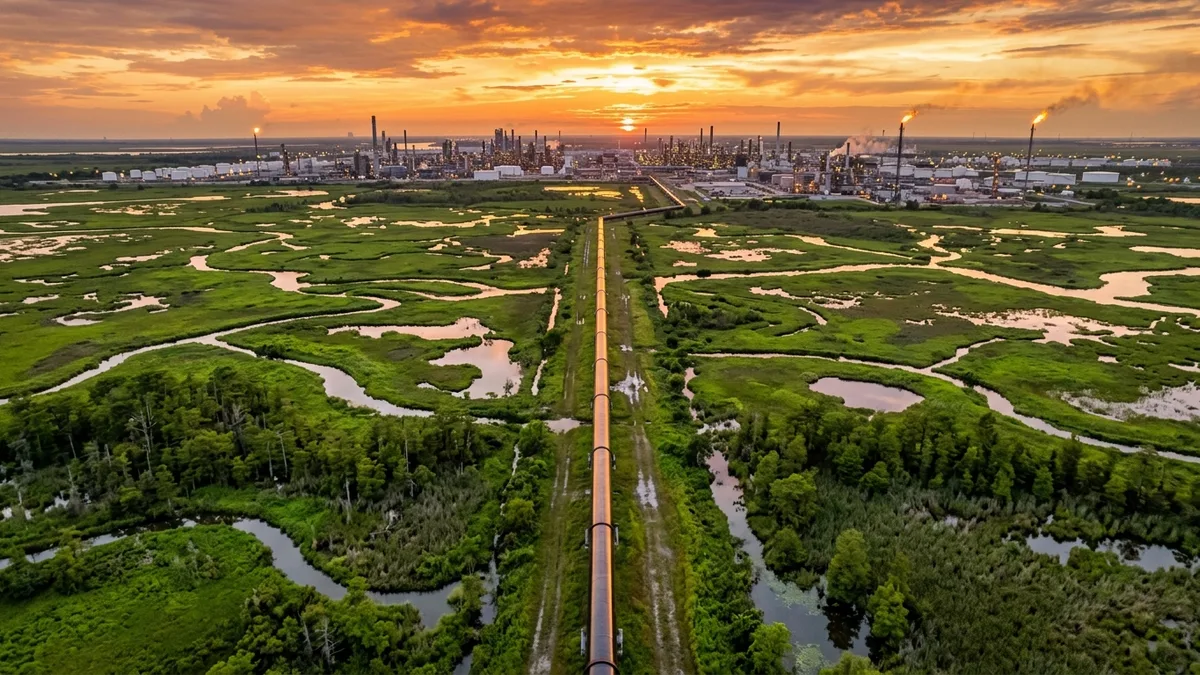
Louisiana has emerged as a leading destination for CCS investment, driven by its existing pipeline infrastructure, favorable geology for underground CO2 storage, and a regulatory framework that has attracted major project sponsors. Several large-scale CCS projects are in various stages of development along the Gulf Coast corridor, including CO2 pipeline networks and Class VI injection wells targeting deep saline formations.
Had the bill passed, developers would have faced greater difficulty acquiring rights-of-way for CO2 pipelines, potentially stalling or rerouting projects that are already in permitting. The legislature’s decision to reject the measure signals continued state-level support for CCS as an economic development tool, a position that aligns with substantial federal incentives available under the 45Q tax credit program, which pays up to $85 per metric ton of CO2 permanently sequestered.
What It Means for Subcontractors
- Pipeline construction and right-of-way crews operating in Louisiana should expect CCS project timelines to hold, with fewer land acquisition delays now that eminent domain authority remains unchanged.
- Welding, coating, hydrostatic testing, and horizontal directional drilling contractors should monitor bid opportunities on CO2 gathering and trunk line projects advancing through permitting in the state.
- Well service companies with Class VI injection well experience, or those looking to build that capability, remain well-positioned as Louisiana continues to process EPA injection well permits.
- Subcontractors working adjacent industries, such as industrial plant turnarounds or midstream maintenance, should track CCS project sponsors in the region as potential new clients with multi-year construction scopes.