Enbridge's $1.2 Billion Wyoming Solar Project Shows Big Tech Is Now Driving Energy Infrastructure
According to Solar Power World, Enbridge is developing the Cowboy Project, a 365-MW solar and battery energy storage facility near Cheyenne, Wyoming, built specifically to support Meta’s data center operations. The project carries a $1.2 billion construction price tag and is expected to enter service by the end of 2027. For field service companies and subcontractors working in energy and power infrastructure, this project is a clear signal of where major construction spending is heading: hyperscale tech demand is now a primary driver of large-scale energy builds, and the work is real, imminent, and geographically specific.
Background
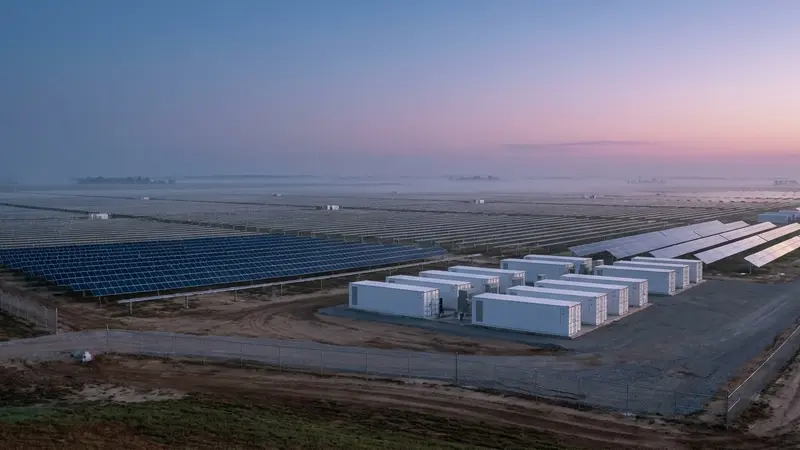
The Cowboy Project is the latest addition to a growing partnership between Enbridge and Meta that, according to Solar Power World, now totals approximately 1.6 GW of contracted capacity across North America. The first phase of the Cowboy Project pairs 365 MW of solar generation with a 1,600-MWh battery energy storage system (BESS). Tesla will supply and service the batteries under a long-term battery tolling agreement with Cheyenne Light, Fuel and Power (CLFP), the local utility delivering power to Meta under Wyoming’s Large Power Contract Service tariff.
That tariff structure is worth noting. Wyoming’s LPCS tariff is designed for large-load customers and allows utilities to provide market and renewable energy options to data centers without affecting retail rates for other customers. It’s a purpose-built regulatory pathway that makes large tech-load projects more viable, and it reflects how states are actively competing to attract data center investment.
The Cowboy Project isn’t Enbridge’s only Meta-related construction. Solar Power World reports the broader portfolio includes Clear Fork Solar at 600 MW, Easter Wind at 152 MW, and Cone Wind at 300 MW, all located in Texas. Meta, meanwhile, recently signed a power purchase agreement with EDP Renewables for the 250-MW Cypress Knee Solar project in Arkansas. The pattern is consistent: Meta is contracting large renewable energy projects in multiple states simultaneously to feed the power appetite of new data centers.
Analysis
What’s happening here is a structural shift in who drives energy infrastructure investment. For most of the past century, large-scale power generation was planned by utilities in response to broad load growth. Today, a single technology company is contracting gigawatts of generation capacity across multiple states, with a Canadian pipeline company as its primary development partner.
Enbridge’s pivot into power is deliberate. The company is using its project development capabilities and balance sheet to position itself as a clean energy infrastructure provider for hyperscale customers, not just a pipeline operator. The Cowboy Project reflects what Allen Capps, Enbridge’s senior VP of corporate strategy and president of its power business, described as a “disciplined approach to expanding our power portfolio” by integrating utility-scale solar with battery storage to deliver “reliable, scalable energy solutions.”
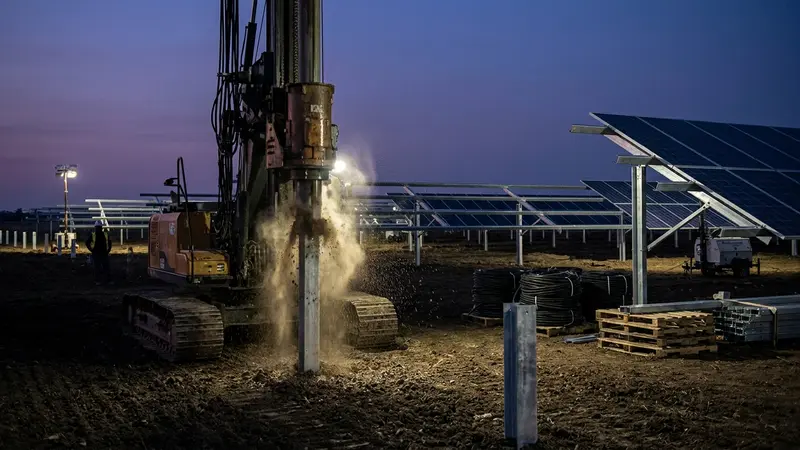
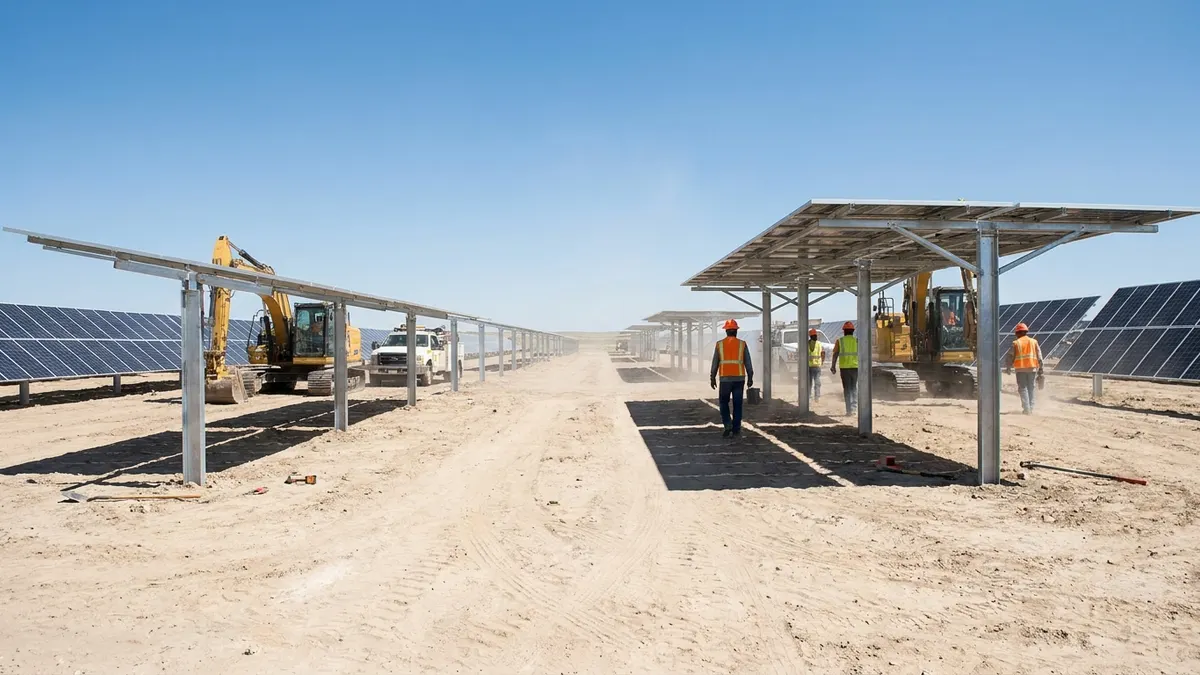
The $1.2 billion investment in Wyoming alone, expected to be built and operational within roughly 18 months of the announcement, represents the kind of compressed construction timeline that creates significant demand for qualified field labor and subcontractors. A project of this scale, combining ground-mount solar installation with a large BESS deployment, requires civil crews, electrical contractors, racking and mounting specialists, and battery system integrators working in close coordination.
The Wyoming location matters for workforce planning. Cheyenne sits in a region with established energy industry labor, but a 365-MW solar-plus-storage project is a different animal than oil and gas work. Subcontractors who have traditionally served Rockies energy markets and are now building solar and storage capabilities are well-positioned to compete for this work. Those who haven’t made that transition yet are watching a large contract cycle develop without them.
The BESS component, at 1,600 MWh, is substantial. Tesla’s role as supplier and servicer means there will be ongoing O&M work tied to the battery system well beyond the construction phase. Long-term service agreements on utility-scale BESS create recurring revenue opportunities for subcontractors who get qualified on those systems early.
What It Means for Subcontractors
- Wyoming is an active market now. A $1.2 billion project near Cheyenne with a 2027 target in-service date means procurement and subcontracting activity is either underway or imminent. Companies in the Rockies region should be positioning for this cycle today.
- Solar-plus-storage expertise is the entry ticket. This project combines utility-scale ground-mount solar with a 1,600-MWh BESS. Subcontractors with demonstrated capability in both disciplines have the strongest competitive position. Single-discipline shops may find themselves limited to narrower scopes.
- The Meta portfolio spans Texas and Wyoming. Clear Fork Solar (600 MW), Easter Wind (152 MW), and Cone Wind (300 MW) are all Texas-based Enbridge-Meta projects. Subcontractors already working in Texas energy markets should be aware that this client relationship is active and growing, with more projects likely to follow.
- BESS service contracts are long-term revenue. Tesla is supplying and servicing the batteries under a long-term tolling agreement. Subcontractors who develop BESS installation and maintenance qualifications position themselves for recurring work, not just one-time construction contracts.
- Tech-driven energy demand is not slowing down. Meta recently signed another solar PPA in Arkansas. The data center buildout driving these projects is a multi-year demand cycle. Subcontractors who build relationships and qualifications in this sector now are investing in a pipeline, not just a project.