Jacobs Survey: Permits, Grid and Equipment Slow US Energy Builds
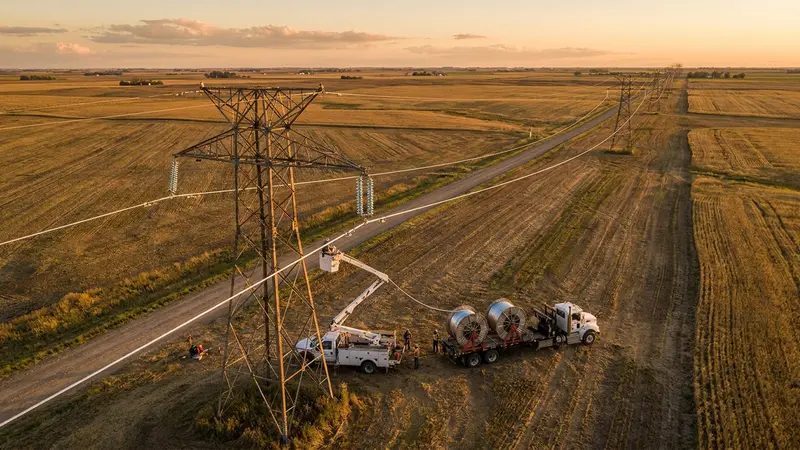
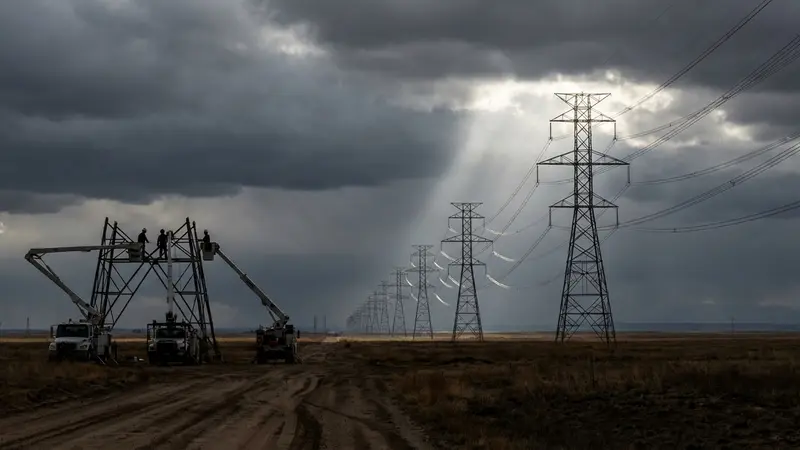
Capital is not what is holding up U.S. energy infrastructure. Permits, grid connections and equipment are, and that is why record demand from data centers is producing delayed and uneven starts for field crews. New research from Jacobs Solutions, covered by ENR, found that only 20% of U.S. energy-sector respondents consistently deliver major infrastructure projects on time and on budget.
Background
Jacobs released its Energy Readiness Equation report Oct. 27. It surveyed 600 senior energy-sector decision-makers in the U.S., UK, Germany, Australia and Singapore, all with responsibility for strategy, procurement, capital programs or major-project delivery. ENR reports that the 20% U.S. figure compares with 30% globally.
Another 49% of U.S. respondents said they hit targets only with significant effort or trade-offs. Some 23% said delays and overruns are common, and 8% called delivery increasingly unpredictable.
On capital, 71% of respondents globally said enough money is available in their markets. Only 29% said both capital and enough investment-ready projects are available. More than three-quarters expect at least one-quarter of their major projects to face delay or overruns over the next three years.
The U.S. barriers were specific. Permitting was ranked among the top three systemic barriers by 80% of U.S. respondents, the highest share of the five countries. Policy or regulatory uncertainty followed at 63%, and grid or network readiness at 51%. About 82% said regulators have the greatest ability to accelerate or delay projects. Jacobs’ Andy Solberg said “time to power has come to dominate planning and engineering for data centers.”
ENR paired the survey with other data on the gap between announcements and construction:
- MSI Economics estimated only about 5 GW of the 12 GW to 16 GW of data-center-related capacity projected for 2026 delivery was under construction. Its model required reserved transformers, turbines and switchgear, among other conditions.
- Aterio CEO Sergio Toro said roughly 30 GW to 40 GW of U.S. data-center capacity is announced each month, while about 7 GW enters construction and 2 GW to 3 GW enters operation.
- Bernstein tracked 404 GW in the North American pipeline against 72.9 GW under construction in August. It estimated about 13 years to clear the pipeline at the prevailing rate, and put 35% (170 GW of 488 GW) as likely to be built eventually.
Analysis
For a subcontractor, the headline number matters less than where the delay sits. A project that is waiting on capital usually shows it early. A project waiting on a permit, an interconnection or a transformer can look fully funded and still not release work.
Oracle’s Project Jupiter in Doña Ana County, N.M., shows the pattern. Oracle said it has awarded more than $994 million in contracts to 30 New Mexico companies through September, covering HVAC, insulation, plumbing, electrical installation, sanitation and equipment rentals. It reported more than 3.75 million labor hours and a peak workforce of 4,393. Yet ENR reports Oracle invoked force majeure protections on the project Sept. 28. The planned 2,462-MW Bloom Energy fuel-cell microgrid still lacked its state construction permit, and the Green Chile gas pipeline meant to supply it faced separate federal and state permitting. Oracle said the project remained on schedule. Buildings can go up while the power that energizes them is unresolved, and that is where the schedule risk sits.
The permitting finding also cuts across trades. The 82% who say regulators control the pace are pointing at agencies, not owners. ENR’s related coverage notes that New Jersey fined a data center $1 million over 123 MW of unpermitted generation. Onsite generation can solve a grid problem and create a permitting problem at the same time.
Aterio’s caution is useful for estimators. Toro said a power agreement or construction permit alone does not mean a project has entered construction. Aterio waits for visible site clearing, grading, foundations or vertical work. Subs can borrow that standard: treat site work as the real signal, not the press release.
Our inference: the survey does not break out owner-furnished equipment, but it names equipment availability as a stall factor. ENR’s related coverage describes long transformer lead times reshaping procurement. Where an owner or utility furnishes that gear, a late delivery lands on the sub’s schedule and cash flow, not the owner’s. The sub’s crew is mobilized and the substation pad is poured, but the transformer is not on site.
The 13-year Bernstein figure is a pipeline-clearing estimate, not a forecast of demand for labor. It does suggest that steady, evenly paced work will be scarcer than the announcement totals imply.
What It Means for Subcontractors
- Line crews: Do not tie crew mobilization to the energization date in the owner’s schedule. Tie it to documented delivery of owner-furnished transformers and switchgear, and write standby or remobilization rates into the proposal before you commit crews. MSI’s screen counts reserved transformers and switchgear as a precondition for near-term projects, so ask whether the owner has reservations in hand.
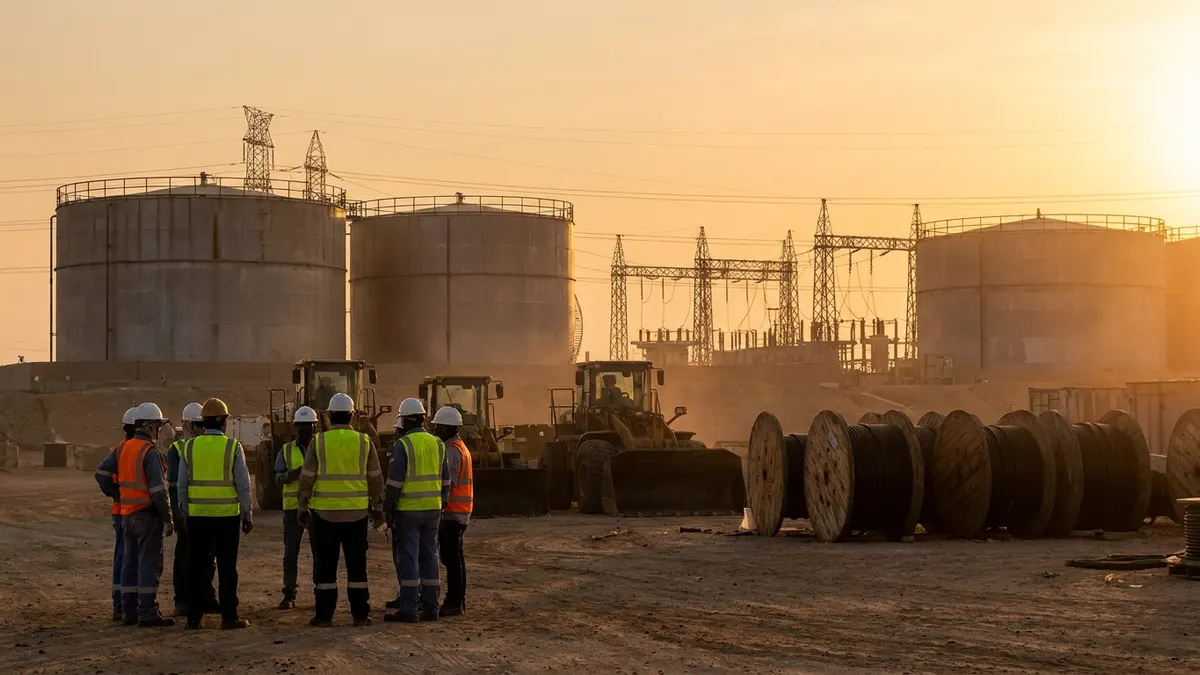
- Substation civil: Foundations, grounding and conduit can finish well ahead of equipment. Price extended site maintenance and storage into the base bid. Include a clause that releases you from the fixed completion date when owner-furnished equipment arrives late.
- Billing terms: Late owner-furnished equipment delays milestones that trigger payment. Push for billing on stored or delivered materials and on completed work in place, not on energization or final equipment set. Settle this at subcontract stage, not after the delay hits.
- Mechanical, electrical and insulation trades on data center campuses: Jupiter’s contract awards in HVAC, insulation, plumbing and electrical show buildings can proceed while power approvals lag. Before pricing a campus, ask whether the permit or microgrid approval is still open. If so, add escalation and remobilization language for work that depends on the open approval.
- Anything involving onsite generation or gas supply: Ask which state and federal permits the owner still lacks. The Jupiter microgrid and pipeline and New Jersey’s $1 million fine show approvals can trail construction. Make payment for generation-related scopes conditional on permit issuance.
- Backlog planning: With only about 7 GW of the 30 GW to 40 GW announced each month entering construction (Aterio), a sub should not count an announced project as backlog. Count it only after site clearing, grading or foundation work begins. Plan for gaps between starts, and keep crews on shorter-cycle utility and maintenance work to fill them.