In-Situ Weld Repair on a 1964 CO₂ Absorber Shows What Aging Plant Work Looks Like
Title suggestion (for editor): In-Situ Weld Repair on a 1965 CO₂ Absorber Shows What Aging Plant Work Looks Like
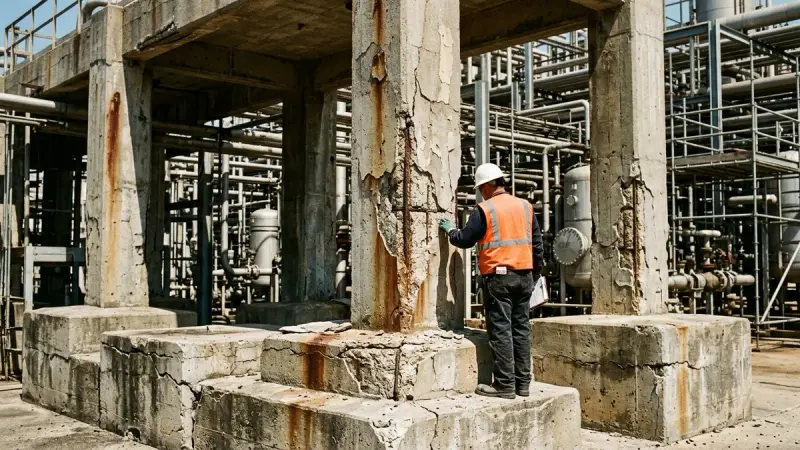
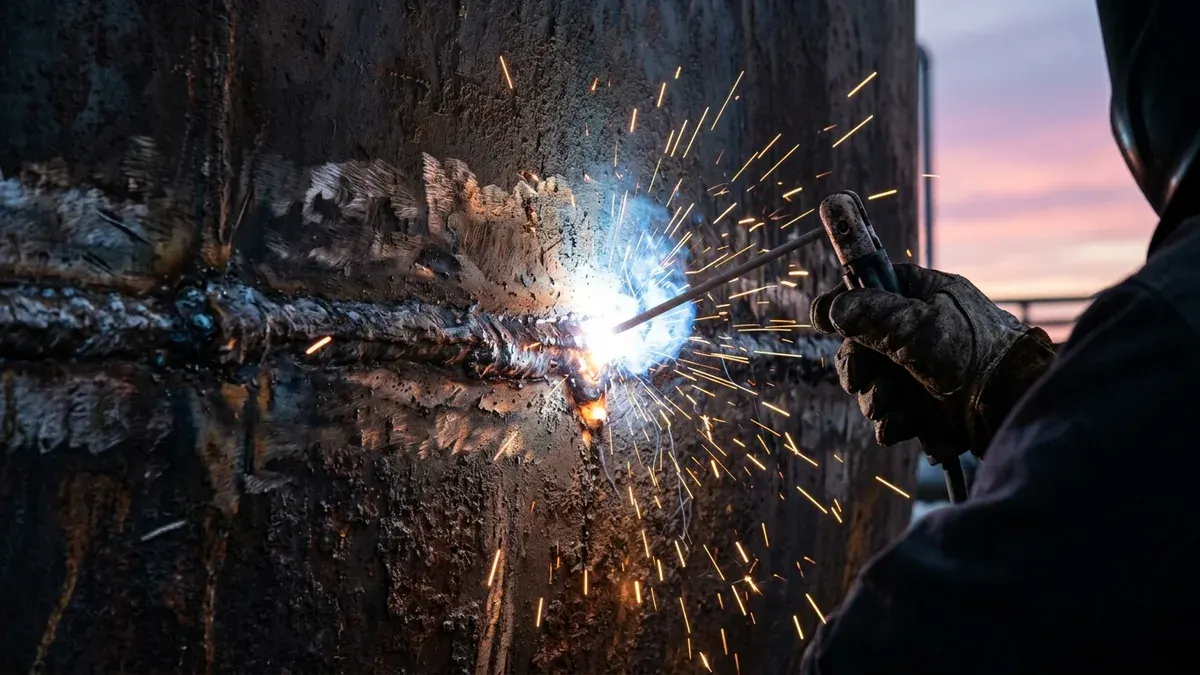
According to Inspectioneering Journal, engineers at Fauji Fertilizer Company’s Port Qasim Plant in Pakistan completed an in-situ repair of two circumferential weld seams on a CO₂ absorber originally fabricated in 1965, keeping the vessel in service rather than pulling it offline.
Vintage Equipment, Modern Demands
The absorber, designated C-208, was a Bechtel design originally built to 1962 ASME Section VIII code standards and first put into service in Lake Charles, Louisiana before being relocated and recommissioned in Pakistan in 1998. That detail matters: this vessel spent time in US Gulf Coast service before its second life overseas, and equipment with that kind of history is common across North American refineries and fertilizer plants as well.
The case study, authored by Sadiq Usman Khattak of FFC’s inspection team and published in the November/December 2025 issue of Inspectioneering Journal, covers the mechanical integrity evaluations and repair methodology used to rehabilitate the weld seams without taking the high-pressure column out of service. The absorber functions as part of a Benfield system, using a potassium carbonate solution to strip CO₂ from synthesis gas, making its uptime critical to ammonia production.
The broader trend is clear: as process plants across the US Gulf Coast, Permian, and Rockies operate equipment well past its original design life, in-situ repair work like this is becoming a more frequent contract scope rather than an exception.
What It Means for Subcontractors
- Vessels designed to pre-1980 ASME codes require careful review before any repair welding begins. Subcontractors need welding engineers who understand older code editions, not just current API and ASME standards.
- In-situ weld repair on pressurized columns demands detailed pre-job mechanical integrity assessments. Field crews should expect more documentation and engineering hold points than on typical maintenance welding.
- Clients operating vintage equipment are increasingly looking for subcontractors who can work around production schedules rather than requiring full shutdowns. Firms that can demonstrate in-situ capability have a competitive edge in turnaround and maintenance bids.
- OSHA PSM (Process Safety Management) requirements under 29 CFR 1910.119 apply to repair work on covered process equipment. Subcontractors working on CO₂ absorbers, reactors, and similar vessels need MOC and quality documentation in order before work starts.