Entropy Commissions Glacier Phase 2 Carbon Capture and Co-Generation Project in Alberta
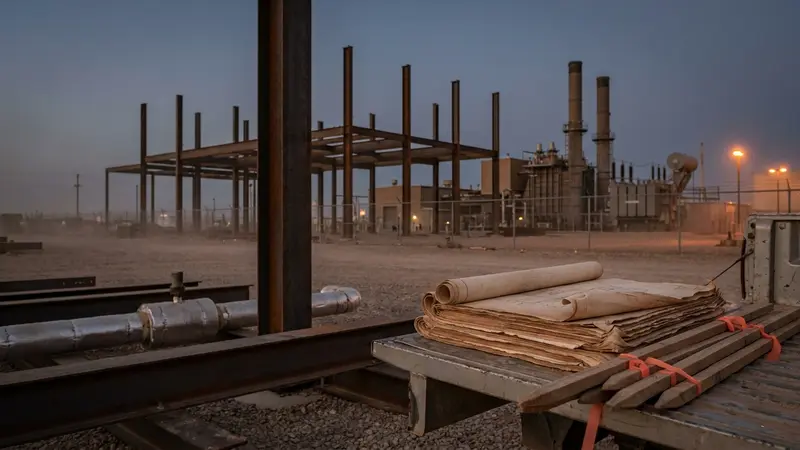
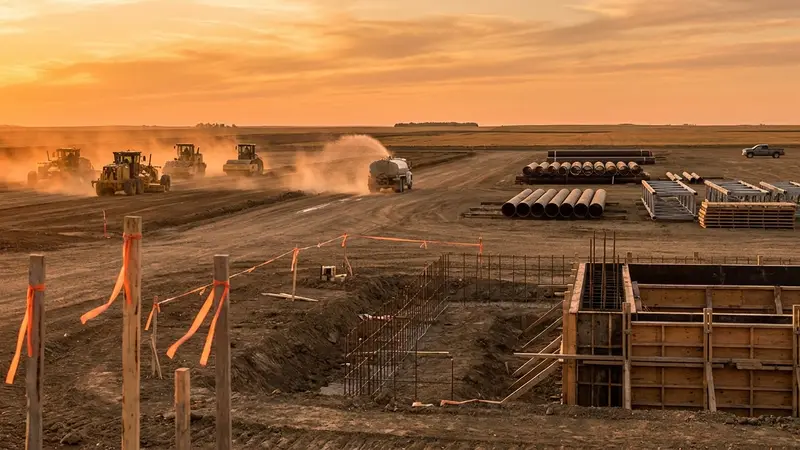
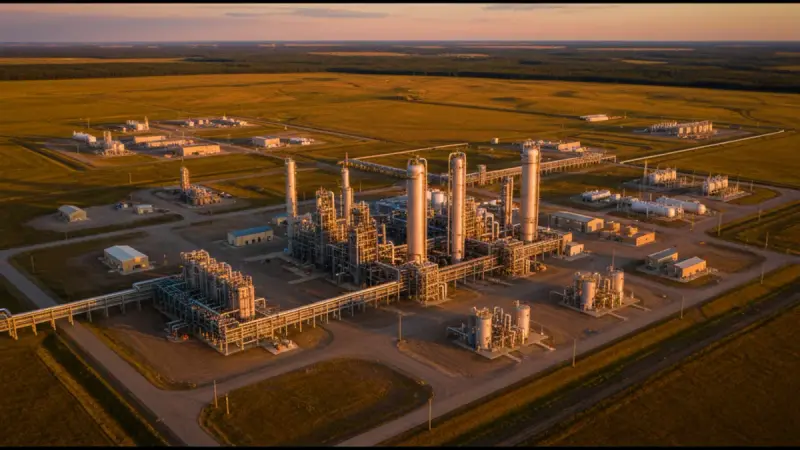
Entropy Inc., a subsidiary of Advantage Energy Ltd., has commissioned its Glacier Phase 2 co-generation and carbon capture and storage project at the Glacier Gas Plant in Saddle Hills County, Alberta, according to a company press release on PR Newswire. The project came online on schedule and adds a new layer of integrated capture capacity to a facility that has run commercial CCS since 2022.
Background
Per the release, Glacier Phase 2 pairs a new 15 MW co-generation gas turbine with fully integrated carbon capture, transportation, and storage, alongside carbon capture retrofitted onto roughly 30 MW of reciprocating engines that drive compression at the plant. Entropy says the combined system is designed to capture more than 90% of CO2 from all material unabated emissions sources at Glacier, using its iCCS Recip and iCCS Turbine technology.
“We are proud of the work our team and service providers have done to safely bring Glacier Phase 2 online right on schedule,” said Sanjay Bishnoi, Chief Executive Officer of Entropy, in the release.
With commissioning complete, Entropy says it is now moving the facility to steady-state operation and expects to publish verified performance data for Glacier Phase 2 in the coming months. The company has operated commercial post-combustion carbon capture at Glacier since 2022, which it describes as one of the longest continuous commercial capture records in the industry. The Glacier facility sits in the Montney formation alongside Advantage’s Progress, Valhalla, and Wembley assets.
Analysis
Glacier Phase 2 is a data point for subcontractors tracking Alberta’s CCS build-out beyond the marquee Pathways Alliance and oil sands megaprojects. This is a mid-size, already-operating gas plant retrofitting capture capacity onto existing compression and adding new co-generation, not a greenfield mega-facility years from first steel. That distinction matters for scheduling: work packages tied to retrofits like this move on operator timelines measured in months, not the multi-year permitting horizons attached to the largest oil sands CCS proposals.
The reciprocating-engine retrofit scope is also worth flagging. Capturing carbon from roughly 30 MW of compression engines, rather than a single large turbine, implies a more distributed mechanical and instrumentation scope across multiple units at one site. Contractors with experience in compressor station retrofits, emissions monitoring instrumentation, or turbine balance-of-plant work have a concrete, named reference project to point to when bidding similar retrofit work elsewhere in the Montney or Duvernay.
What It Means for Subcontractors
- Mechanical and E&I subcontractors with compressor station and reciprocating-engine experience should track Entropy and Advantage Energy as active CCS retrofit clients in Alberta’s Montney fairway, distinct from the larger, slower-moving oil sands CCS proposals.
- Instrumentation and controls firms should note the emphasis on verified performance data reporting; owners running CCS retrofits are likely to need ongoing monitoring, measurement, and verification (MMV) subcontract support as these systems move to steady-state operation.
- Firms bidding co-generation and turbine balance-of-plant packages can use the 15 MW Glacier Phase 2 installation as a comparable scale reference for similar small-to-mid co-generation retrofits tied to gas processing infrastructure.