EIA Forecasts Back-to-Back US Power Consumption Records Through 2027, Driven by AI and Electrification
According to a Reuters report via BOE Report, the U.S. Energy Information Administration projects American power consumption will set new records in both 2026 and 2027, pushed higher by AI-driven data center growth and broad electrification across homes, businesses, and transportation. The EIA’s Short-Term Energy Outlook, published Tuesday, puts demand at 4,271 billion kilowatt-hours in 2026 and 4,397 billion kWh in 2027, building on the record 4,195 billion kWh consumed in 2025. For field service companies and subcontractors working in electrical, utility, and construction trades, the implications are straightforward: multi-year demand growth is now the baseline, not the optimistic scenario.
Background
The EIA’s projection marks what would be a third consecutive annual record for U.S. power consumption. According to the Reuters report via BOE Report, the 2025 figure of 4,195 billion kWh was itself the second straight annual record high.
The growth is not evenly distributed across sectors. The commercial sector, fueled by data centers dedicated to artificial intelligence and cryptocurrency, is expected to outpace residential demand in 2026 for the first time on record. The EIA forecast commercial power sales rising to 1,547 billion kWh in 2026, surpassing the residential figure of 1,512 billion kWh, with industrial customers adding 1,066 billion kWh. For comparison, the all-time high for commercial customers was 1,493 billion kWh in 2025, meaning the sector is projected to break its own record within a single year.
On the generation side, natural gas is projected to hold its share at 40% of the power mix through 2026 and 2027, the same level as 2025. Renewables are forecast to grow from roughly 24% of generation in 2025 to 27% by 2027, while coal slides from 17% to 15%. Nuclear holds steady at 18%.
Analysis
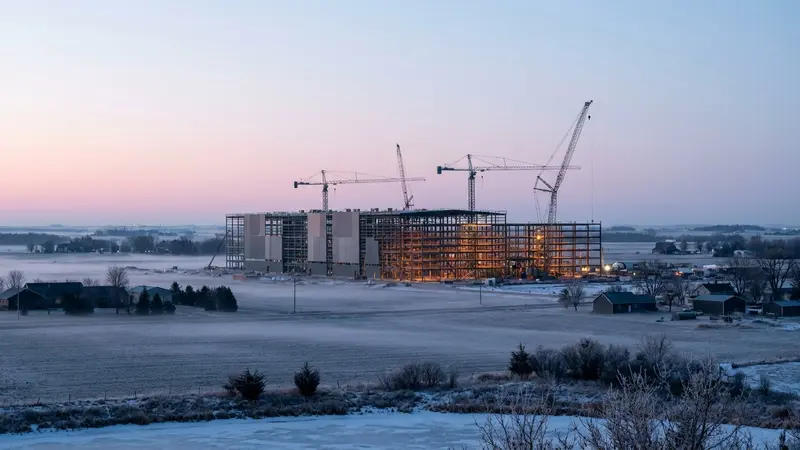
The EIA numbers confirm what many in the infrastructure trades have already been feeling on the ground: demand for power construction is not a cycle, it’s a structural shift. The data center buildout behind AI and cryptocurrency is a capital-intensive, geographically distributed wave of construction that requires everything from site prep and foundations to high-voltage electrical work, cooling systems, and grid interconnection. When commercial electricity demand overtakes residential for the first time on record, that’s not a statistical footnote. It signals a fundamental change in where power is being consumed and, by extension, where infrastructure investment has to follow.
The renewable generation growth forecast adds another layer of sustained workload. Moving from 24% to 27% of the generation mix over two years requires actual physical construction: solar farms, wind projects, battery storage, and the transmission infrastructure to connect them to load centers. That work doesn’t happen without electricians, ironworkers, civil crews, and the subcontractors who support them.
The sustained 40% share for natural gas is also notable. Gas-fired generation isn’t being displaced in this forecast; it’s holding firm as the backbone of a growing grid. For subcontractors in pipeline services, compression, and power plant maintenance, that means the gas infrastructure supporting power generation will need to keep performing and expanding alongside renewables, not in competition with them.
One dynamic worth watching is the geographic concentration of data center construction. Certain markets, including parts of Texas, Virginia, and the broader Sunbelt, have seen the most aggressive buildout so far. Subcontractors positioned in those corridors are already seeing elevated workloads, but the scale implied by EIA’s demand curve suggests secondary markets will increasingly come online as primary markets strain grid capacity and available land.
The industrial sector forecast adds another thread. Industrial electricity consumption is projected at 1,066 billion kWh in 2026, which would exceed the all-time high of 1,064 billion kWh set back in 2000. Reshoring trends, domestic manufacturing investment, and industrial electrification all feed that number. For subcontractors serving industrial clients, that’s a meaningful signal that plant electrical work, equipment installation, and facility upgrades are not slowing down.
What It Means for Subcontractors
- Data center work is a multi-year pipeline, not a spike. Subcontractors with electrical, mechanical, and civil capabilities should be actively pursuing data center general contractors and developers in their regions. Qualification processes can take months, so the time to get on bid lists is now, not when project awards start flowing.
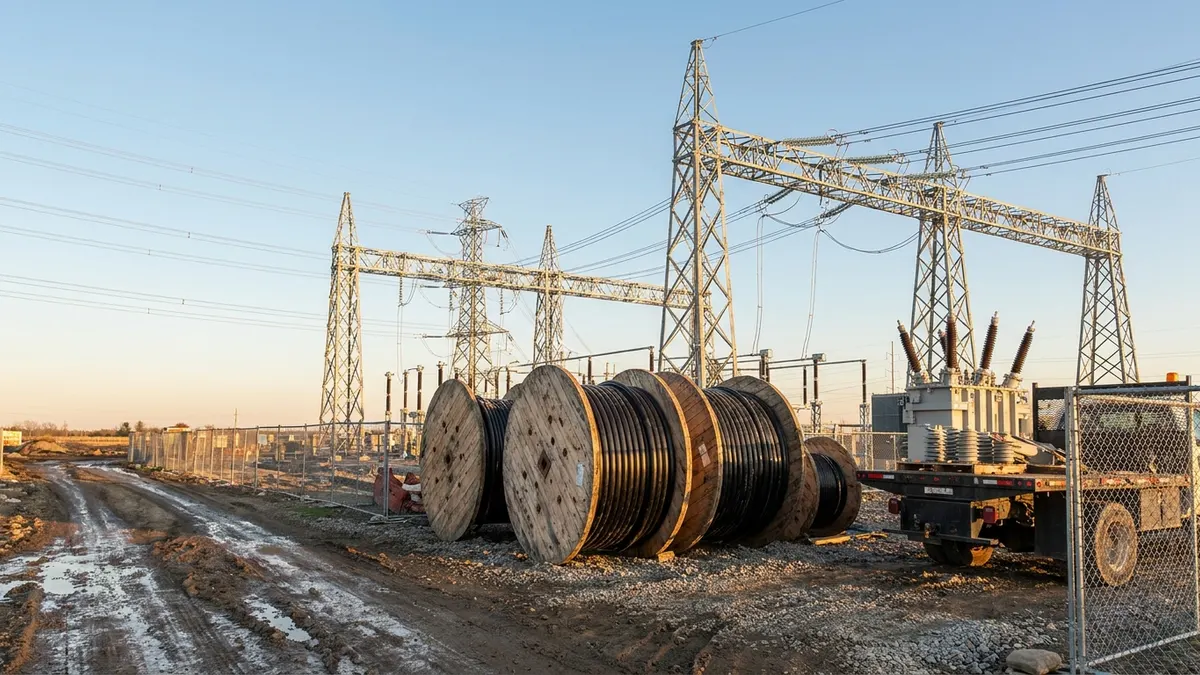
- Grid interconnection and transmission work will grow alongside generation. Every new solar farm or gas peaker needs to connect to the grid. Subcontractors in high-voltage work, substations, and transmission line construction are positioned for sustained demand.
- Industrial facility work is recovering to peak levels. With industrial electricity demand approaching the 2000 record, maintenance, upgrades, and new construction at manufacturing and processing facilities represent a growing workload for mechanical and electrical trades.
- Workforce and equipment capacity planning matters now. A three-year runway of record demand growth gives subcontractors a rare window to plan hiring, training pipelines, and equipment investment before the crunch hits rather than during it.
- Natural gas infrastructure stays relevant. Gas-fired generation holding at 40% of the mix through 2027 means compression, pipeline, and power plant service work remains a stable revenue base alongside the renewables buildout.