
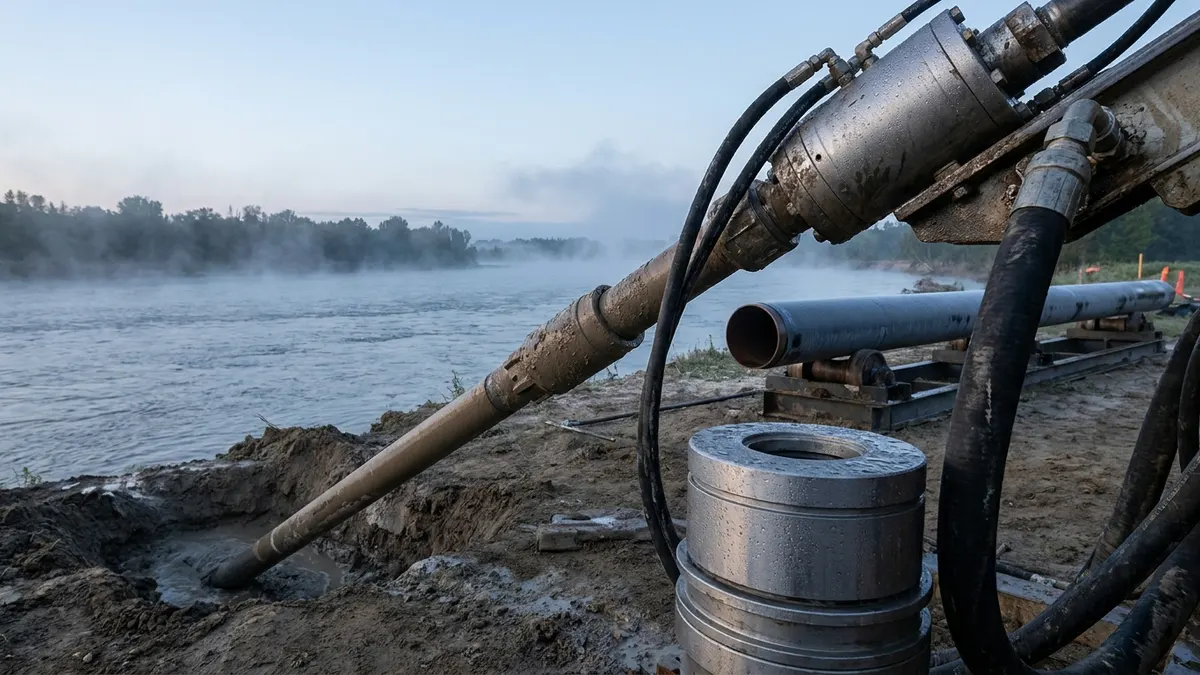
Crossing Group Sets HDD Record on Athabasca River Pipeline Bore
The Crossing Group completed a record-setting 2,955-meter (9,695-ft) horizontal directional drilling intersect beneath Alberta’s Athabasca River, finishing on budget and ahead of schedule, according to Trenchless Technology Canada.
Market Impact
The crossing forms a critical segment of the Whiskey Jack Lateral, a pipeline corridor developed by Wolf Midstream connecting the Fort McMurray region to the Alberta Heartland. The Crossing Group was contracted to install a 12-inch steel product pipeline beneath the river south of Fort McMurray, using the HDD intersect method: two rigs launched simultaneously from opposite banks, steering underground toward a predetermined meeting point.
The bore’s meeting point landed 1,550 meters (5,085 ft) from the entry side. Trenchless Technology Canada reports both the total bore length and the single-ended intersect leg distance are company records for The Crossing Group, marking the longest HDD bore and longest single-ended intersect leg in the firm’s nearly three-decade history. The project underscores the scale of trenchless work now being awarded to support oil sands midstream buildout in one of North America’s more logistically demanding operating environments.
What It Means for Subcontractors
- HDD contractors bidding oil sands midstream work should expect crossing specs in the 2,500 to 3,000-meter range to become a benchmark, not an outlier, as pipeline corridors like Whiskey Jack Lateral push into longer river crossings.
- Two-ended intersect crews (gyroscopic steering, dual-rig coordination) are the differentiator on jobs like this. Firms without in-house gyroscopic intersect capability should evaluate partnering or equipment investment now, before the next Alberta Heartland-area bid package goes out.
- Pipe installation subs working 12-inch and larger steel product lines in oil sands corridors should track Wolf Midstream’s broader Whiskey Jack Lateral buildout for additional crossing packages tied to the Fort McMurray-to-Alberta Heartland route.
- Project owners on technically demanding river crossings are rewarding contractors who deliver ahead of schedule and on budget, a track record worth highlighting in prequalification packages for future HDD bids in Canada’s oil sands region.
