Canada's Pipeline Capacity Gap Could Drive a Decade of Work for Western Field Subs
According to the Financial Post, Canada’s pipeline industry may be entering a new phase after years of project delays and outright cancellations. The publication points to South Bow’s proposed Prairie Connector line to the United States, potential upgrades to Enbridge’s Mainline, and possible expansions of the Trans Mountain system as projects that could open up meaningful new capacity for rising oil production. The backdrop: Canada is expected to produce over 5.8 million barrels of oil per day by 2030, and pipeline infrastructure will need to keep pace.
That single data point, 5.8 million bopd by 2030, is the load-bearing number for anyone who works in Western Canadian field services. It sets the scale of what’s coming and why pipeline construction and maintenance could become the dominant work category in the basin for the rest of this decade. US-based field service companies with Canadian divisions or cross-border operations should also be paying attention.
Background
Canada’s pipeline sector has spent much of the past 15 years defined by what didn’t get built. Keystone XL was cancelled. Northern Gateway was blocked. Energy East never made it to a shovel. Trans Mountain eventually crossed the finish line after years of litigation and cost overruns, but it was the exception, not the rule.
The result has been a persistent mismatch between upstream production growth and the midstream infrastructure needed to move that production to market. Producers in Alberta and Saskatchewan have watched differentials widen and margins compress when takeaway capacity tightens, a dynamic that has ripple effects all the way down to the field service companies that depend on upstream capital budgets staying open.
According to the Financial Post, the current moment may represent a shift in that pattern. South Bow’s Prairie Connector, Enbridge Mainline upgrade work, and potential Trans Mountain expansions are the named projects in play. Whether all of them advance, and on what timeline, remains an open question, but the direction of travel appears to be toward more capacity, not less.
Analysis
The framing of a “turning point” deserves some scrutiny, because the Canadian pipeline sector has seen false dawns before. Regulatory risk, Indigenous consultation requirements, and cross-border political exposure (the Prairie Connector routes to the US, which adds its own complexity in the current trade environment) are all real variables that can push timelines out or kill projects entirely.
That said, a few structural factors make this moment different from the last cycle. Trans Mountain is now in service and operating, which proves that large-scale Canadian pipeline construction can complete in the modern regulatory environment. The federal government has shown more appetite for energy infrastructure framing as an economic sovereignty issue, particularly in the context of US trade tensions. And producer balance sheets in Alberta are in better shape than they were during the 2015 to 2016 downturn, meaning there is genuine demand-side pressure from upstream companies that need the capacity.
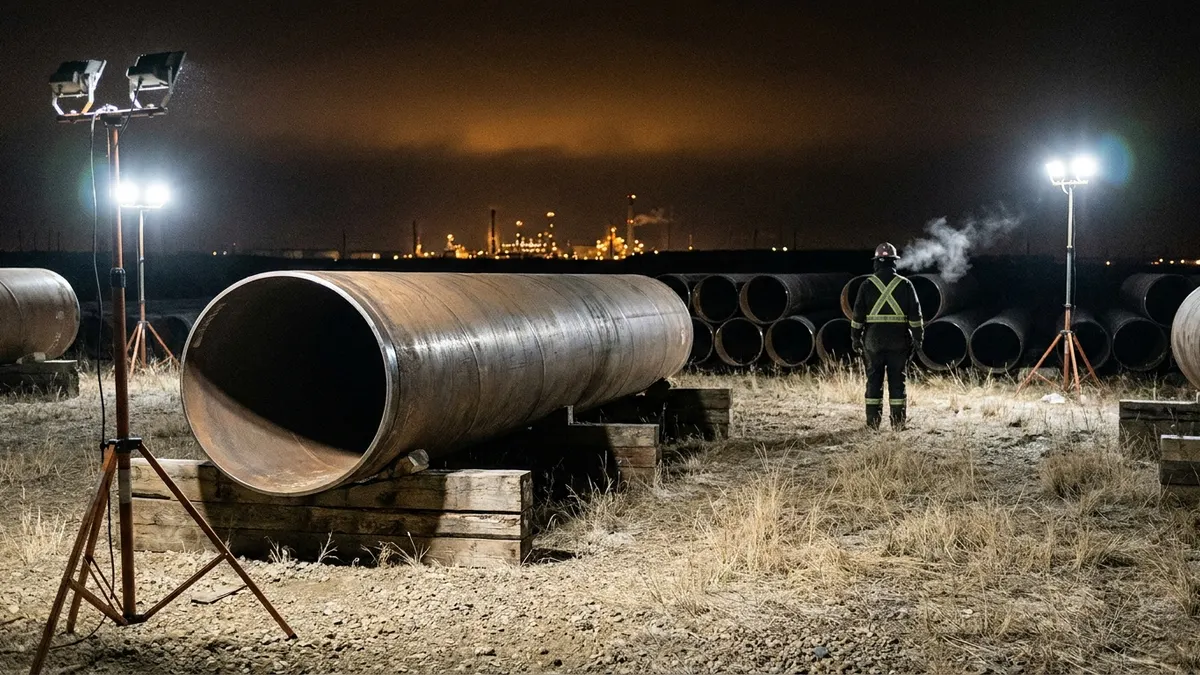
For the midstream sector, the pipeline construction and maintenance backlog in Western Canada is not a single project bet. It’s a portfolio. Enbridge Mainline upgrade work, if it proceeds, tends to be steady and long-duration. New build work like Prairie Connector, if it clears regulatory hurdles, generates a concentrated burst of construction activity followed by years of integrity management and operations work. Trans Mountain expansion would follow a similar pattern.
The aggregate effect is that Western Canada could see a sustained, multi-year pipeline workload that runs well into the early 2030s. That’s a different planning horizon than a single contract award, and it argues for field service companies to be thinking about capacity and positioning now, not after the first shovels hit the ground.
There’s also a workforce dimension. Pipeline construction draws heavily on specialized trades, welders, equipment operators, hydrostatic testers, coating and inspection crews. If multiple major projects run concurrently or in close sequence, labor competition will be real. Companies that have maintained their skilled trades base through the leaner years, or that have relationships with Indigenous-owned contractors in the project corridors, will be better positioned than those scrambling to staff up at peak.
What It Means for Subcontractors
-
Watch the regulatory calendar closely. Project timelines for Prairie Connector, Enbridge Mainline work, and any Trans Mountain expansion will be driven by approval milestones. Field service companies should be tracking Canada Energy Regulator (CER, formerly the National Energy Board) proceedings and environmental assessment timelines to anticipate when mobilization windows will open.
-
Diversify across project types. New build pipeline work and integrity/maintenance work on existing lines have different crew profiles and equipment requirements. Companies that can serve both are less exposed to any single project being delayed.
-
Build or protect your welding and inspection capacity. Pipeline construction is welder-constrained in a hot market. If large-diameter new build work accelerates, certified welders and CWB-qualified (Canadian Welding Bureau) inspection personnel will be in short supply across Alberta and BC.
-
Engage with Indigenous contracting frameworks early. Major pipeline corridors in Western Canada increasingly run through First Nations territories with equity stakes or impact benefit agreements. Primes and project owners will be under pressure to demonstrate Indigenous participation. Subcontractors with existing relationships or joint venture structures will have a competitive advantage.
-
Don’t overcommit to a single project. The history of Canadian pipeline construction is full of projects that looked certain and then weren’t. Build your business plan around the range of possible outcomes, not just the optimistic case.