British Columbia Starts Work on $6B North Coast Transmission Line
Construction has started on British Columbia’s North Coast Transmission Line, according to Construction Today, one of the province’s largest electricity infrastructure projects and a bet that grid capacity, not just permits and financing, will decide which industrial projects get built in the north.
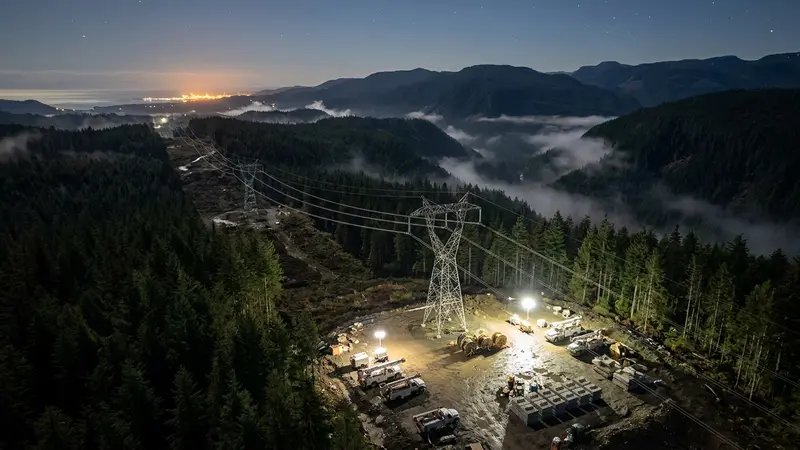
BC Hydro’s line will add new 500-kilovolt infrastructure between Prince George and Terrace, an industrial corridor where proposed mines, LNG facilities, ports and other large projects are competing for access to electricity. Phase 1 covers about 165 kilometres between the Williston Substation near Prince George and the Glenannan Substation near Fraser Lake, targeted for service in fall 2030. Phase 2 continues roughly 275 kilometres from Glenannan to the Skeena Substation near Terrace, with major construction beginning in spring 2027 and service targeted for mid-2032.
The preliminary cost estimate for the first two phases is about $6 billion, funded in part by a $3.9 billion federal-provincial commitment through the Canada-British Columbia Co-operative Prosperity Agreement, plus an earlier $139.5 million Canada Infrastructure Bank loan to BC Hydro for engineering, route clearing and consultation work.
The existing 500-kilovolt system between Prince George and Terrace has reached the point where projected electricity demand exceeds available capacity, according to Construction Today. That is already shaping investment decisions: BC Hydro signed a memorandum of understanding in January with the proposed Ksi Lisims LNG project on Nisga’a Treaty Lands outlining steps to supply as much as 600 megawatts, a single-customer demand large enough to strain regional transmission on its own.
The province projects that industrial activity supported by the expanded grid could create about 9,700 direct full-time jobs, add nearly $10 billion a year to provincial GDP, and generate roughly $950 million a year in government revenue, though those figures depend on projects reaching final investment decisions and financing.
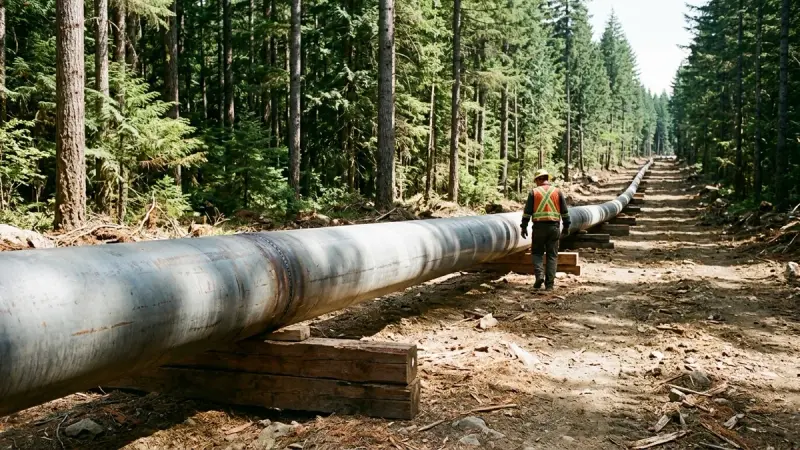
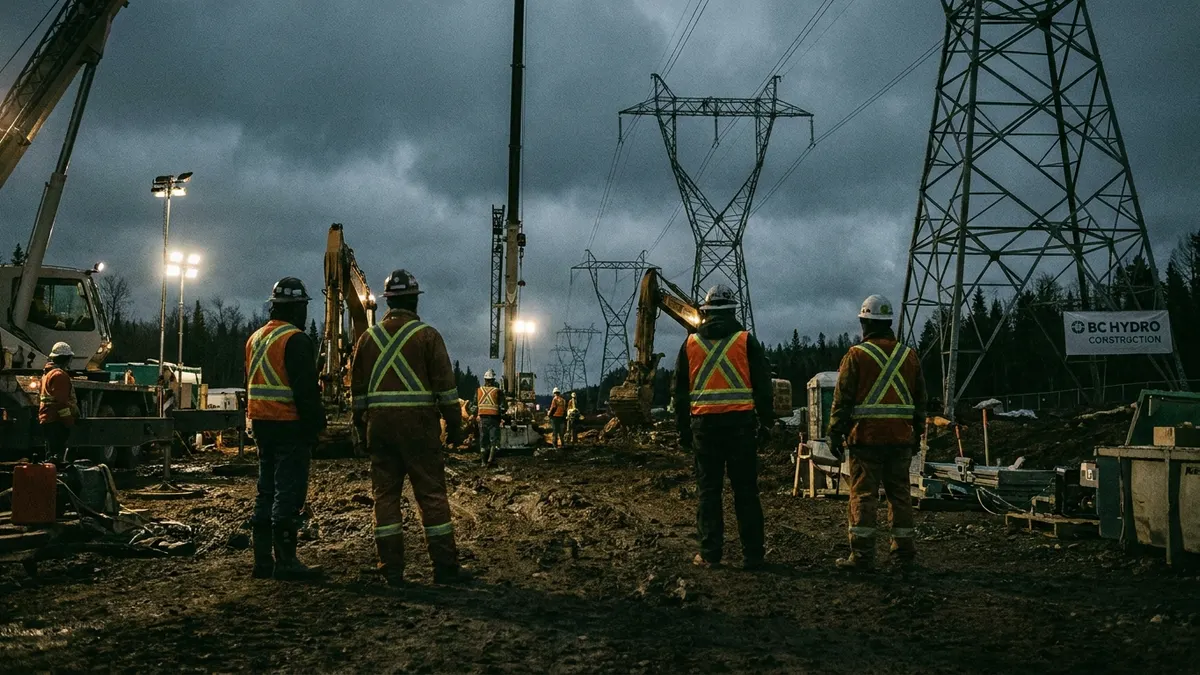
Construction activity now underway includes clearing, access development, workforce accommodation and equipment staging, with the province forecasting about 1,400 construction workers across both phases at peak activity.
First Nations participating in the project have been offered an option to acquire up to 50 percent equity in the new infrastructure through the K’uul Power consortium, a structure the federal Major Projects Office says several member nations have already signed onto. That equity option is layered on top of, not instead of, construction and procurement opportunities tied to the build.
What It Means for Subcontractors
The multi-year build calls for utility linemen, transmission structure crews, civil earthworks contractors and access-road builders across two remote phases running into the early 2030s. With Phase 2 major construction not starting until spring 2027, subcontractors have a multi-year runway to position for prequalification on both BC Hydro-managed work packages and downstream industrial construction (mining, LNG, port expansion) that the line is designed to unlock. First Nations equity participation through K’uul Power also means joint-venture and procurement-partnership structures are likely to factor into contractor selection, not just lowest bid.