Who Owns Safety on a Multi-Contractor Worksite? The Answer Is More Complicated Than You Think
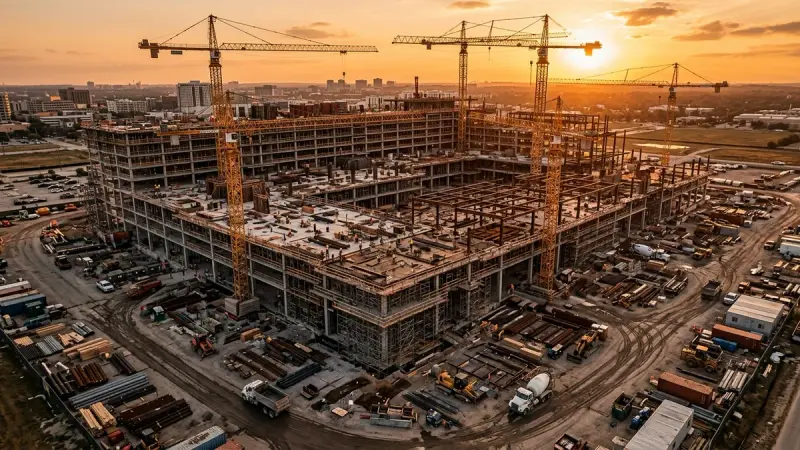
According to Safety+Health Magazine, managing risk on a construction site changes entirely once multiple subcontractors enter the picture. The core problem isn’t bad intentions. It’s that one trade’s work routinely creates hazards for workers employed by a completely different company, and the worker most likely to get hurt is often not the one whose employer created the danger. That dynamic, the magazine notes, is not an edge case on multi-trade sites. It’s the norm.
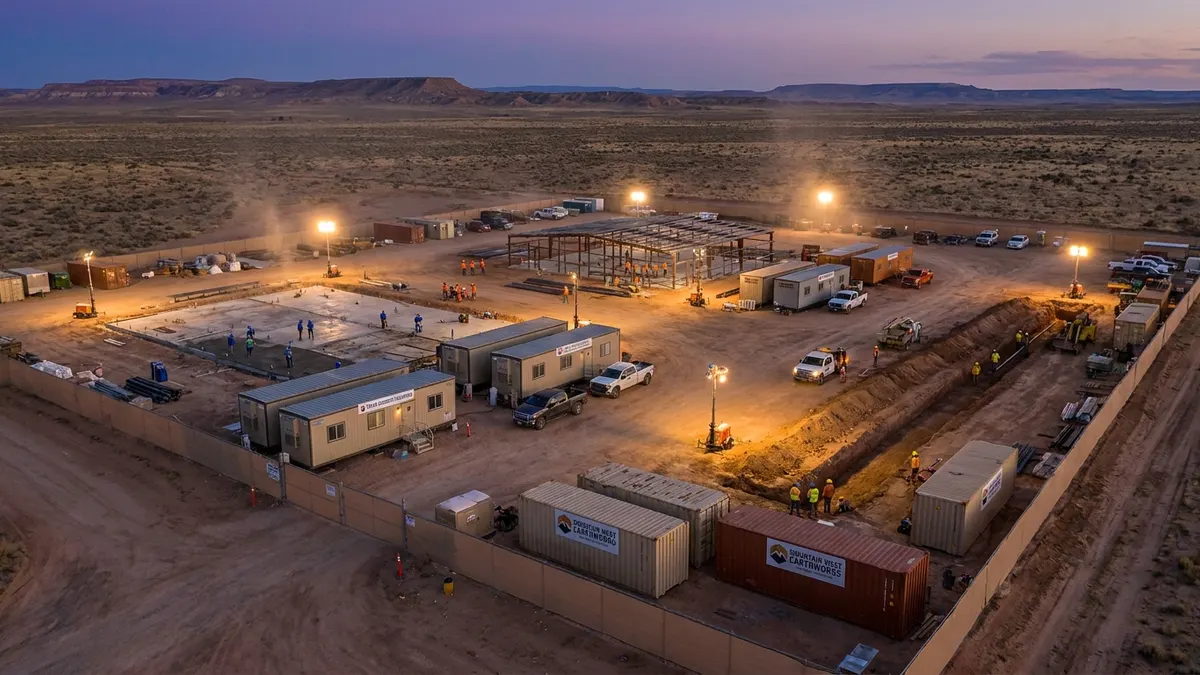
For subcontractors working on shared worksites in the Permian, Gulf Coast, or on large commercial construction projects across Texas and the Mountain West, this isn’t a theoretical concern. It’s a daily operational reality that carries real legal exposure.
Background
Safety+Health Magazine published a workplace solutions piece featuring commentary from Erin Mitchell, product marketing manager at Corfix, an Ottawa-based construction software company, addressing how construction companies should approach risk management when multiple subcontractors with different safety cultures and systems are working a single site.
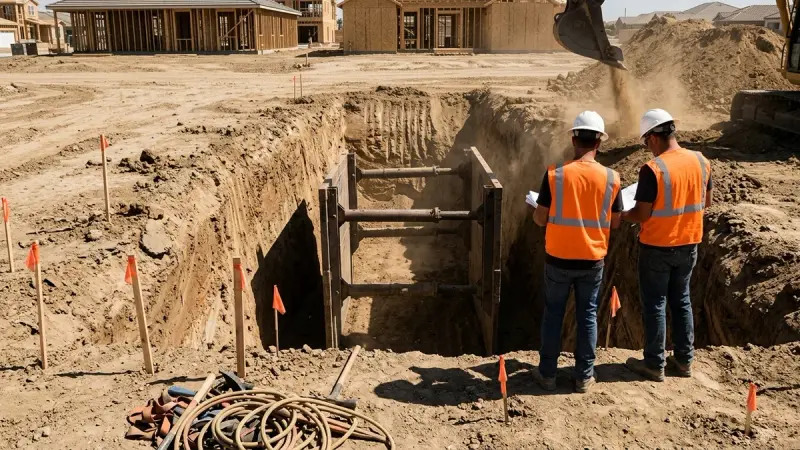
The piece centers on a core structural tension: hazard creation and hazard exposure rarely belong to the same employer. Overhead crews create struck-by risks for workers below. Excavation and trenching work creates conditions that affect whoever comes next. The company whose worker gets hurt may have had nothing to do with creating the condition that hurt them.
Mitchell points to OSHA’s multi-employer citation policy as the framework that defines accountability in these situations. Under that policy, more than one employer can be cited for the same hazardous condition. OSHA identifies four distinct employer roles in these scenarios: creating, exposing, correcting, and controlling. The general contractor typically fills the controlling employer role, which carries supervisory authority over the site and a responsibility to require correction of violations, including those created by subcontractors. According to the piece, that obligation is broader than most general contractors recognize until they’re facing a compliance officer.
Analysis
The OSHA multi-employer framework has been around long enough that there’s little excuse for confusion about it, yet enforcement actions on multi-trade sites continue to catch GCs and subs off guard. The reason is cultural, not legal. Most subcontractors operate with their own safety programs, their own field habits, and their own assumptions about how a site runs. Those assumptions don’t automatically sync with whoever is controlling the project.
This creates a gap between what the paperwork says and what actually happens in the field. A hazard assessment that covers only the GC’s scope isn’t actually site-specific, as Mitchell points out. A real site-specific assessment needs to account for every trade active on the project, be updated as new contractors mobilize or scopes shift, and be accessible to field supervisors in a form they can actually use. A document sitting in a site trailer is not a safety program. It’s a filing system.
The premobilization meeting is the practical tool Mitchell highlights for closing that gap. Before a new trade arrives on site, their foreperson reviews current conditions, active hazards from other trades, overlap zones, and documentation requirements. Done properly, this is a working session, not a formality. It puts the incoming subcontractor’s leadership on notice about what they’re walking into before their crew sets foot on the jobsite.
For subcontractors, the stakes here are double-sided. On one hand, your workers can be exposed to hazards your company didn’t create, and your company can still be cited if you’re classified as an exposing employer under OSHA’s policy. On the other hand, if your scope creates conditions that affect other trades, you carry creating-employer liability regardless of whether you ever interact with the workers who get hurt.
The safety culture problem Mitchell references cuts both ways too. A subcontractor with a strong internal safety program can find themselves working alongside crews whose habits don’t match, and the interface between those cultures is where incidents happen. Aligning culture takes more than posting rules. It requires consistent communication, defined expectations before mobilization, and real oversight of what’s happening at the overlap zones.
What It Means for Subcontractors
-
Know your OSHA classification before work starts. Under the multi-employer citation policy, you may be a creating, exposing, correcting, or controlling employer. Each carries different obligations. Don’t assume the GC absorbs all exposure.
-
Participate actively in premobilization meetings. If the GC isn’t running them, ask for one before your crew mobilizes. That session is your opportunity to document what hazards exist, who owns them, and what your team needs to avoid.
-
Your hazard assessment must reflect the full site, not just your scope. If overhead work, excavation, or adjacent trades are active while your crew is on site, those hazards belong in your assessment and your toolbox talks.
-
Document everything at the interface points. When your work creates conditions that affect another trade, document that handoff. When you inherit conditions created by someone else, document your acknowledgment and any corrective steps taken. That paper trail matters in an OSHA investigation.
-
Don’t assume the GC’s safety program covers your obligations. Even when the controlling employer has a robust program, your company retains independent liability for the roles you fill on that site. Two safety programs running in parallel is not redundancy. It’s the legal baseline.