US Grid Adds 75 GW of Summer Capacity in a Year, Led by Texas and the West
According to Utility Dive, the United States will enter this summer with roughly 75 gigawatts more generating capacity than it had a year ago, the largest year-over-year increase in over a decade, according to staff at the Federal Energy Regulatory Commission. The additions are concentrated in Texas, the West, and the Midwest, and they are arriving at the same time plant retirements have slowed dramatically, cutting in half compared to last summer’s pace. For the construction and electrical trades that build and connect this infrastructure, the numbers point to one conclusion: the buildout is accelerating, not plateauing.
Background
FERC staff presented the findings during the agency’s monthly open meeting on May 21, 2026, as part of the commission’s annual summer market and reliability assessment. FERC economist Alec Stirling called the pace of change notable, saying new capacity additions are accelerating to the largest year-over-year increase in gigawatts in over a decade, while retirements have slowed by more than 50% since last summer.
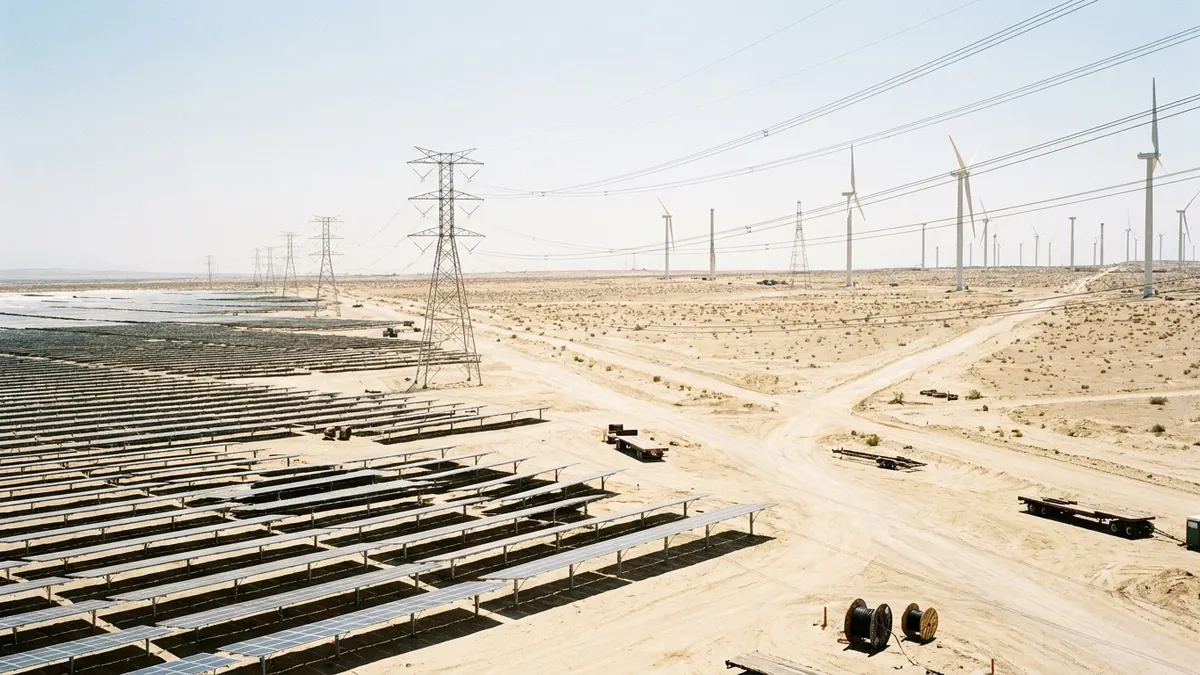
The 75 GW of new capacity is dominated by solar, wind, and battery storage, according to FERC. The geographic breakdown is significant for anyone tracking where field work is concentrating: nearly 26 GW landed in the Electric Reliability Council of Texas footprint, close to 13 GW was added in the Western Electric Coordinating Council region, and 11 GW came online in the Midcontinent Independent System Operator market. Together, those three regions account for roughly two-thirds of all new summer capacity.
On the reliability side, FERC staff noted that generation additions are now outpacing demand growth, improving the overall outlook compared to last summer. Suzanne Edwards, a North American Electric Reliability Corp. analyst, told the commission that the supply picture is broadly better. However, three areas still face risk of power shortfalls during extreme weather: the Pacific Northwest, New England, and part of western Texas. Additionally, FERC staff flagged that low water levels in the Colorado River Basin could affect roughly 4.5 GW of hydroelectric generation by August, including the 2-GW Hoover Dam. FERC engineer Monica Ferrara warned that losing that hydro capacity would create operational challenges, including increased congestion, reduced operational flexibility, and a greater need for mitigation measures during peak demand periods.
In terms of the overall capacity mix this summer, FERC staff projects gas-fired generators will provide 39% of all capacity, followed by solar at 14%, coal at 13%, wind at 12%, and nuclear and hydropower at 7% each.
Analysis
The headline number, 75 GW in a single year, deserves a moment of context. For comparison, 75 GW is roughly equivalent to the entire generating capacity of Germany. Deploying that much capacity in one year requires thousands of individual projects: solar farms, wind installations, battery storage systems, substation upgrades, transmission tie-ins, and interconnection work. The fact that retirements have slowed at the same time means the grid is genuinely expanding in net terms, not just swapping old assets for new ones.
The Texas numbers are particularly telling. Nearly 26 GW added within the ERCOT footprint alone reflects both the state’s aggressive renewable development and the relative ease of permitting compared to other regions. For electrical subcontractors, specialty contractors, and civil crews working in West Texas and the Panhandle, this means the pipeline of solar and battery projects is not a temporary spike. It is a structural condition of the market.
The Western Interconnect’s 13 GW addition is also significant, especially against the backdrop of Colorado River water concerns. While new solar and wind capacity is coming online in the West, grid operators face the simultaneous challenge of potential hydro shortfalls. That tension creates operational pressure that tends to accelerate transmission and storage projects as operators look for flexibility. Subcontractors in Nevada, Arizona, Utah, and the broader Mountain West should expect interconnection and storage work to stay active, potentially intensifying if hydro output drops as projected.
The MISO region’s 11 GW addition spans a large footprint across the central US, including parts of the Midwest and Gulf Coast. MISO has historically been a challenging interconnection queue environment, so that volume of completed additions signals that projects which have been queued for years are finally reaching construction completion.
One detail worth watching: FERC staff flagged western Texas specifically as a reliability risk zone even while noting the region’s massive capacity additions. That apparent contradiction reflects a recurring problem in fast-growing grids. Generation is being built faster than the transmission infrastructure needed to move it. That gap is where subcontractors will find the next wave of work.
What It Means for Subcontractors
- Texas remains the single largest market for new capacity work, with nearly 26 GW added in the past year. Electrical, civil, and commissioning contractors with ERCOT-area operations should expect sustained project flow, particularly in West Texas where reliability concerns are creating pressure for transmission upgrades alongside generation buildout.
- The Western Coordinating Council region added close to 13 GW, but faces hydro uncertainty on the Colorado River. Contractors in Arizona, Nevada, and Utah should watch for accelerated storage and transmission projects as grid operators seek to offset potential hydro shortfalls.
- MISO’s 11 GW of additions signals that long-queued Midwest projects are moving to completion. Subcontractors serving that region, including parts of the Gulf Coast, should anticipate continued interconnection and substation activity.
- Solar, wind, and batteries are driving the capacity additions, meaning the dominant trades in demand are electrical, steel, and civil earthwork. Mechanical and civil contractors who have not pursued renewable work may be leaving significant revenue on the table in these core markets.
- The Pacific Northwest and New England reliability risk zones are likely to attract near-term transmission and grid modernization investment. Subcontractors in those regions should track FERC and regional transmission organization announcements for project opportunities tied to reliability remediation.
- Retirements slowing by more than 50% means fewer decommissioning projects but also fewer “make-work” replacement projects. The growth is additive, which generally means greenfield site work rather than retrofit or repowering scopes.