Construction Starts Climbed 9% in April as Growth Spread Across Multiple Sectors
According to Construction Dive, total construction starts jumped 9% month over month in April, reaching a seasonally adjusted annual rate of $1.33 trillion, with growth spreading across nine of 15 tracked categories. The data, sourced from Dodge Construction Network, marks a meaningful shift from recent months, when headline gains depended almost entirely on a small cluster of data center and energy megaprojects breaking ground.
Background
Dodge Construction Network chief economist Eric Gaus described April’s numbers as “robust,” noting that only three categories posted month-over-month losses. “Large data centers and energy generation supported the growth, but nine of the 15 categories saw double or triple digit growth,” Gaus said, according to Construction Dive.
Nonresidential building starts led the charge, rising 18.6% month over month. Commercial construction surged 41.4% within that segment, driven in part by a 46.1% jump in office and data center projects. But warehouse groundbreakings rose 25% and hotel starts climbed 12.8%, signaling that the commercial uptick wasn’t a one-category story.
Institutional construction, covering education and healthcare, posted a 12.3% monthly gain. On the infrastructure side, nonbuilding construction improved 7%, with highway and bridge projects up 17% and environmental public works rising 16.3%.
Not every sector participated equally. Manufacturing construction fell 29.3% month over month after a 251.4% surge in March, a correction that was predictable given the prior month’s spike. The electric power and utilities segment declined 9.7% from March, though it remains the nonbuilding market’s strongest long-term growth category, up 62% over the trailing 12 months and 79.3% year to date through April. Residential starts edged down 0.7%, with single-family up 4.2% but multifamily dropping 7.2%.
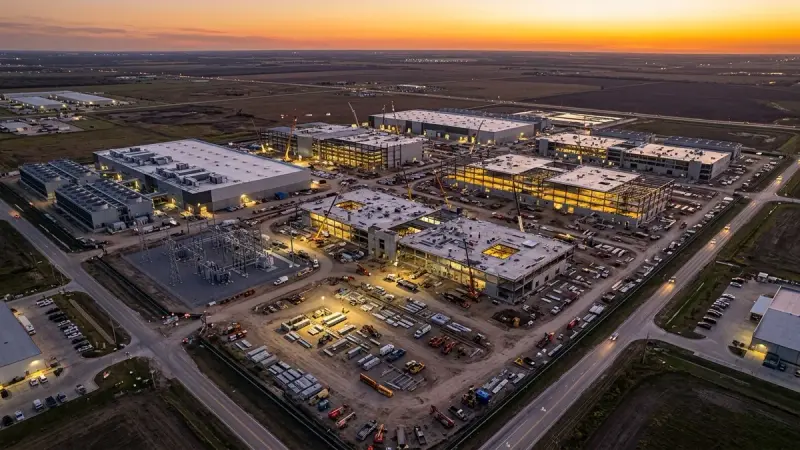
Among the largest individual projects to break ground in April, Construction Dive noted the $5 billion Provident/PowerHouse Prairie Ridge data center phase 1 in Midlothian, Texas.
Analysis
The story here isn’t just the headline number. For most of 2025 and into early 2026, the construction industry’s growth narrative has been narrowly concentrated. Data centers and power generation projects, many of them enormous, were doing the heavy lifting. That concentration carries real risk for subcontractors: if you weren’t positioned in those verticals, the “strong market” wasn’t your market.
April’s broadening changes that calculus. When nine of 15 categories post meaningful gains in a single month, it suggests demand is moving through the pipeline more broadly, not just piling into AI infrastructure. Highway and bridge work being up 17% matters to civil contractors, equipment operators, and materials suppliers who have been watching power and data center players capture most of the recent growth.
The institutional gain deserves attention too. Education and healthcare construction tends to be more geographically distributed than data center work, which clusters around power grids and fiber corridors. A 12.3% institutional gain could translate to project activity in markets that haven’t seen much recent momentum.
The manufacturing pullback is worth watching but shouldn’t be alarming on its own. A 251.4% surge in March followed by a 29.3% drop in April is a timing story, not a demand story. The underlying drivers of domestic manufacturing investment, including reshoring and semiconductor-related construction, haven’t disappeared.
The residential picture is more complicated. Multifamily dropping 7.2% in a single month, even with single-family partially offsetting it, suggests developers are still navigating financing costs and absorption concerns. Subcontractors who are heavily residential-focused may continue to find the commercial and infrastructure side of the market more active.
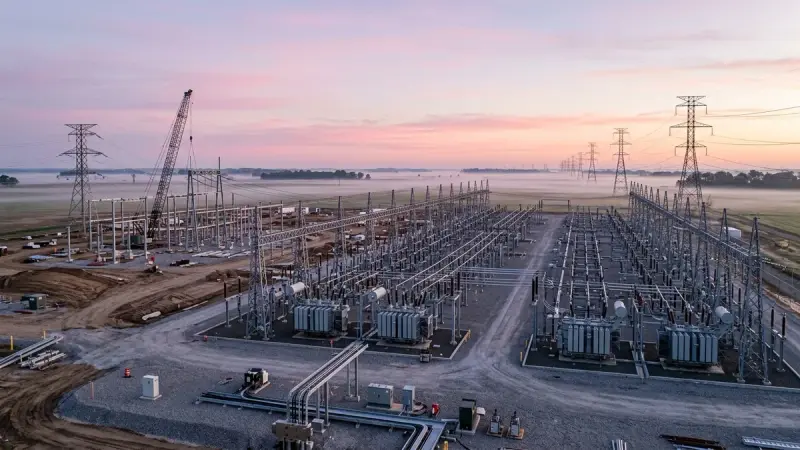
The long-term utility and power numbers are a reminder that even with April’s monthly dip, this sector is still the strongest growth story in the nonbuilding market. A 62% year-over-year gain is not a number that disappears with one soft month.
What It Means for Subcontractors
-
The broadening of April’s starts across commercial, institutional, and infrastructure sectors means more bid opportunities outside the data center niche. If your pipeline has been thin, this is a signal to widen your target project types.
-
Highway and bridge starts up 17% is a direct opportunity flag for civil contractors, paving crews, concrete subcontractors, and equipment rental companies tied to transportation work.
-
Institutional construction growth in education and healthcare tends to distribute across mid-size markets. Subcontractors in secondary markets who felt left out of the data center boom may find more local activity opening up.
-
The manufacturing correction from March to April is likely statistical noise after an outsized prior month. Don’t pull back from industrial project pursuits based on one month of data, particularly given the broader reshoring trend driving that category.
-
Despite April’s monthly dip in power and utilities, the 12-month trend is still up 62%. Subcontractors serving electrical, mechanical, and civil work tied to power generation should continue treating this vertical as a core growth area.
-
The multifamily decline reinforces a pattern. Residential-focused subcontractors may find better near-term volume by selectively pursuing commercial and institutional work where their skills transfer.