TVA Eyes Up to 26 GW of New Gas Generation, Signaling Major Construction Wave in the Southeast
According to Utility Dive, the Tennessee Valley Authority has released its preliminary 2026 integrated resource plan, identifying a need for between 7 GW and 26 GW of new natural gas generation capacity by 2040. The federally-owned utility cited load growth that is already outpacing the reference case forecast in its draft IRP, driven primarily by data center expansion including artificial intelligence and hyperscaler facilities. For subcontractors and field service companies operating in the Southeast, the scale of what TVA is signaling is hard to overstate.
Background
TVA’s preliminary 2026 IRP lays out three potential strategies for meeting surging regional electricity demand. According to Utility Dive, load growth in the Tennessee Valley Authority region is approaching the “Higher Growth Economy scenario” originally outlined in its draft IRP, a scenario the utility describes as being driven by “substantial economic growth” and a higher natural gas price environment.
Beyond gas, the plan calls for up to 5 GW of new nuclear capacity, between 1 GW and 5 GW of battery and pumped storage, 2 GW to 5 GW of renewables (with up to 8 GW nameplate capacity), and 2 GW to 3 GW of energy efficiency and demand response additions. TVA noted that the region set a new winter peak demand record of 35,319 MW in January 2025, and has “recently experienced extreme winter temperatures in each of the last few years.” For the 2026 IRP, TVA raised its winter planning reserve margin target to 26%, up from the 18% target used for summer planning.
TVA will accept public comment on the preliminary IRP through July 22, with a public webinar scheduled for July 2. Final recommendations are set to be presented at the TVA Board meeting in August.
Analysis
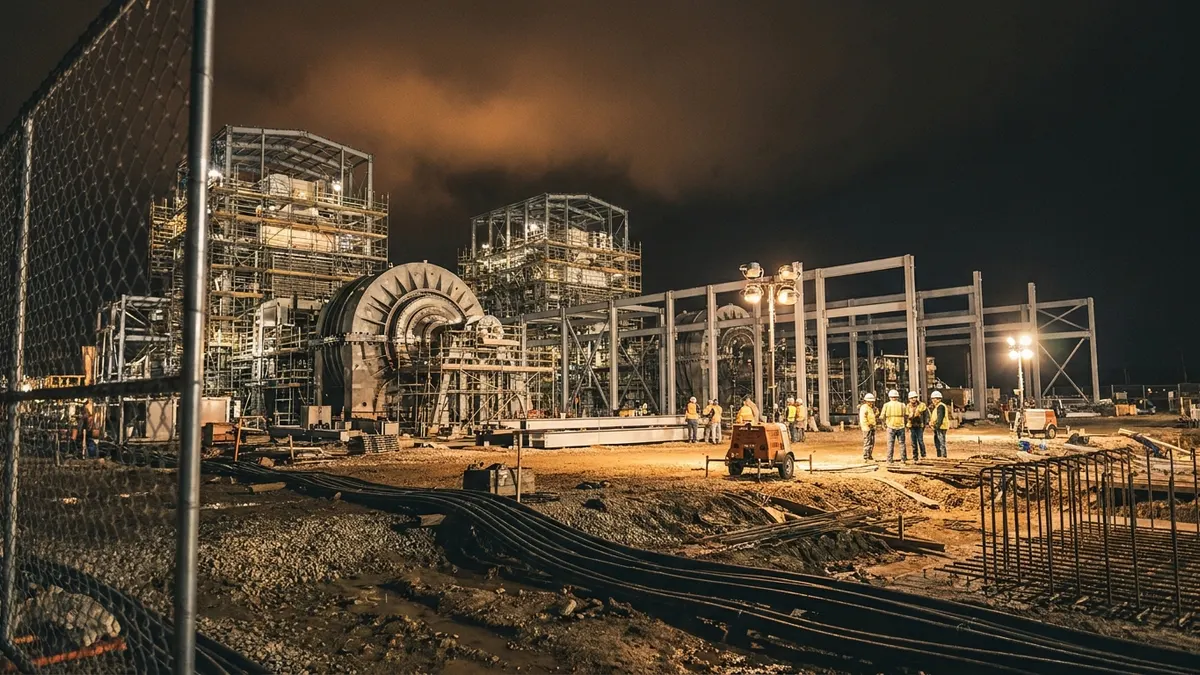
The range between 7 GW and 26 GW is enormous, and that spread reflects real uncertainty about how fast AI-driven data center demand will materialize. But even the low end of that range represents a significant build-out. For context, a single combined-cycle gas plant typically runs somewhere between 500 MW and 1,000 MW of capacity, meaning TVA’s low-end scenario alone implies construction of roughly 7 to 14 major generation facilities over the next 14 years. The high end implies a project pipeline that could keep fabricators, pipefitters, electricians, and civil contractors busy for the better part of two decades.
The driver here, data centers, is not a speculative demand signal. TVA specifically called out AI infrastructure and hyperscaler facilities as the reason actual demand is already running ahead of its reference forecast. That’s a demand source with long capital commitments and predictable load profiles, exactly the kind of customer base that justifies large-scale, firm dispatchable generation investment.
TVA’s own language about gas is telling. The IRP describes gas expansion as necessary to provide “firm, dispatchable capacity,” which puts it in a different category from solar and storage in the planning hierarchy. Renewables are described as playing a “complementary role,” while gas is the backbone. That framing matters for subcontractors because it means gas plant construction isn’t being planned as a bridge or a stopgap. TVA is treating it as a long-term infrastructure commitment.
The nuclear addition of up to 5 GW is also notable. New nuclear construction, whether small modular reactors or conventional large-scale plants, carries some of the most demanding civil, mechanical, and electrical scope in the industry. If even a portion of that nuclear capacity moves forward, it will generate highly specialized contracting demand. Combined with the gas build-out, storage additions, and renewables work, TVA’s territory is shaping up as one of the most active power infrastructure construction markets in the country over the next decade.
The political backdrop adds a layer of complexity. TVA’s board was previously set to vote to convert the Cumberland Fossil Plant from coal to gas, but after the board was remade by President Trump, it voted instead to continue operating the coal plant, according to Utility Dive. That history suggests TVA’s final IRP strategy could still shift depending on board composition and political priorities. Subcontractors tracking this pipeline should monitor the August board meeting closely.
What It Means for Subcontractors
- Scale up your Southeast presence now. TVA’s footprint covers Tennessee and parts of surrounding states. Subcontractors in mechanical, electrical, and civil disciplines who aren’t already established in this market should be moving to build relationships with EPC firms and general contractors who will compete for this work.
- Gas plant construction is the near-term priority. TVA’s IRP frames gas as the firm capacity backbone, meaning gas-fired generation projects are likely to be first in the queue. Pipefitters, boilermakers, and instrumentation and controls contractors should be positioning accordingly.
- Nuclear work is on the table. Up to 5 GW of new nuclear capacity represents a longer-horizon opportunity with demanding qualification requirements. If your firm has nuclear QA/QC credentials or is willing to pursue them, now is the time to start that process.
- Watch the August board meeting. TVA’s final IRP recommendations go to the board in August. That meeting will clarify which strategy the utility is pursuing and give a clearer picture of project sequencing and procurement timelines.
- Storage and renewables add secondary scope. Between 1 GW and 5 GW of storage and up to 5 GW of renewables represent meaningful additional work, particularly for electrical contractors and site civil firms. These projects often run parallel to larger generation builds and can fill capacity gaps in your schedule.
- Demand is already outrunning forecasts. TVA explicitly stated that actual load growth is exceeding its reference scenario. That’s a signal that project timelines could accelerate, not slow down. Contractors waiting for final approvals before mobilizing resources risk being behind when procurement moves.