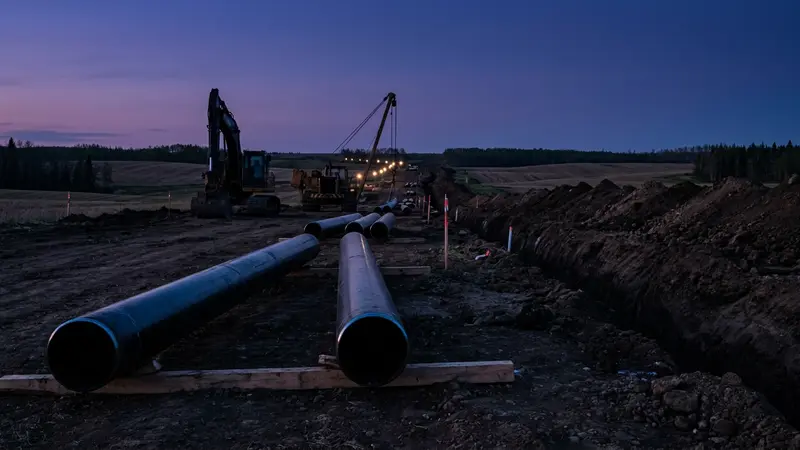
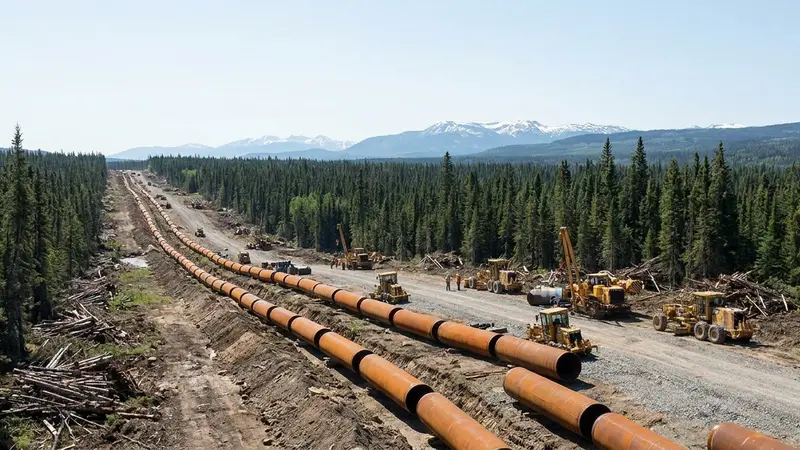
Transmission Buildout Falls 90% Short of Grid Needs, Analysis Finds
A new analysis from OilPrice.com lays out a stark gap between what the US grid needs and what it’s actually getting: the industry needs to add roughly 5,000 miles of high-voltage transmission line every year to keep pace with demand, but it built an average of just 392 miles annually between 2022 and 2025. In 2013, annual additions came close to 4,000 miles. By 2025, that figure had fallen to 402 miles, according to the analysis, written by Leonard Hyman and William Tilles.
Background
Hyman and Tilles, longtime utility sector analysts, frame the shortfall as a two-decade-old problem that predates the current AI and data center boom. Grid reliability organizations and infrastructure engineers were already warning about inadequate transmission additions before demand from data centers spiked, the analysis states. Regulators have tried offering higher returns to spur builders into action, and market operators have leaned on pricing signals meant to entice investment. Neither approach, per the analysis, has closed the gap.
The piece makes a technical point that matters for anyone bidding transmission work: electricity doesn’t move from a specific generator to a specific customer like water through a pipe. It flows into the grid and distributes itself along the path of least resistance across the entire network, more like water in a bathtub than water in a hose. That means building a new power plant next to a data center doesn’t solve the capacity problem. Both still depend on a grid that can absorb and move that power without overloading, according to the analysis.
Analysis
The math here is the story. If the industry needs 5,000 miles a year and is delivering under 400, that’s not a temporary lag; it’s a structural shortfall that has been building since at least 2013, when annual mileage peaked near 4,000. Every year the gap persists, the backlog of “needed but not built” transmission capacity compounds, and it compounds at a moment when data center and nuclear developers are trying to layer massive new load and generation onto a network that was already falling behind before AI-driven demand growth entered the picture.
For subcontractors, the implication is that the current pipeline of announced data center and nuclear projects, and the associated interconnection and substation work often tied to those announcements, may not materialize on the timelines developers are advertising. The analysis argues plainly that ambitious data center and nuclear plans are “unviable” without grid enlargement, and predicts more developers will pursue power generation that’s disconnected from the grid entirely rather than wait for transmission to catch up.
That’s a real fork in the road for field services companies. One path is the traditional one: utilities eventually get transmission projects permitted and built, and the work goes to line crews, right-of-way clearing outfits, civil contractors doing foundation and access road work, and E&I firms handling substation tie-ins. The other path is off-grid generation, microgrids, and behind-the-meter power plants built specifically to avoid the interconnection queue and the transmission bottleneck. That work looks different: it favors mechanical, electrical, and civil trades experienced in self-contained power installations rather than long-haul transmission corridors.
The analysis doesn’t put a dollar figure or project count on either path, but the structural argument is clear enough: the mileage numbers show a system that isn’t fixing itself, and the incentive structures regulators have tried (favorable rate-of-return treatment, market pricing signals) haven’t moved the needle from 2013 levels. That’s the kind of persistent gap that tends to produce sudden urgency once policymakers or grid operators run out of patience, not steady, predictable project flow.
What It Means for Subcontractors
- Transmission line crews and right-of-way clearing outfits should size capacity now rather than wait for utility RFPs. A structural shortfall that has run since at least 2013 doesn’t disappear on its own, and any policy fix or emergency siting reform could trigger a compressed rush of awards.
- Civil and E&I contractors bidding data center or nuclear-adjacent work should ask developers directly whether the project’s power plan includes new transmission capacity or is designed to run off-grid. The analysis argues on-grid plans without added transmission capacity risk stalling.
- Firms with experience in behind-the-meter or off-grid generation, microgrids, and self-contained power installations should market that capability now. The analysis flags off-grid buildout as the likely growth path while transmission siting remains gridlocked.
- Substation and interconnection specialists should track which regions see permitting or siting reform, since the analysis points to siting bottlenecks and regulatory failure, not lack of funding incentive, as the core obstacle holding mileage near 392 to 402 miles a year.
- Estimators bidding long-cycle transmission corridor work should build schedule risk into proposals. With annual additions running roughly 90% below the 5,000-mile benchmark, permitting delays are the norm, not the exception, on these jobs.