South Korea's $22.3B Texas Gas Plant Bet Signals Major Buildout for AI Power
A 6.3 GW gas-fired power plant bound for Texas could become one of the largest single energy infrastructure builds tied to the AI boom, and it comes with a South Korean price tag of $22.3 billion, Oilprice.com reports, citing a Reuters account of Korean media coverage.
Background
The investment marks the first project South Korea has moved on under its trade agreement with the Trump administration, according to Oilprice.com. The plant would supply power directly to Texas data centers, placing it squarely in the middle of the AI infrastructure race that has driven massive new demand for reliable, dispatchable electricity.
The Texas gas plant is one piece of a much larger commitment. Seoul has pledged roughly $350 billion in total U.S. investment as part of the deal, with some of that capital potentially flowing toward a nuclear power plant project or the Alaska LNG project, Oilprice.com reported, again citing Korean media.
The trade deal itself dates to July last year, when President Trump announced a 15% tariff on South Korean imports, a rate that replaced a previously threatened 25% levy. In exchange, South Korea committed to purchasing $100 billion worth of U.S. LNG and other energy commodities. Oilprice.com noted that in early 2026, South Korea also signaled plans to import more U.S. crude oil, a decision accelerated by the U.S. and Israeli war against Iran and the resulting disruption to energy exports into Asia.
That disruption has been significant. Oilprice.com reported that spot LNG prices for Asia surged to nearly $26 per million British thermal units last week as the U.S. and Iran exchanged fire in the Persian Gulf, raising fresh doubts about when normal tanker traffic through the waterway might resume. South Korea remains the world’s third-largest LNG importer, behind only China and Japan, which helps explain why Seoul is moving aggressively to lock down both supply and generation capacity in the U.S.
Analysis
A 6.3 GW gas plant is a massive undertaking by any measure, comparable in scale to some of the largest combined-cycle facilities built in the U.S. over the past decade. At $22.3 billion, the price point suggests a project scope that goes well beyond just turbines and switchgear. It likely includes site development, transmission interconnection, water infrastructure for cooling, and potentially co-located gas processing or pipeline laterals to feed the plant.
The strategic logic is straightforward. AI data centers need firm, always-on power, and Texas has emerged as a preferred location because of its deregulated grid, existing gas infrastructure, and favorable permitting environment compared to other states. Pairing a dedicated gas plant with data center demand sidesteps the interconnection queues and grid capacity constraints that have slowed data center buildout elsewhere in the country.
The trade deal framing also matters. This isn’t a merchant power play driven purely by returns. It’s part of a broader $350 billion package South Korea is deploying to secure better tariff treatment, which means the capital is likely to move forward even if near-term power market economics are mixed. That’s a different risk profile than a typical independent power producer project, and it could mean the plant moves from announcement to construction faster than market-driven projects tend to.
What’s missing from the reporting so far is the specific site location within Texas, the EPC contractor, and a construction timeline. Those details will determine which regional labor markets see the benefit and how quickly. Given the scale of the project, a 6.3 GW plant will require years of sustained civil, electrical, and mechanical work regardless of exactly where in Texas it lands.
What It Means for Subcontractors
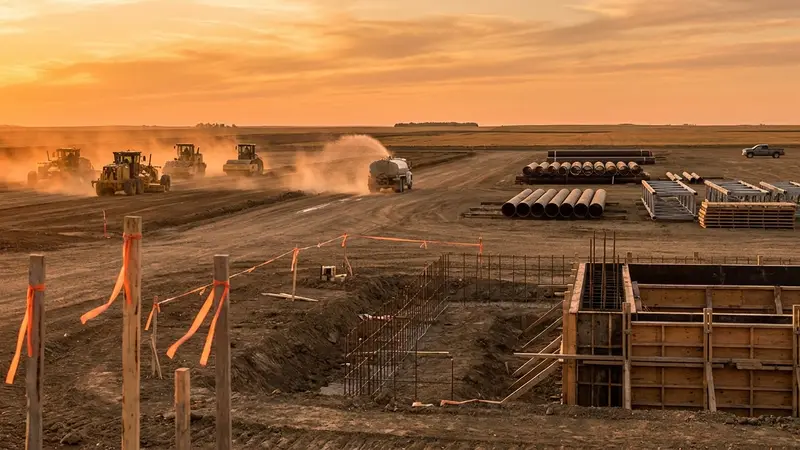
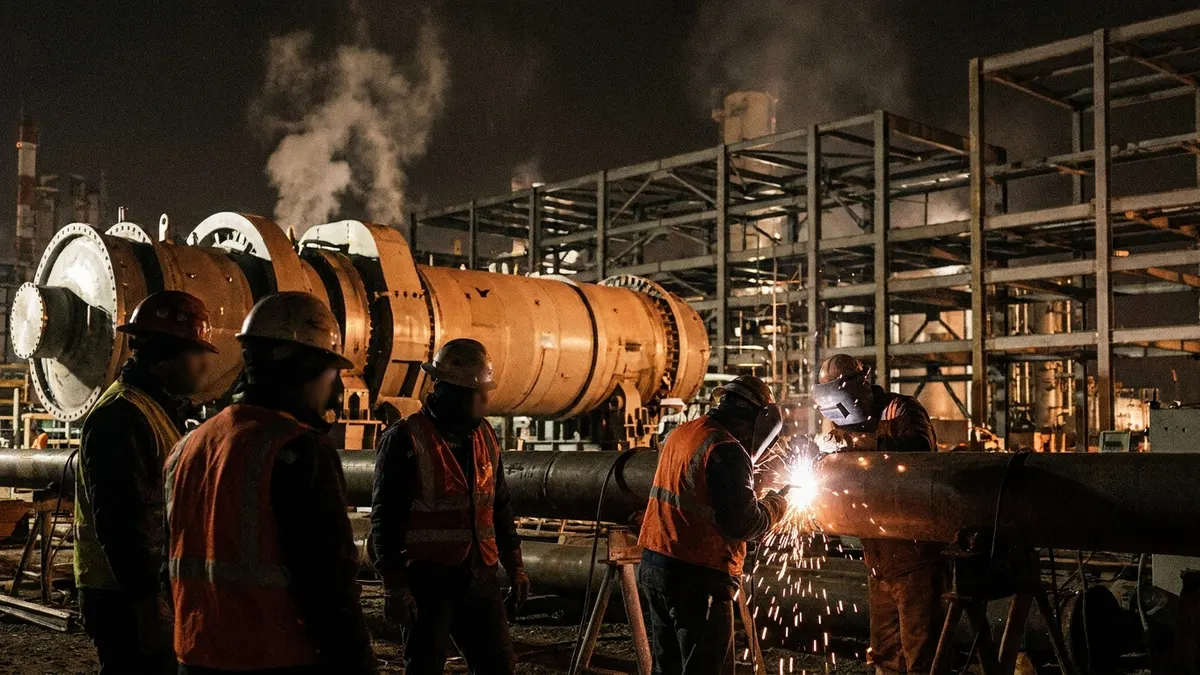
- A 6.3 GW gas plant of this scale typically requires large civil packages (foundations, site grading, water infrastructure), structural steel, electrical and instrumentation work, and pipefitting for gas supply laterals. Texas-based firms in these trades should watch for EPC contractor announcements, since that award will determine subcontract package timing.
- The $22.3 billion figure signals a project large enough to require staged bid packages rather than a single general contract. Firms should prepare for multi-year work opportunities once site selection and permitting details become public.
- Because this investment is tied to a government trade agreement rather than pure market economics, it may proceed on a faster or more politically driven timeline than typical merchant power projects. Subcontractors should track announcements from the Texas Public Utility Commission and ERCOT for interconnection filings, which often surface before formal construction bids.
- South Korea’s broader $350 billion U.S. investment pledge includes potential funding for a nuclear power plant project and Alaska LNG infrastructure. Firms with nuclear-qualified electrical, mechanical, or civil crews, or LNG-related pipefitting and welding experience, should monitor Korean investment announcements beyond this single Texas project for additional bid opportunities.
- No site location, contractor, or construction start date has been disclosed yet. Firms should follow Texas county and state permitting filings for a 6.3 GW gas facility, since that filing will likely be the first concrete signal of where the work will land.