Private Equity Moves Into Utilities as AI Power Demand Reshapes the Grid
Private equity firms are getting a rare shot at buying into regulated utility assets, and the reason is the same one driving gas turbine shortages and gigawatt-scale data center campuses: AI. Oilprice.com reports that major utilities, historically reluctant to sell off pieces of their regulated businesses, are now unloading non-core assets to raise cash for the infrastructure buildout that data center demand is forcing on them.
Background
Oilprice.com energy journalist Haley Zaremba writes that data center power demand has become a rare point of bipartisan agreement in Washington, with lawmakers from both parties pushing back on hyperscalers whose massive campuses are straining local grids and pushing up electricity prices for everyone else. The Trump administration’s response has been to encourage tech companies to build their own power supply rather than lean on the existing grid, but critics warn this could create what one Semafor op-ed cited in the piece calls a “shadow grid,” a parallel power system operating outside standard grid regulation and oversight.
Grid expert Brandon Owens, founder of AIxEnergy, told Politico (as cited by Oilprice.com) that the underlying cost problem isn’t generation at all. “Most of today’s cost pressure is coming from transmission, distribution, and system readiness, not energy supply,” Owens said, adding that those costs remain even when a data center supplies its own power.
Meanwhile, the buildout is already happening at enormous scale. Amazon is building a gas-fired power plant in Texas that Oilprice.com reports will become the single-biggest source of power-related emissions in the country. Nvidia has announced a partnership with Japan’s SoftBank and the U.S. government to build what would be the nation’s largest fossil-fuel plant, to power an OpenAI project in Ohio. Utilities, not wanting to be left out, are racing to add capacity too, and that race is what’s forcing them to sell assets they’d normally hold onto. Jeff Jenkins, co-founder of Louisiana-based Bernhard Capital Partners, told Semafor (via Oilprice.com) that this is “totally unique from an investor standpoint, because people haven’t seen these assets [for sale] in 20 years.”
Analysis
The significance for field service companies isn’t the private equity ownership structure itself, it’s the speed. Utilities have historically planned capital projects on multi-year regulatory and ratemaking cycles. Private capital doesn’t operate on that clock. When Jenkins says “when you can buy a regulated monopoly at a discount, you do it,” that’s an investor describing a buy-and-build thesis, and build-outs backed by PE money tend to move faster than build-outs backed by rate cases and utility commission approvals.
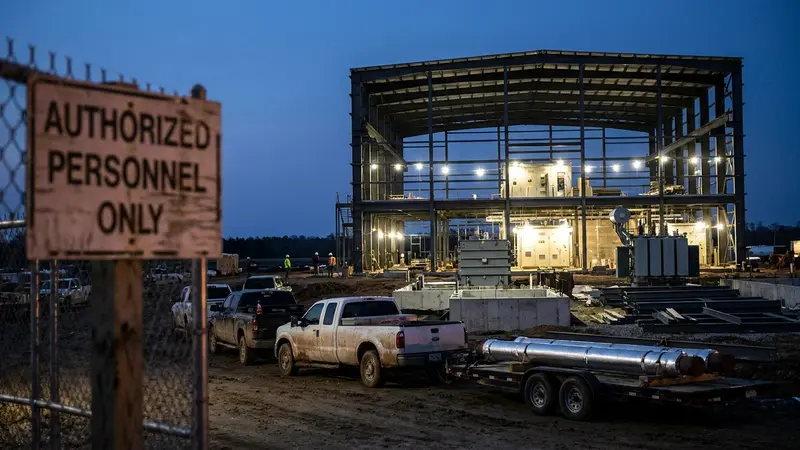
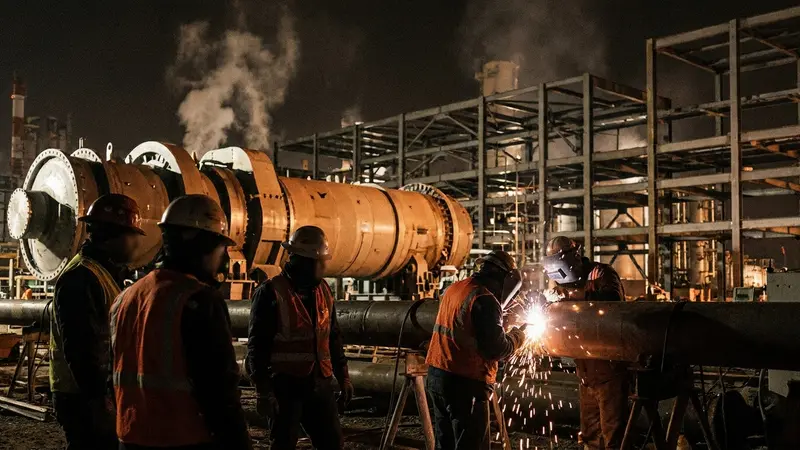
That urgency compounds with what’s already happening on the generation side. Big Tech firms like Amazon and Nvidia aren’t waiting for utilities at all, they’re building their own gas-fired plants directly. Whether that power gets built by a utility flush with new PE capital or by a hyperscaler building a “shadow” plant next to a data center campus, the physical work, substations, transmission lines, gas plant construction, still has to be done by someone with boots on the ground.
There’s a risk flagged in the piece worth taking seriously. Jenkins himself predicts a bubble: once this “supercycle of building” plays out and Big Tech shifts to self-supplying power through its own gas plants, utilities could find themselves overbuilt and back in a buying, not building, posture. For subcontractors, that means the current wave of opportunity may be real but front-loaded. Firms that lean into these projects now stand to capture work at the front end of a compressed build cycle, but the demand curve behind it may not be linear or permanent.
The regulatory uncertainty around the “shadow grid” concept also matters operationally. If tech-owned generation assets end up operating outside standard grid oversight, the permitting, inspection, and compliance pathways for contractors working on those projects could look different than a typical utility-regulated job, potentially faster to greenlight, but also less predictable in scope and less protected by the standard utility contracting frameworks crews are used to.
What It Means for Subcontractors
- Electrical, civil, and E&I crews should expect faster-moving RFPs tied to utility asset sales and private equity-funded capital plans, since PE-backed capital deployment typically bypasses the slower rate-case timelines utilities normally use to greenlight transmission and substation work.
- Gas-fired generation build-outs, like the Amazon plant in Texas and the Nvidia/SoftBank project in Ohio referenced in the report, point to near-term demand for mechanical, pipefitting, and civil contractors experienced in power plant construction, not just traditional utility infrastructure.
- Firms working with hyperscalers building self-supplied power (the “shadow grid” scenario) should clarify upfront whether the project falls under standard utility regulatory oversight or a separate compliance track, since permitting and inspection processes may differ from typical utility-scale work.
- Given Bernhard Capital’s Jeff Jenkins’s own prediction of a potential building “supercycle” followed by a pullback, subcontractors should prioritize near-term contract terms and avoid over-committing capacity based on assumptions of sustained, long-term demand growth.
- Companies with experience in substation and transmission work should monitor utility asset sale announcements directly, since Oilprice.com reports utilities are actively divesting non-core regulated assets for the first time in roughly two decades to fund this buildout.