South Bow Won't Move on Keystone XL Revival Without a Durable US Presidential Permit
According to a Reuters report via BOE Report, South Bow CEO Bevin Wirzba told attendees at the Energy Roundtable conference in Calgary that the company will not move forward with a partial revival of the Keystone XL pipeline until it has proof that a US presidential permit is “durable.” The statement sets a clear threshold for what South Bow needs before committing to one of the most closely watched pipeline restart efforts in North America.
Background
South Bow was spun off by TC Energy in 2024 to take over its oil pipeline business, including the unfinished Keystone XL corridor. The proposed project is a partnership between South Bow and its US partner, Bridger Pipeline, operating under the name Prairie Connector. According to the Reuters report via BOE Report, South Bow said in May it had begun work to secure regulatory approvals along the US route of the Prairie Connector project.
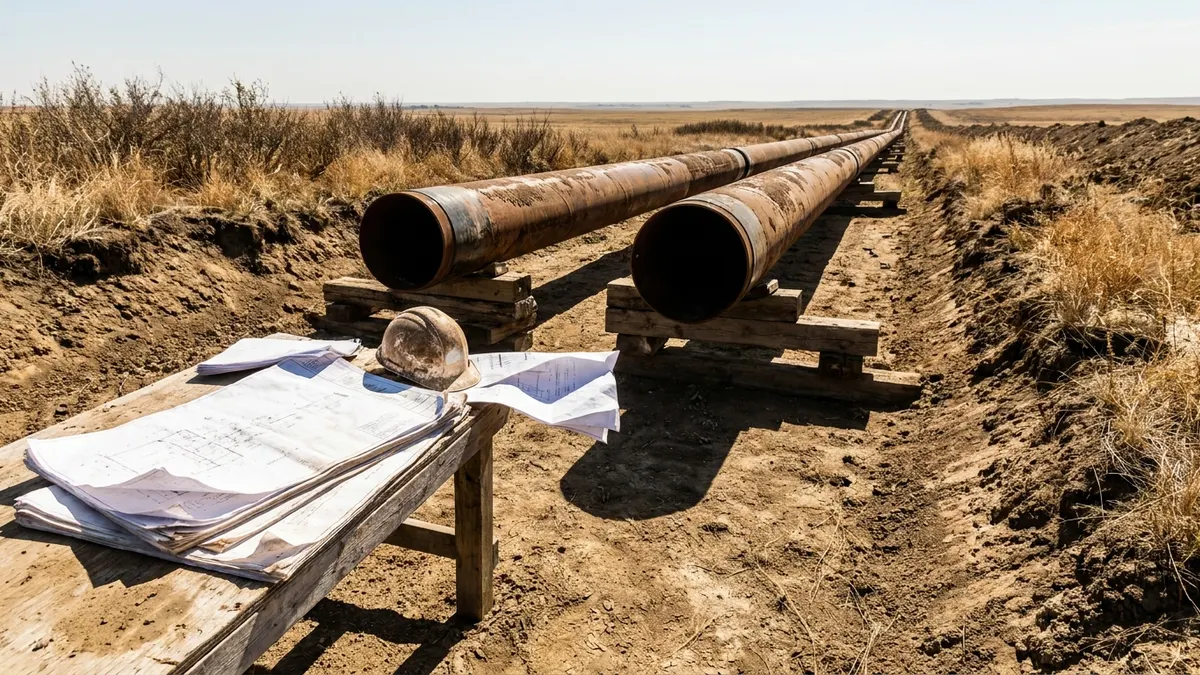
Approximately 150 km, or 93 miles, of pipe has already been built on the Canadian side and has been sitting idle since the original Keystone XL cancellation. The Alberta-to-Wyoming pipeline, if completed, could increase Canada’s crude exports to the United States by more than 12%, adding meaningful takeaway capacity for Canadian producers who have long faced pipeline constraints.
Analysis
Wirzba’s comments are a calculated signal, not a delay for its own sake. By publicly tying forward progress to permit durability, South Bow is drawing a direct lesson from Keystone XL’s original fate: a project of this scale cannot absorb another cancellation. The original pipeline was killed by a presidential permit revocation, and the company is making clear it will not pour resources into permitting, engineering, and mobilization without a credible guarantee that history won’t repeat itself.
The word “durable” is doing a lot of work here. It suggests South Bow is not just looking for a permit to be issued, it wants confidence that the permit can survive a change in administration or a legal challenge. That is a high bar, and it reflects the commercial reality that a multi-billion dollar infrastructure restart requires bankable certainty, not just political goodwill.
The Prairie Connector framing is also worth noting. Rather than relaunching Keystone XL as a brand with all its political baggage, South Bow has structured this as a new regulatory application along the US route. That approach may help the project move through the approval process with less friction, but it does not change the fundamental exposure: a US presidential permit is still required, and presidential permits are, by definition, subject to executive discretion.
For the Canadian oil patch, the stakes are significant. Pipeline takeaway capacity has been a persistent constraint for Alberta producers, and a project that could move more than 12% additional crude to US markets would have real commercial impact. But that upside remains entirely conditional on regulatory and political outcomes that South Bow cannot control.
What It Means for Subcontractors
- Don’t front-load mobilization costs. A project of this size will generate significant subcontract opportunity in pipeline construction, civil work, and integrity services, but South Bow’s own posture says the green light is not here yet. Firms that begin building capacity in anticipation of a contract award take on real financial risk.
- Watch the permit, not the press releases. The trigger for this project moving forward is a durable US presidential permit. Track regulatory filings and permit news directly rather than relying on conference statements as a proxy for project readiness.
- Existing pipe creates early-scope opportunity. The 93 miles of idle Canadian pipe will need inspection, integrity assessment, and likely remediation work before it can be commissioned. That scope could move ahead of full project approval, representing a more near-term opportunity for qualified pipeline service firms.
- Cross-border projects carry cross-border risk. Subcontractors bidding on Prairie Connector work need to understand that contract terms, milestone payments, and project continuity are exposed to US regulatory decisions outside any Canadian operator’s control. Build appropriate contingency and cancellation provisions into any agreements.